How to Make Dubai Chewy Cookies with Kataifi and Pistachio
A practical guide to the Korean dujjonku: toasted kataifi and pistachio filling wrapped in cocoa marshmallow dough, with ingredient swaps, steps and storage.
 Chloe Morgan
In this post
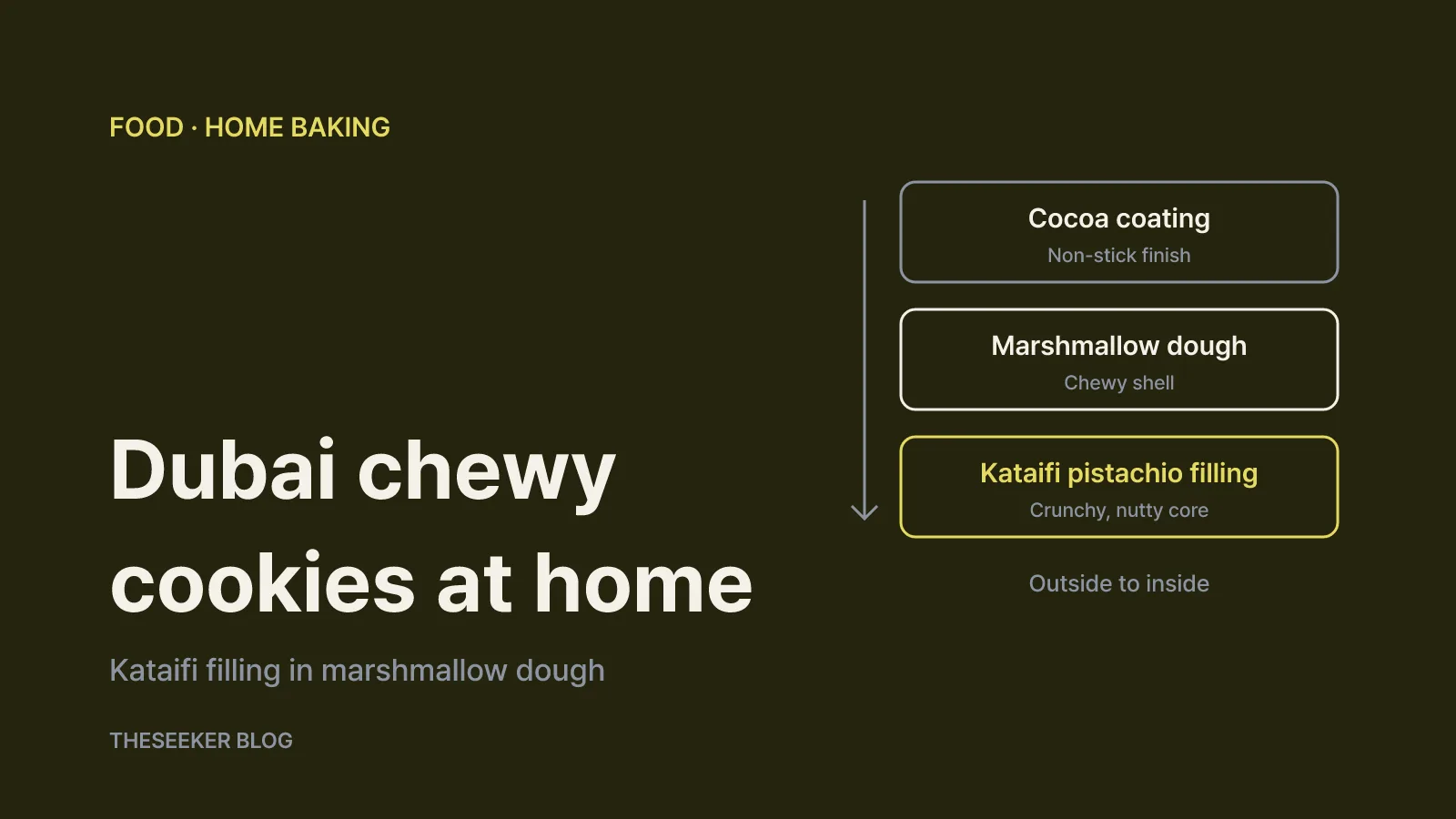
As of October 2026, the Dubai chewy cookie (known in Korea as dujjonku) is best described as a no-bake confection with three parts: a crunchy filling of butter-toasted kataifi mixed with pistachio paste and white chocolate, a chewy shell made by melting marshmallows with butter and stirring in cocoa powder and milk powder, and a final roll in cocoa powder. You can make it on the stovetop without an oven. The order is simple: toast the kataifi, mix and freeze the filling, cook the marshmallow dough, wrap, then coat. This guide does not reproduce any single creator's recipe; it compares several published versions so you can choose quantities that suit your kitchen.
What is a Dubai chewy cookie?
Despite the name, it did not start in Dubai. Callebaut's trend overview describes it as a twist inspired by the viral Dubai chocolate bar and popularised by South Korean bakeries and food creators. Think of it as the kataifi-and-pistachio center of that chocolate bar, wrapped in a stretchy cocoa marshmallow layer instead of a chocolate shell.
It helps to picture the cross-section:
- Filling: kataifi toasted in butter until golden, folded into pistachio paste or cream and melted white chocolate. This is the crunchy, nutty core.
- Shell: marshmallows melted with butter, with sifted cocoa powder and milk powder stirred in. It looks like mochi, but as Cook With Dana points out, the chew comes from marshmallow, not glutinous rice.
- Coating: a generous layer of cocoa powder that stops the cookie sticking to your fingers and adds a slightly bitter edge.
In Korea the trend peaked in early 2026. Korean food outlet Wikifoodie reported that Naver search interest for the cookie hit its peak on January 10, 2026, and had fallen to 12 percent of that peak by February 8, while the price of a 300g jar of pistachio spread dropped sharply from its January high. Ingredients that were once scarce are now much easier to find.
Ingredients and practical substitutes
Organize your shopping around the three components.
← Swipe to see more
| Component | Core ingredients | Job |
|---|---|---|
| Filling | Kataifi, butter, pistachio paste or cream, white chocolate | Crunch, flavor, binding |
| Shell | Marshmallows, butter, cocoa powder, milk powder | Chewy wrapper |
| Coating | Cocoa powder | Non-stick finish |
Quantities vary a lot between recipes, so it is useful to compare a few published versions side by side.
← Swipe to see more
| Source | Filling | Shell | Yield |
|---|---|---|---|
| Cook With Dana | 1 tbsp butter, 55g kataifi, 1 tsp tahini, 75g pistachio paste | 2.5 tbsp unsalted butter, 2 tbsp cocoa powder, 1 tbsp milk powder, 130g marshmallows, pinch of salt | 5 cookies |
| Callebaut (US version) | 9.2 oz kataifi, 2.1 oz feuilletine, 1.8 oz butter, 14.1 oz pistachio paste, 4.2 oz white chocolate | 14.1 oz marshmallows, 3.0 oz butter, 1.8 oz cocoa powder, 1.4 oz nonfat milk powder | 25 pieces, 30g filling and 30g dough each |
| Wikifoodie home test | 170g toasted kataifi, 155g pistachio spread, about 35g white chocolate | About 150g marshmallows, butter, 15g cocoa powder, 12g skim milk powder | Dough portions of about 15g |
For a first attempt, a small batch like Dana's is easier to manage. The marshmallow dough firms up as it cools, so the bigger the batch, the faster you have to work.
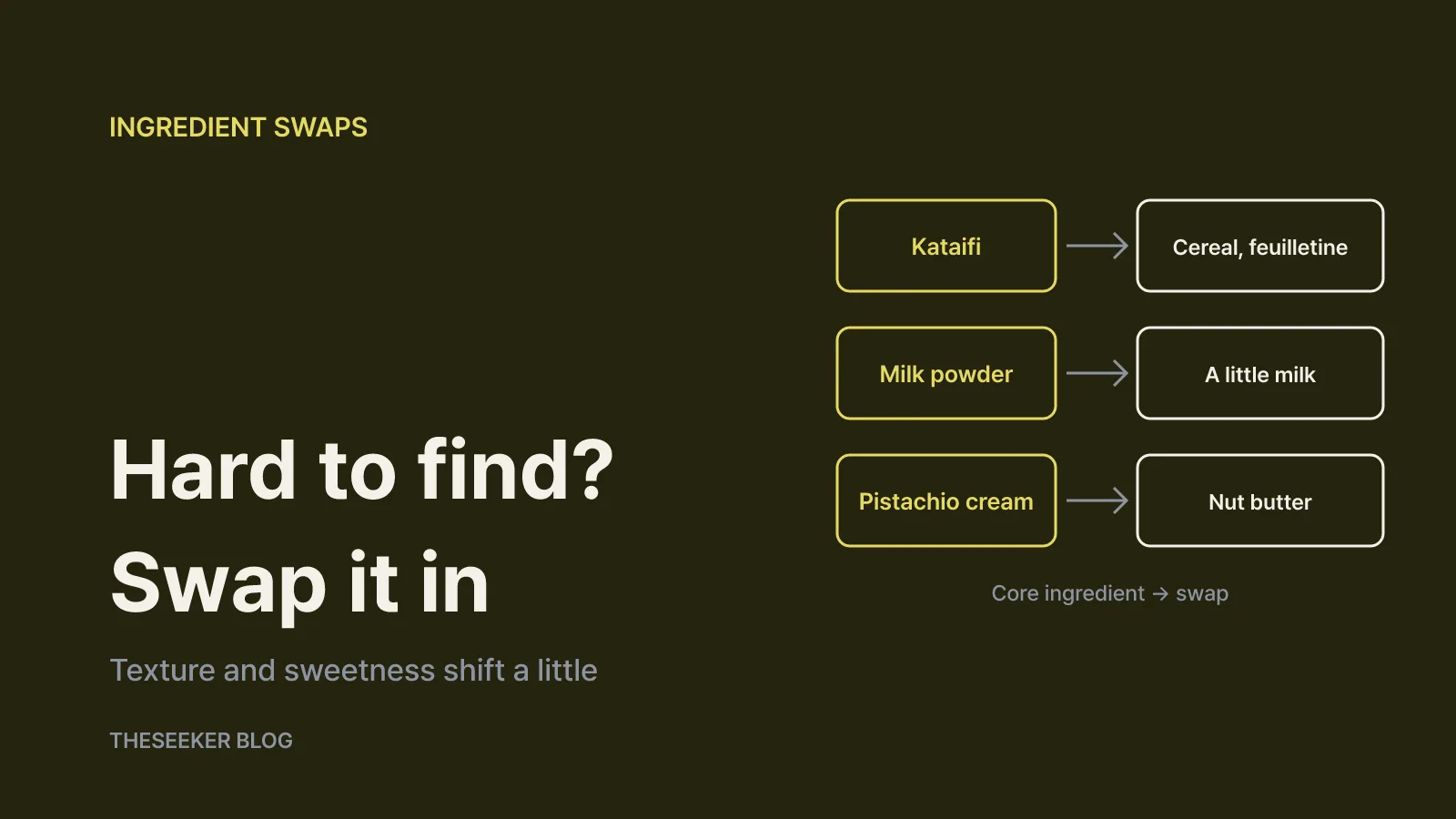
Kataifi is shredded phyllo dough, usually sold in the freezer section of Middle Eastern or international grocery stores. Thaw it and pull the strands apart before toasting. If you cannot find it, Callebaut's recipe shows one way to add crunch: mixing in feuilletine (crisp crêpe flakes). Korean recipe site Cookpick suggests crushed cereal. Neither reproduces the fine, shattering texture of kataifi, but both keep the filling crunchy.
Pistachio paste versus pistachio cream matters for sweetness. Callebaut's pure pistachio paste is unsweetened, while many pistachio creams are sweetened like a chocolate spread. If you use a sweet cream, reduce the white chocolate. Dana adds a little tahini to make the filling less sweet and creamier, and notes that almond butter or peanut butter can stand in for pistachio cream, although the flavor and sweetness will change.
Marshmallows should be regular gelatin-style ones such as Jet-Puffed. Dana found that vegan marshmallows did not melt properly. Milk powder makes the dough smoother and, according to Wikifoodie, less sticky; Wikifoodie suggests a spoonful or two of milk if you have none, and Dana says you can omit it at the cost of a slightly less smooth, less rich dough.
Step-by-step: filling, dough, assembly

The key to an efficient workflow is to make and freeze the filling first, then cook the dough while it chills.
- Toast the kataifi. Separate the strands and toss them with melted butter. Callebaut roasts the mixture at 175°C (about 350°F) for 10 to 12 minutes until golden; Dana toasts it in a pan over low-medium heat for about 5 minutes, stirring constantly. Spread it out so it browns evenly, then let it cool completely so it does not melt the chocolate.
- Mix the filling. Melt the white chocolate (Callebaut takes it to 40°C, about 104°F) and stir in the pistachio paste until smooth, then fold in the cooled kataifi. If cold pistachio paste is too stiff, Dana suggests 15 seconds in the microwave.
- Portion and freeze. Scoop the filling into balls and freeze them on a tray. Wikifoodie found about 30 minutes was enough at home; Callebaut freezes them until solid. Firm filling keeps its shape when you wrap it.
- Make the marshmallow dough. Melt the butter and marshmallows together in a nonstick pan over the lowest heat. Sift the cocoa powder and milk powder together. When the marshmallows are mostly melted but still hold a little shape, add the powders in two batches and stir quickly until the mixture is one even chocolate color. Turn it out onto a greased tray, silicone mat or parchment paper.
- Wrap. Oil your hands lightly, flatten a portion of dough into a thin round, set a frozen filling ball in the center and bring the dough up around it. Pinch the seam closed underneath, then roll the cookie between your palms to smooth the seam and even out the thickness. Trim any excess dough with a bench scraper or scissors.
- Coat. Roll each cookie in a bowl of cocoa powder until fully covered. Callebaut sifts a little more cocoa on top just before serving.
Troubleshooting heat and timing
Most failures happen with the shell, and three habits prevent nearly all of them.
First, keep the heat low. Wikifoodie notes that rushing the marshmallows over high heat can make the dough tough and lose its chew. Stir constantly with a silicone spatula so nothing catches on the bottom of the pan.
Second, add the powders at the right moment. Dana explains that if the marshmallow is too hot, the milk powder clumps and the dough will not be smooth. That is why you add it while some marshmallow shape remains, in two batches.
Third, cool the dough just enough. Freshly cooked dough is very hot and extremely sticky. Dana recommends letting it rest for a minute or two. Wait too long, though, and it stiffens. Cookpick suggests reviving firm dough with 10-second bursts in the microwave.
A few more tips:
- Use only a light film of oil on your hands; too much makes the cocoa coating patchy.
- Roll the dough thin but not so thin that it tears. Wikifoodie stresses wrapping as thinly as possible without letting the filling escape.
- Keep the remaining filling balls in the freezer and take out a few at a time.
- For variations, Callebaut hides an Amarena cherry in the center, Dana suggests a strawberry or raspberry, and matcha powder can replace cocoa in both the dough and the coating.
Storage, cost and allergens
Storage advice differs by source. Callebaut lists a 10-day shelf life at 12 to 18°C, but that applies to its professional formulation and conditions. Dana says the cookies keep covered at room temperature for up to 3 days, away from sunlight, and Cookpick suggests up to 5 days in the fridge or 2 weeks in the freezer. For homemade cookies, follow the most cautious guidance: store them airtight somewhere cool or in the fridge and eat them soon. Cookpick notes that chilled cookies taste crisper while room-temperature ones are softer, so let refrigerated cookies sit briefly before eating.
On cost, Wikifoodie's February 2026 home test in Korea spent about 110,000 won on ingredients for 22 cookies, roughly 5,000 won each, compared with an average shop price in the 6,000-won range. Kataifi, pistachio paste and marshmallows are often sold in large packs, so plan how you will use the leftovers before you buy.
Finally, check allergens. Pistachios are tree nuts, kataifi is a wheat dough, and butter, milk powder and white chocolate contain dairy. Many marshmallows contain gelatin, so read the label if that matters to you or your guests, and tell people what is inside when you share them.
Sources
Frequently asked questions
Can I make Dubai chewy cookies without kataifi?
Yes. Crushed cereal or feuilletine (crisp crêpe flakes) will keep the filling crunchy, although neither matches the fine, shattering texture of toasted kataifi.
Do I need an oven?
No. You can toast the kataifi in butter in a pan over low-medium heat, stirring until golden, and the marshmallow dough is made on the stovetop.
Why is my marshmallow dough so sticky?
Sticky dough is normal. Let it cool for a minute or two on a silicone mat or parchment, oil your hands lightly, and microwave it in 10-second bursts if it firms up too much.
Can I skip the milk powder?
You can replace it with a spoonful or two of milk or leave it out, but the dough may be less smooth and less rich.
How long do homemade Dubai chewy cookies keep?
Published guidance ranges from 3 days covered at room temperature to 5 days in the fridge or 2 weeks frozen. Store them airtight in a cool place or the fridge and eat them soon.
blog.theseeker.io/en/posts/dubai-chewy-cookie-kataifi-pistachio-recipe
Chloe Morgan
Chloe covers easy recipes and how to prepare and store ingredients, written in quantities and steps that work in a home kitchen.
Read our editorial standards