Japan Trip Budget: Flights, Lodging, Transit and Food
A step-by-step framework for estimating what a Japan trip will cost: total airfare including the new departure tax, lodging plus local accommodation tax, route-based transit, daily food costs and the new tax refund rules for shopping.
 Daniel Foster
In this post
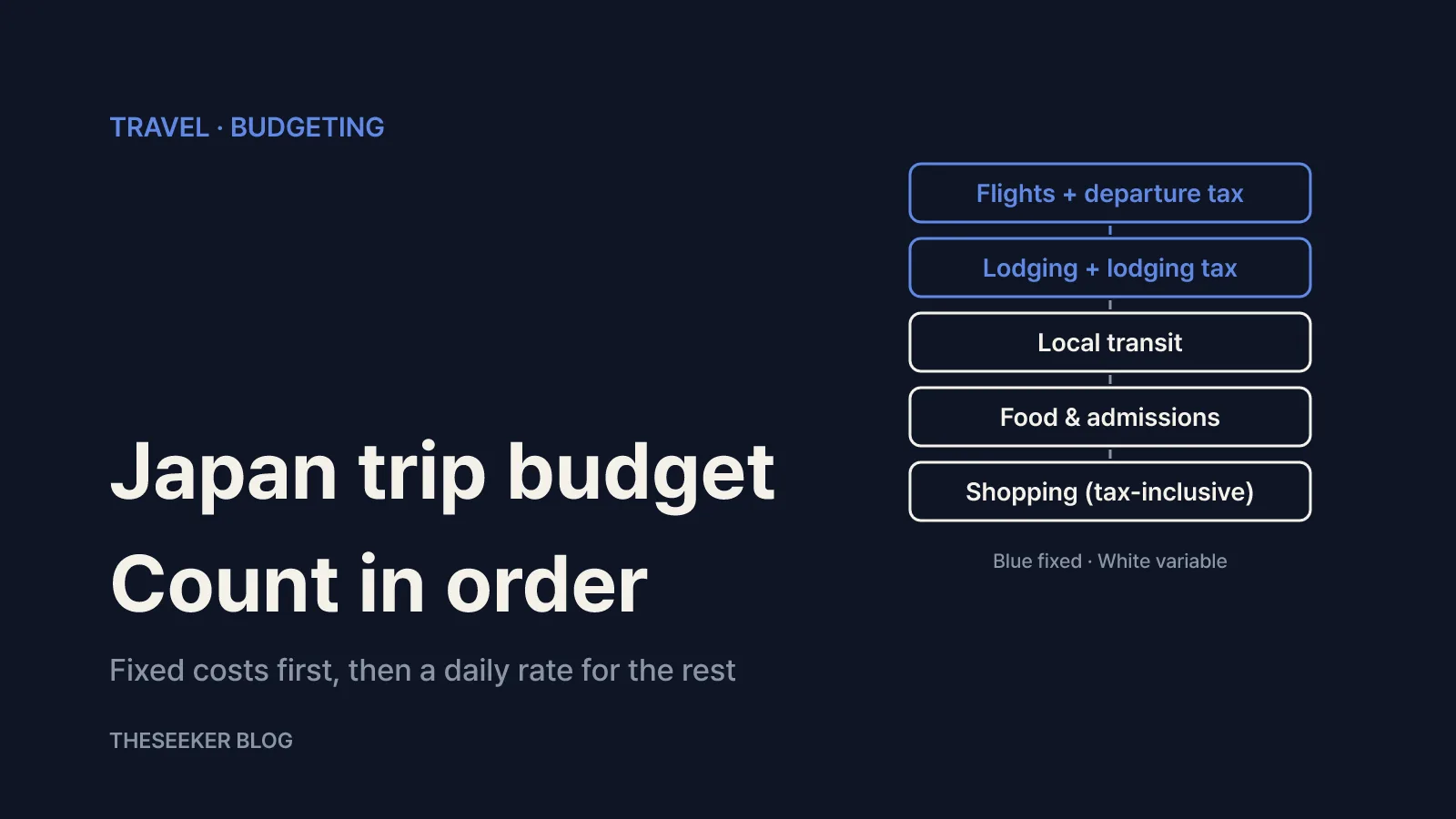
- Build the budget from fixed costs to variable costs
- Flights: include the JPY 3,000 departure tax in the total
- Lodging: add accommodation tax to the room rate
- Local transit: map the route before comparing passes
- Food and admissions: use a daily rate × days
- Shopping: plan for the new tax refund method
- Finish with exchange-rate margin, fees and contingency
- Sources
- Frequently asked questions
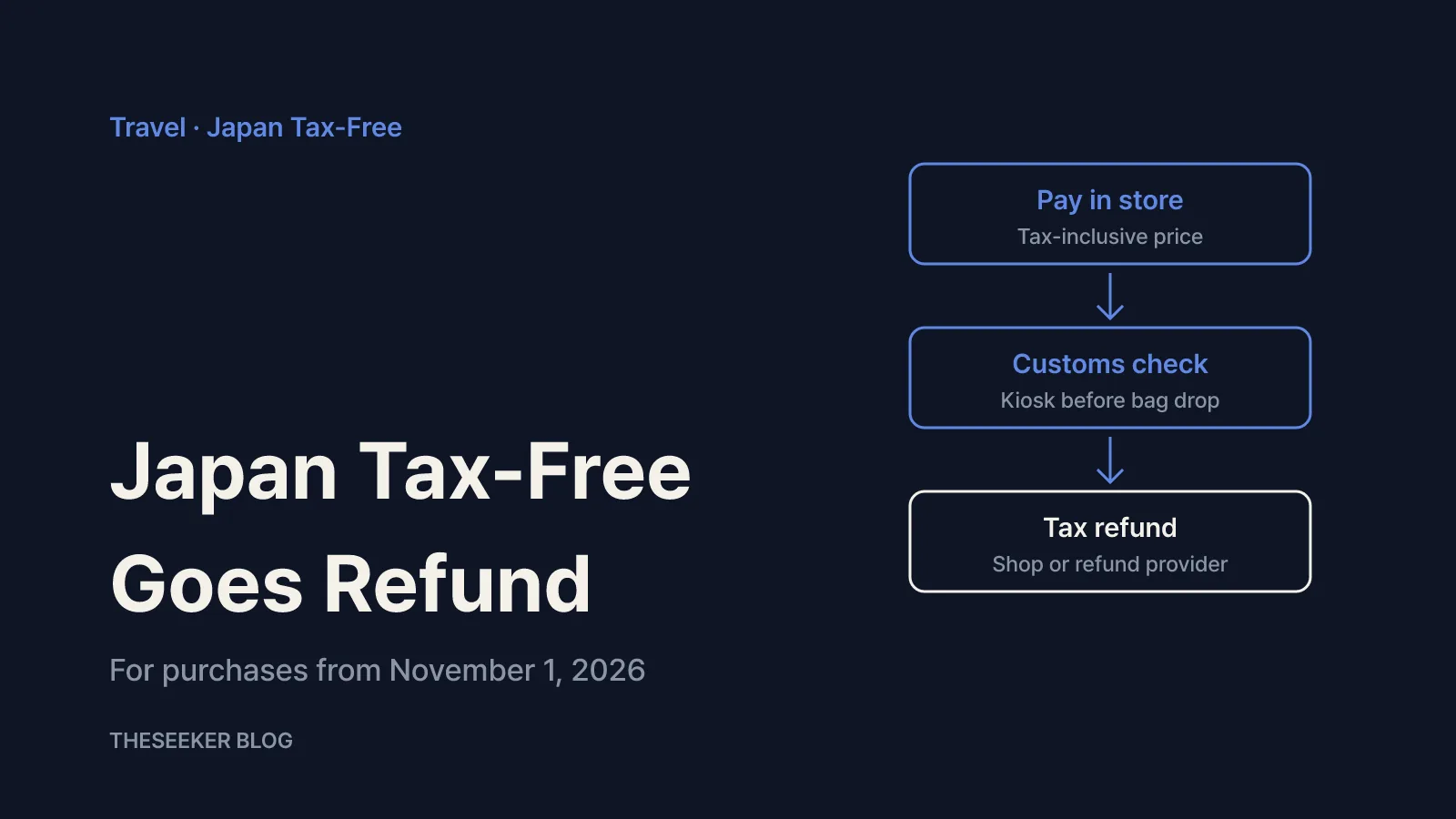
As of October 2026, the most reliable way to work out how much a trip to Japan will cost is to build the budget in a fixed order: flights, lodging, local transit, food and admissions, shopping, then exchange-rate margin, card fees and a contingency fund. Lock in the costs that become fixed the moment you book, then add the costs that depend on how you spend each day. Three official changes this year belong in that calculation. Japan's International Tourist Tax rose to JPY 3,000 per departure on July 1, 2026. Kyoto City moved to a five-tier accommodation tax in March 2026. And for purchases made on or after November 1, 2026, tax-free shopping switches to a refund method: you pay the tax-inclusive price and get the consumption tax back after a customs check when you leave.
This guide does not quote an average daily cost for Japan. Prices vary by season, city and exchange rate, so a single headline number is rarely useful. Instead, you get a framework you can fill in with your own dates, plus the official pages where each number can be checked. The only figures used here are taxes and fares published by official sources.
Build the budget from fixed costs to variable costs
Most Japan budgets go over because the order is wrong. If you start with a generous food allowance and only later price your flights, a peak-season fare or a baggage fee can undo the whole plan. Split your spreadsheet into two columns instead.
- Fixed costs (known when you book): round-trip airfare with fuel surcharges, airport charges and departure tax; lodging with any accommodation tax; rail passes bought in advance; pre-booked tickets
- Variable costs (depend on what you do): airport transfers, city transit, meals, snacks and coffee, walk-up admissions, shopping
- A separate row: exchange-rate margin, card and ATM fees, contingency
As a formula: Total = airfare + (nightly rate + accommodation tax) × nights + transit + (daily food + daily admissions) × days + shopping at tax-inclusive prices + fees and FX margin + contingency. Once the fixed column is settled, whatever remains tells you your daily spending limit on the ground.
Keep currencies separate. Flights are usually charged in your home currency, while hotels and on-the-ground spending are priced in yen. Total the yen items in yen and convert once at the end, so the figures match your card statements later.
Flights: include the JPY 3,000 departure tax in the total
Record airfare as the final checkout total, not the first price on the search page. Fuel surcharges, airport fees and taxes are added on top of the base fare, and budget carriers may charge separately for checked bags, seat selection and meals. If you expect to come home with more luggage, price the return-leg baggage allowance now.
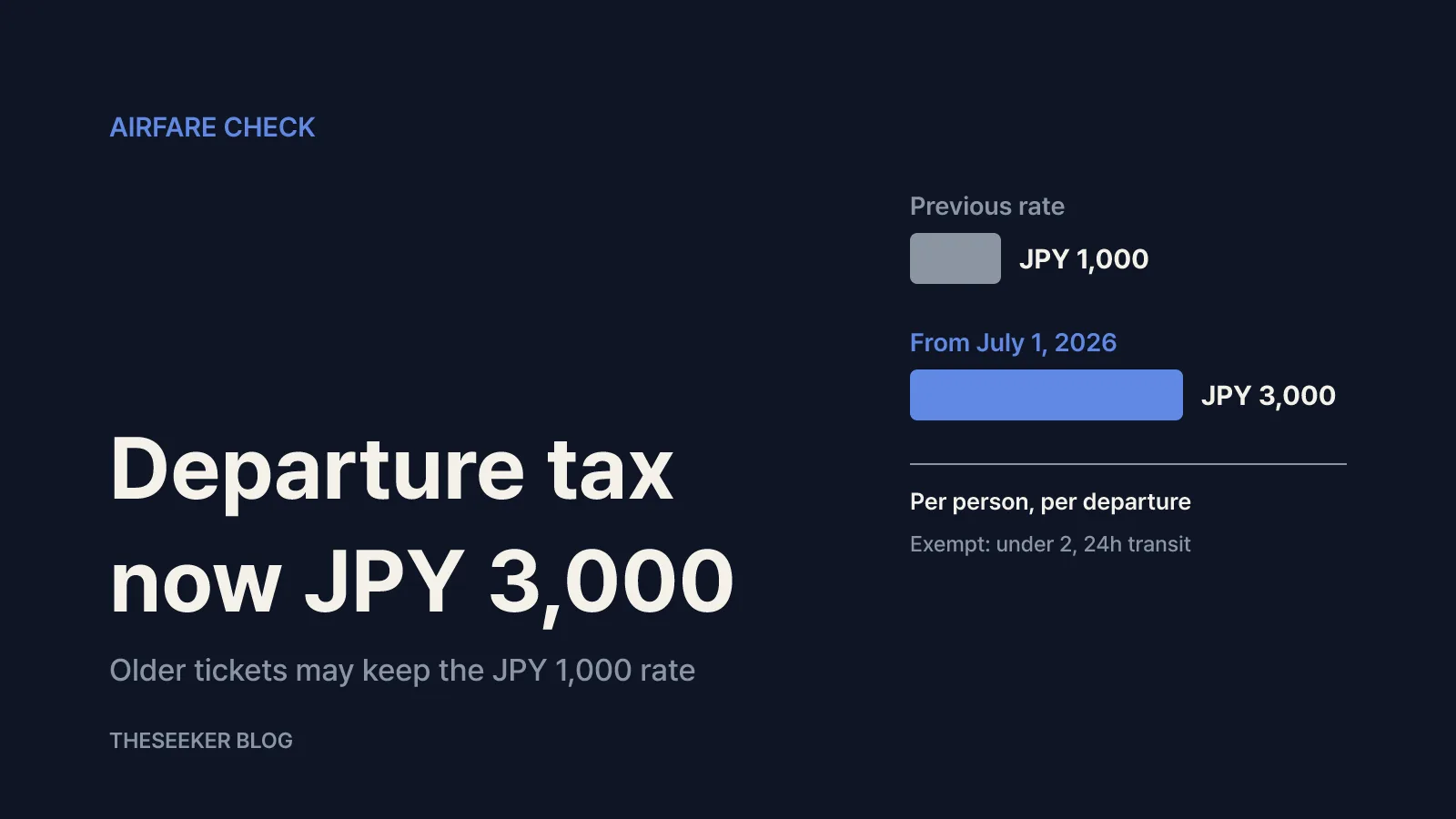
According to Japan's National Tax Agency, the International Tourist Tax applies to anyone leaving Japan by air or sea, regardless of nationality or purpose, at JPY 3,000 per departure. The previous rate was JPY 1,000, and a transitional rule keeps the JPY 1,000 rate for eligible tickets issued on or before June 30, 2026. Airlines and cruise lines collect it from passengers, so in most cases it is already built into the ticket price.
Two quick checks: confirm that the tax breakdown on your booking includes the Japan departure tax, and count it per traveler. Children under 2 and transit passengers who leave within 24 hours of arrival are exempt; everyone else counts as one passenger. If your itinerary leaves Japan more than once, the tax applies on each departure.
Lodging: add accommodation tax to the room rate
Lodging is not simply nightly rate × nights. Check whether the listed price includes tax and whether cleaning or service fees are added, then add any local accommodation tax per person per night. Some properties collect that tax separately at check-in, which is why it is easy to miss.
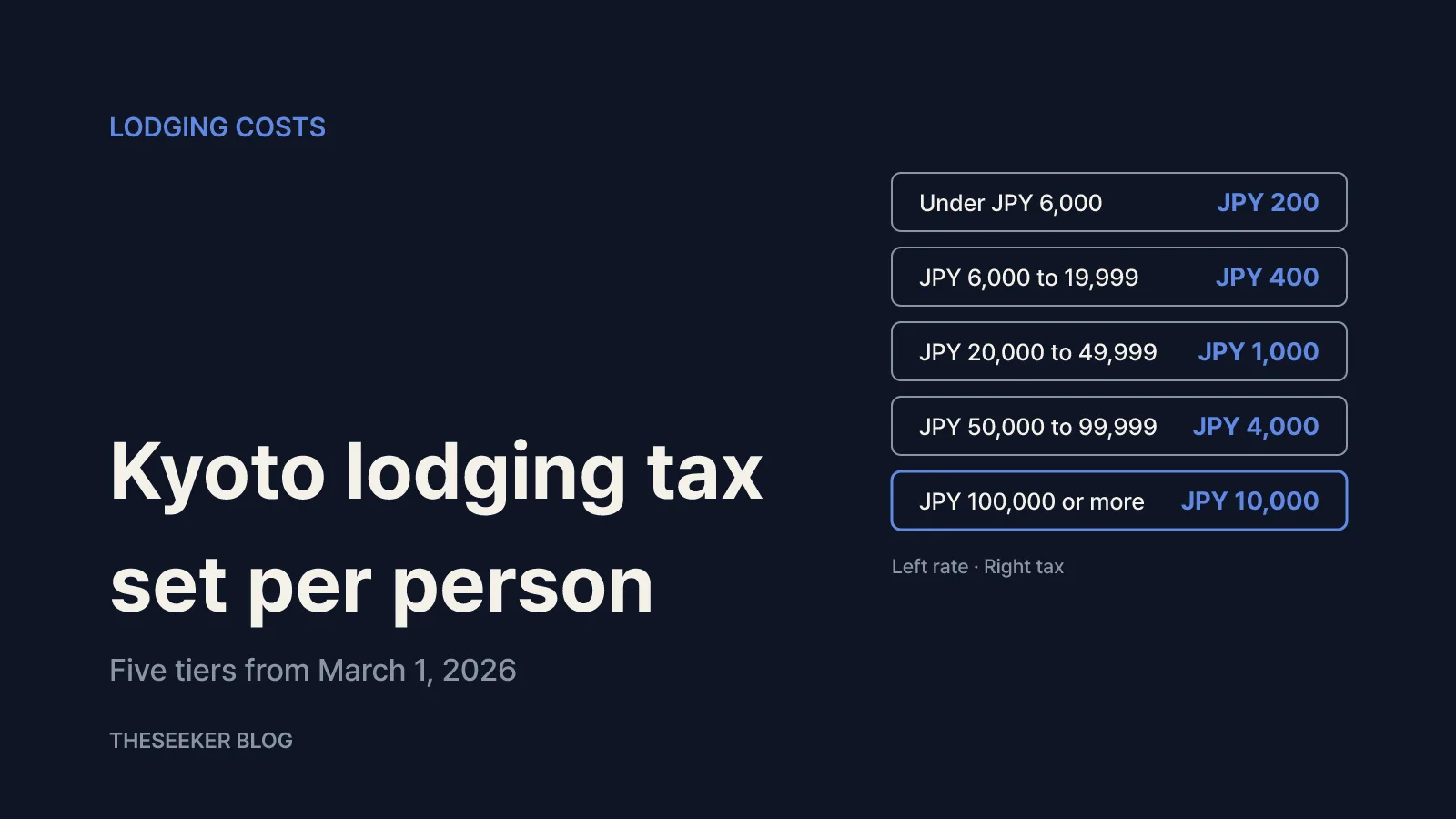
Kyoto is the clearest example. The Kyoto City official guide lists the rates in force since March 1, 2026, based on the accommodation fee per person per night:
- Under JPY 6,000: JPY 200
- JPY 6,000 to 19,999: JPY 400
- JPY 20,000 to 49,999: JPY 1,000
- JPY 50,000 to 99,999: JPY 4,000
- JPY 100,000 or more: JPY 10,000
The key detail is that the tier is set by the per-person rate, not the room total. Two people sharing a JPY 30,000 room pay on a per-person rate of JPY 15,000, so the tax is JPY 400 each per night; over three nights that is JPY 400 × 2 × 3 = JPY 2,400. A solo traveler in the same room has a per-person rate of JPY 30,000 and moves into the JPY 1,000 tier. The tax covers hotels, ryokan, simple lodgings and registered private rentals (minpaku). Kyoto also charges an onsen tax: JPY 150 per person per night when hot-spring bathing is included in a stay, and JPY 100 per person per day for general onsen entry.
Other Japanese cities levy their own accommodation taxes, so once you choose where to stay, check that municipality's official page and calculate it the same way. On a multi-city trip, give each city its own row.
Local transit: map the route before comparing passes
Starting with a rail pass is a common way to overspend. Write down where you will be each day, price those legs as individual tickets, and only then compare the total with a pass. It helps to split transit into three parts.
- Airport to hotel and back: airport rail, limousine bus or taxi, depending on arrival time and luggage
- Intercity travel: shinkansen, limited express trains, highway buses or domestic flights
- City travel: single subway or bus fares × expected rides, or a day pass
If you are covering long distances, put the JAPAN RAIL PASS into the comparison. The official price list shows an Ordinary 7-day adult pass at JPY 50,000 when bought online, with 14-day and 21-day passes at JPY 80,000 and JPY 100,000. Through an overseas designated agency the 7-day pass costs JPY 53,000, and the local-currency price is set by the exchange rate on the day the Exchange Order is issued.
One catch: riding NOZOMI or MIZUHO trains on the Tokaido, Sanyo or Kyushu Shinkansen requires a special ticket issued only to pass holders. Move the pass into your fixed column only when the individual fares clearly exceed its price and the trains you plan to ride are covered. If you are staying in one or two cities, airport transfers and city transit usually cover it.
Food and admissions: use a daily rate × days
Food is easier to control as a daily rate than as a trip total. Split each day into breakfast, lunch, dinner and snacks, and write a price for the kind of place you will actually use, taken from menus or official websites rather than guesses. A convenience-store breakfast, a set-meal lunch and an izakaya dinner each deserve their own line.
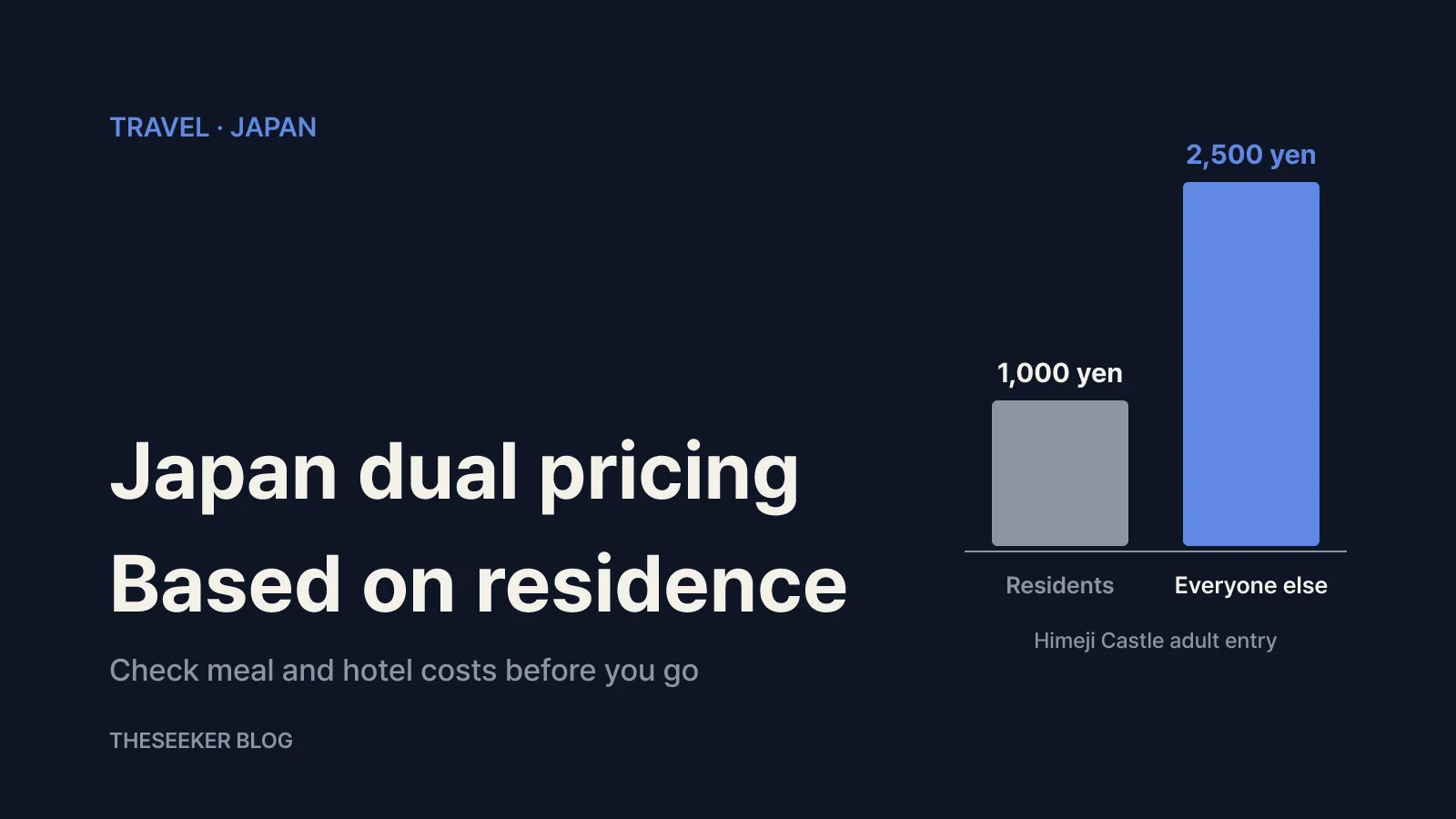
Prices in busy tourist areas have been rising, and some businesses have introduced separate pricing for overseas visitors. Use prices you checked within a month of departure rather than figures from an old trip report, and note the date you checked them.
Admissions work the same way. List the temples, museums, observation decks and theme parks on your itinerary, record the official prices and assign each to a day. Anything that requires advance booking moves into the fixed column, so a change of plan only means editing one row.
Decide how you will pay at this stage too. Kyoto's official guide recommends exchanging money in advance because many purchases and temple admission fees can only be paid in cash. Estimate what share of your daily rate will be cash, and you will know how much yen to carry.
Shopping: plan for the new tax refund method
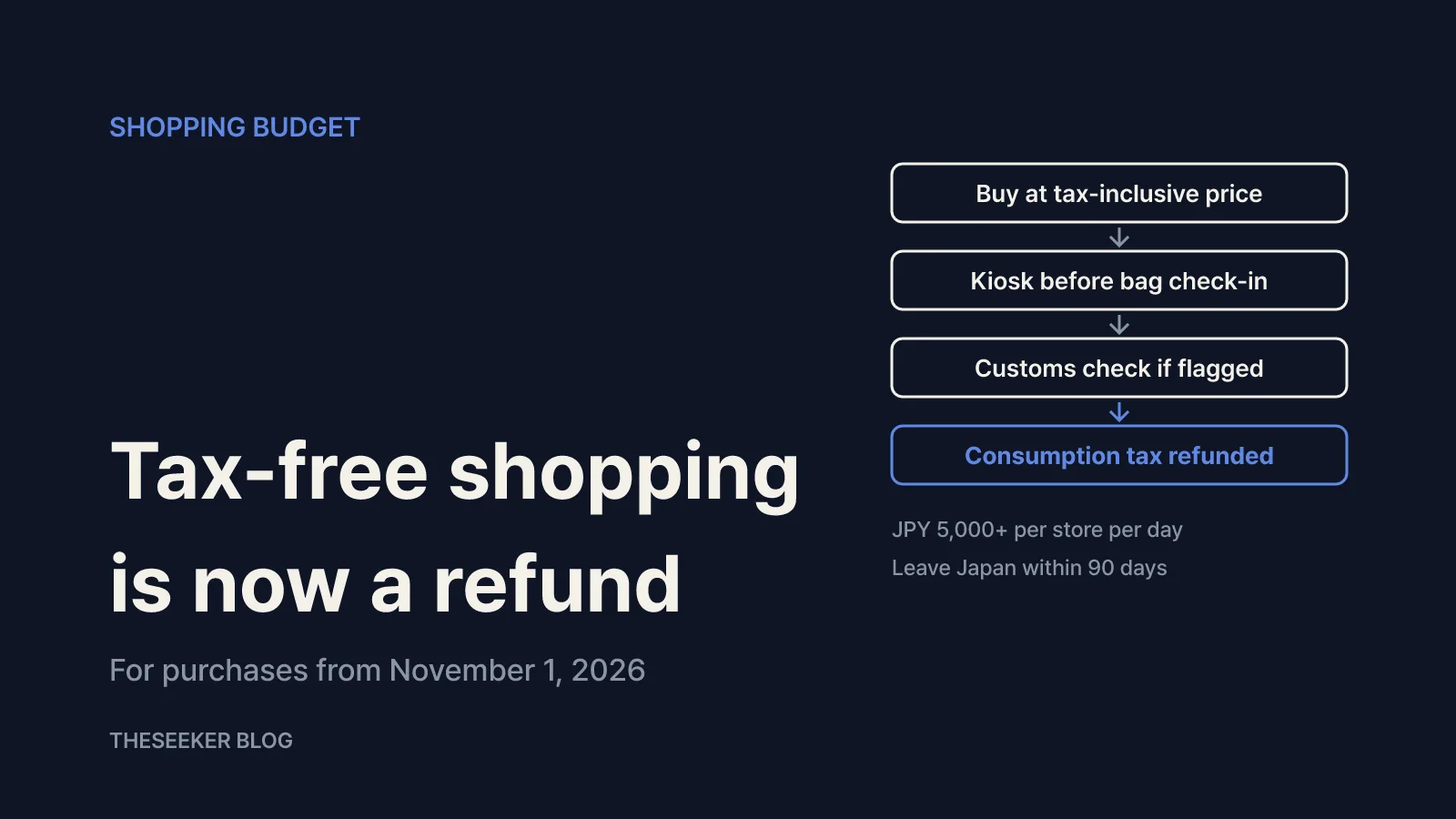
The way shopping fits into a Japan budget changes this month. The Japan Tourism Agency explains that until October 31, 2026, eligible visitors could buy at tax-free shops at tax-exclusive prices. For purchases on or after November 1, 2026, you pay the tax-inclusive price and the consumption tax equivalent is refunded after customs confirms at departure that the goods are leaving Japan.
For budgeting, that means: set your shopping budget at tax-inclusive prices, and treat the refund as money that arrives after you complete the departure procedure. The full amount leaves your card limit or cash during the trip, so check your card limit if you plan a large purchase. Refunds are handled by each tax-free shop or a refund service provider it has appointed, so ask the shop how and when the refund is paid.
The conditions also affect your timing:
- Purchases must total JPY 5,000 or more, tax excluded, per store per day.
- Within 90 days of purchase, present your passport at a tax-free procedure terminal at the departure airport or seaport.
- Terminals sit in the departure lobby before baggage check-in, and you must have all tax-free goods with you, so you cannot do it after checking your bags.
- Checks are made per receipt; if even one item from a receipt is missing, nothing on that receipt qualifies.
- Food, drinks or cosmetics consumed or used in Japan do not qualify.
- At Narita, Haneda, Kansai, Chubu, Fukuoka, New Chitose and Naha, the procedure can also be done online through Visit Japan Web in designated areas.
If the terminal shows a red result, you take your purchases to a customs inspection area, and everything must be finished before boarding. If you abandon the inspection for lack of time, it is treated as not completed, and the agency notes that neither airlines nor customs compensate travelers who miss a flight over these procedures. Arrive at the airport earlier than usual on departure day.
Finish with exchange-rate margin, fees and contingency
When you convert the yen total into your home currency, add three things. First, an exchange-rate margin: the rate on the day you plan is not the rate on the day you pay, so convert with a buffer you choose. Second, payment fees: foreign transaction fees, ATM withdrawal charges and dynamic currency conversion can all add cost, so read your card and bank terms and choose to be charged in yen when a terminal offers a choice. Third, a contingency fund for taxis in the rain, replacement tickets or pharmacy visits. If you do not spend it, it simply stays in your account.
Before you go, check that you have:
- Confirmed taxes and baggage fees on the airfare checkout page
- Calculated accommodation tax per person per night for each city
- Compared individual fares with any rail pass
- Written food and admissions as daily rate × days
- Budgeted shopping at tax-inclusive prices and planned an earlier airport arrival
- Added an FX margin, fees and contingency
With those six lines filled in, you will know what you can spend each day. Fares and taxes do change, so recheck the official pages linked above shortly before departure.
Sources
Frequently asked questions
Do I have to pay Japan's JPY 3,000 departure tax separately?
Usually not. Airlines and cruise lines collect it from passengers, so it is normally included in your ticket price; check the tax breakdown at checkout. Eligible tickets issued on or before June 30, 2026 keep the old JPY 1,000 rate, and children under 2 and transit passengers leaving within 24 hours are exempt.
Is Kyoto's accommodation tax based on the room price or per person?
Per person per night. Since March 1, 2026 it is JPY 200 under JPY 6,000, JPY 400 for JPY 6,000 to 19,999, JPY 1,000 for JPY 20,000 to 49,999, JPY 4,000 for JPY 50,000 to 99,999 and JPY 10,000 for JPY 100,000 or more. A solo traveler in the same room may land in a higher tier.
How should I budget for tax-free shopping after November 1, 2026?
Budget at tax-inclusive prices, because you now pay the tax up front and receive the consumption tax equivalent back after a customs check at departure. Purchases must reach JPY 5,000 or more, tax excluded, per store per day, and you must leave Japan within 90 days of purchase with the goods in hand.
When is a JAPAN RAIL PASS worth it?
When individual tickets for your planned routes clearly add up to more than the pass. The Ordinary 7-day adult pass is JPY 50,000 online, and NOZOMI or MIZUHO trains need a separate special ticket. For one or two cities, city transit and airport transfers are often enough.
How do I account for exchange-rate changes?
Total your yen spending in yen, convert once at the end and add a margin you choose. Pay in yen when a card terminal offers a choice, and check your card's foreign transaction and ATM fees before you leave.
blog.theseeker.io/en/posts/japan-trip-budget-flights-lodging-transit-food
Daniel Foster
Daniel covers trip planning, booking and on-the-ground tips, checking fast-changing details such as entry rules and fares against official sources and noting when they were checked.
Read our editorial standards