Japan Tax-Free Shopping Changes: How Airport Refunds Work
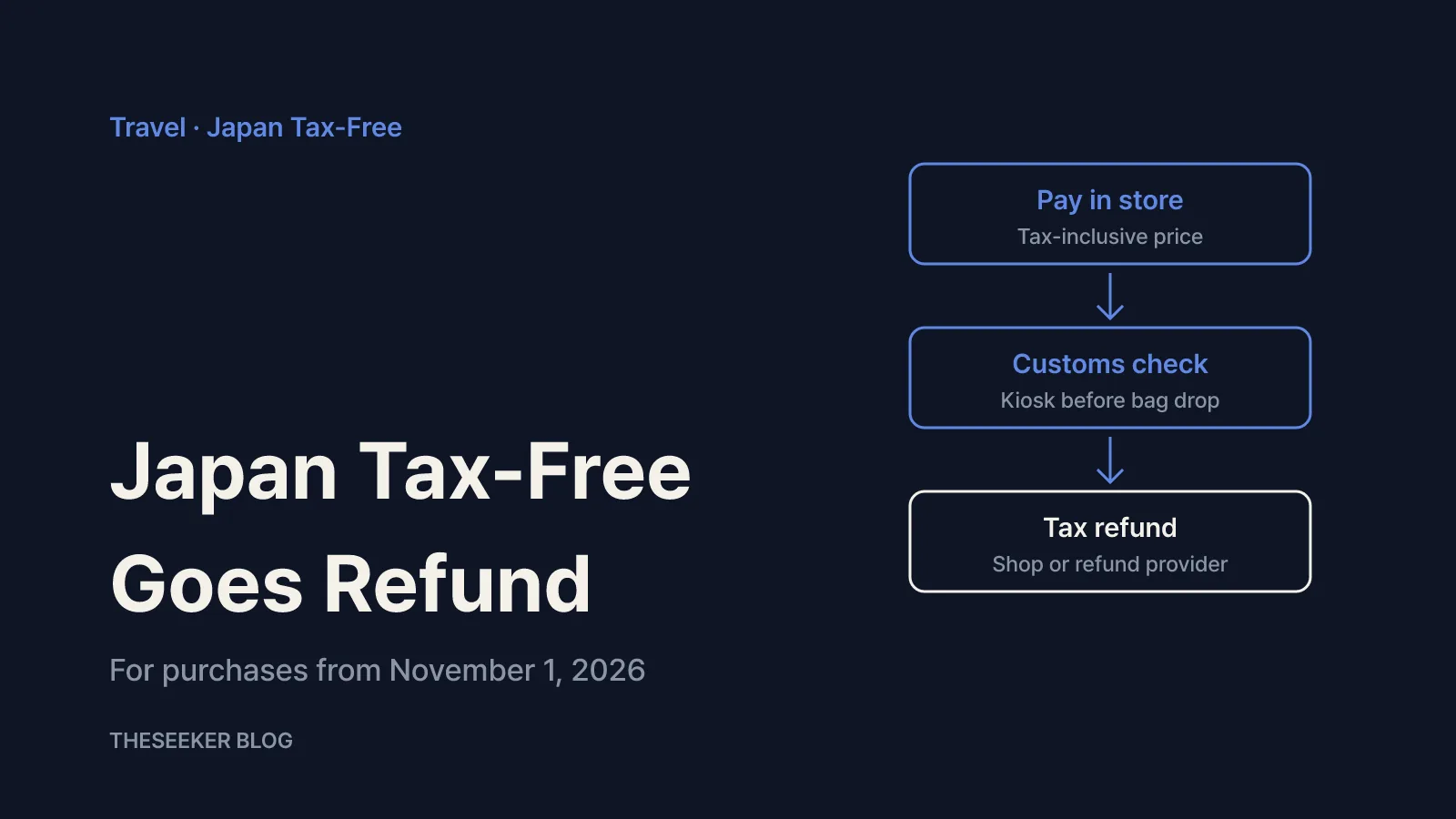
From November 1, 2026, Japan's tax-free shops charge the tax-inclusive price and refund the consumption tax after Customs confirms your goods are leaving the country. Here is what changes when you buy, depart and get paid back.
 Daniel Foster
In this post
As of October 2026, official guidance from Japan Customs and the Japan Tourism Agency confirms the change: for purchases made on or after November 1, 2026, Japan's tax-free shopping for visitors moves to a "refund method." You pay the full tax-inclusive price at the shop, then the amount equivalent to the consumption tax is refunded after a customs inspection at the airport or seaport confirms you are taking the goods out of Japan (Japan Customs). Anything bought up to October 31, 2026 still follows the old point-of-sale exemption.
If you only remember three things, make them these: leave Japan within 90 days of the purchase, scan your passport at a tax-free procedure terminal before you check your bags, and keep every single item from each receipt with you until the check is done. The rest of this guide walks through each stage.
What changes on November 1, 2026
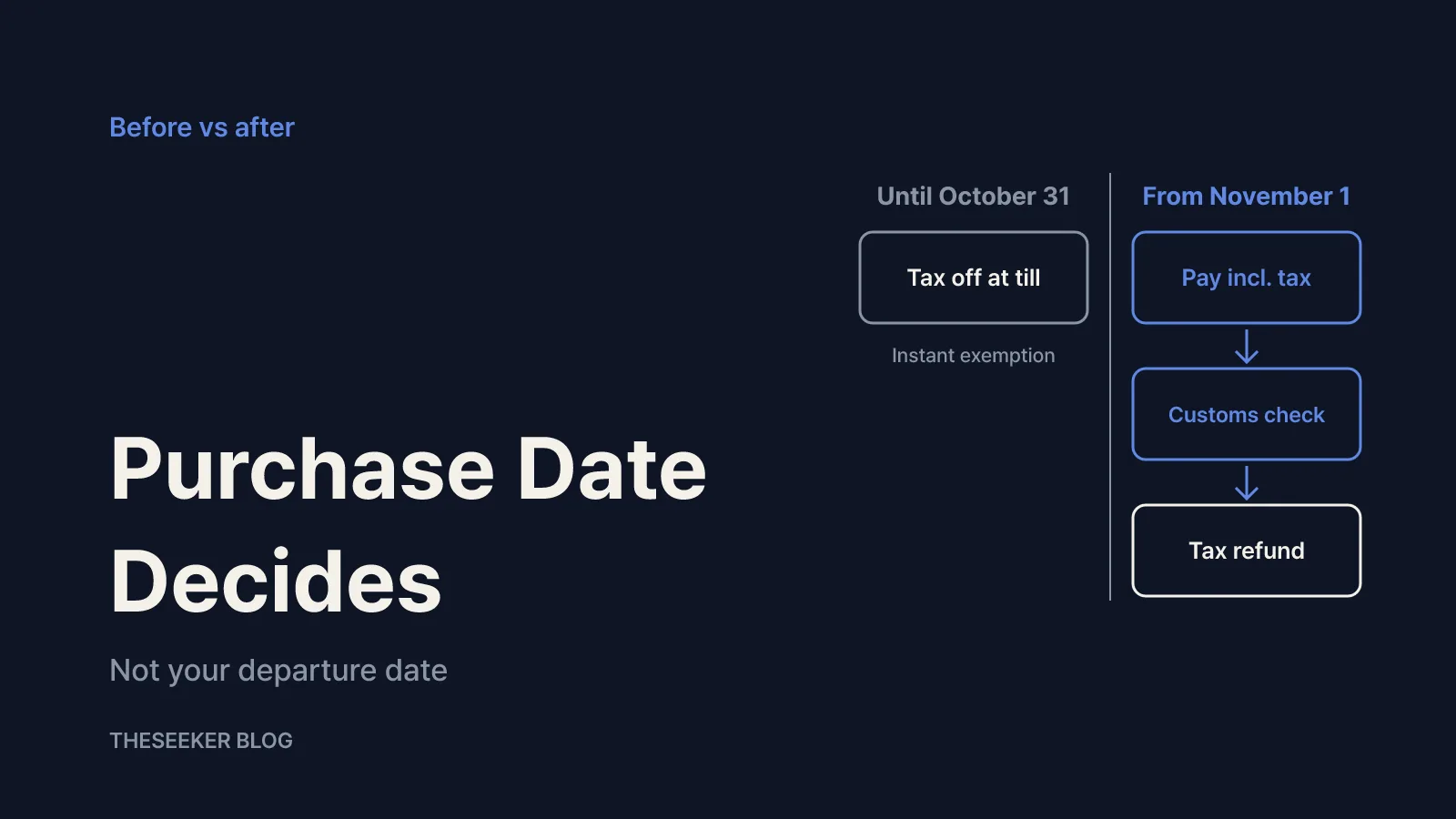
Under the old system, showing your passport at a tax-free shop meant the consumption tax came off at the register. Under the refund method, the register charges the tax-inclusive price. Once Customs has confirmed the export at departure, the shop, or a refund service provider the shop has hired, pays the tax-equivalent amount back to you (Japan Tourism Agency).
The deciding factor is the purchase date, not your departure date. A trip that starts in late October and ends in early November can therefore involve both systems: items bought on October 31 are sold tax-free at the counter, while items bought from November 1 need the airport procedure. Keeping receipts sorted by date avoids confusion at the terminal.
The practical difference most travelers will feel is cash flow. The tax portion now leaves your card or wallet at the time of purchase and only comes back after the customs check. If you plan a big shopping day, factor that extra amount into your card limit and daily budget.
Buying: what qualifies and what to ask at the counter
The eligibility rules that apply from November 1, 2026 are set out by Japan Customs (Japan Customs):
- Total purchases of 5,000 yen or more (before tax) per store, per day.
- The goods must be taken out of Japan.
- Gold and platinum bullion, and items that are already exempt from consumption tax, are excluded.
- Quantities are limited to what you can personally carry out of Japan when you leave.
- The special sealed bags for consumables such as food, drinks and cosmetics are being discontinued, but if you eat, drink or use those items in Japan, they no longer qualify.
That last point catches people out. The sealed bag used to act as a visual reminder not to open your snacks or skincare. The bag is gone, but the rule is not. Open one box of tax-free sweets at your hotel and the whole receipt it belongs to may lose its refund. Pay for travel snacks separately from your tax-free haul.
At the register, present your passport and complete whatever refund method registration the shop offers. The Japan Tourism Agency says shops explain how to register when you buy, and that the shop or its refund provider handles the details (JTA FAQ). Ask on the spot whether the money goes back to a card, a bank account or an app, and whether any fee applies, because this varies by shop. Write the answer on the receipt envelope.
Two more details are worth knowing. Mailing tax-free goods home yourself from a post office stopped qualifying on March 31, 2025; whether a shop arranges overseas shipping on your behalf depends on the shop. And for a single item priced at 1 million yen or more before tax, customs officers may ask to see a certificate of authenticity or warranty, so keep those documents with the item.
Departing: the airport procedure step by step
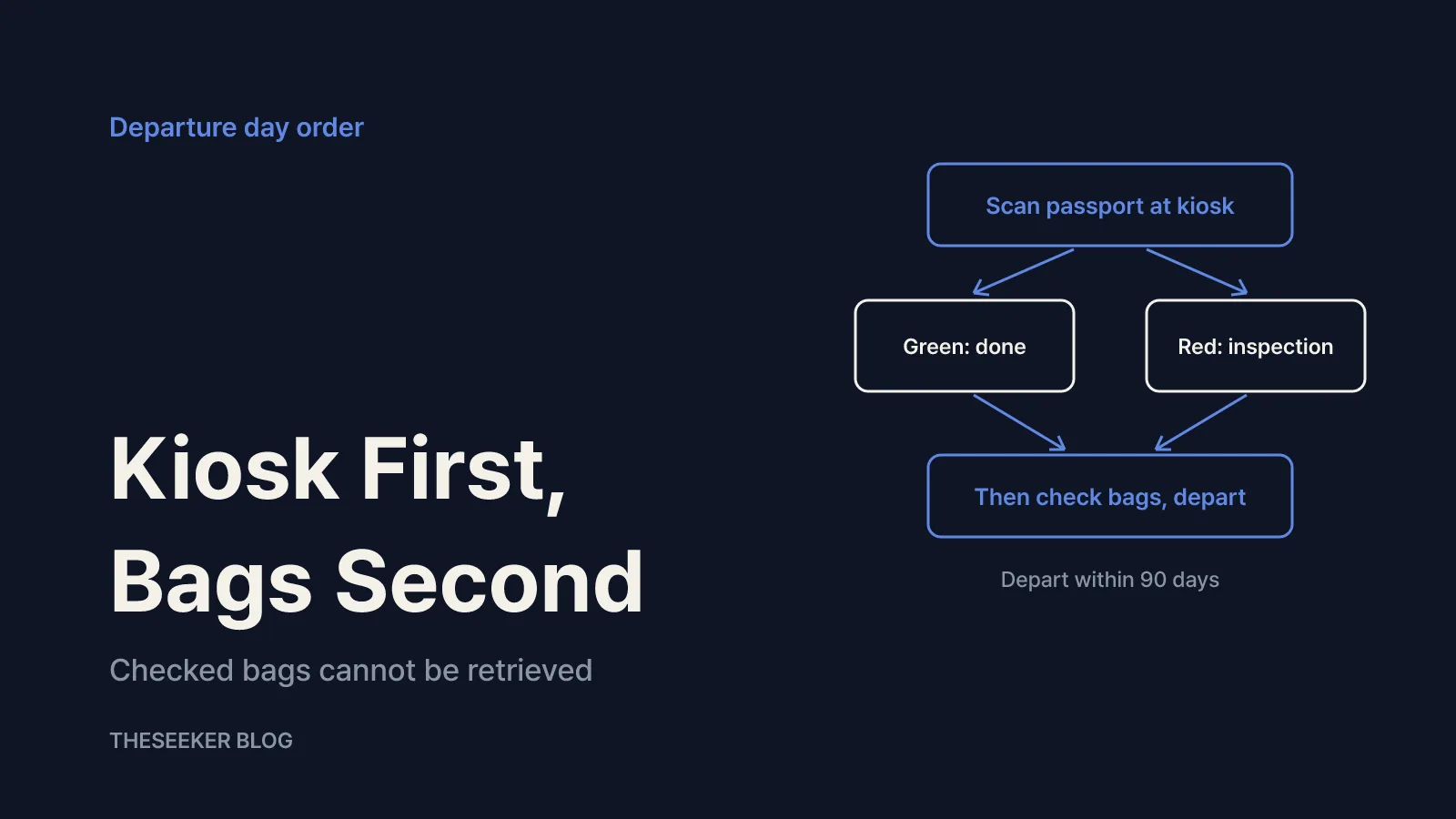
To get your refund you must pass the customs check when leaving Japan within 90 days of the purchase date. The process starts at a tax-free procedure terminal (a kiosk or electronic terminal) in the international departure lobby, located before baggage check-in (Japan Tourism Agency).
- Before visiting the airline counter, go to a tax-free procedure terminal with all of your tax-free purchases.
- Scan your passport. According to the official FAQ, the result appears within seconds.
- Green result: no inspection is needed and the customs procedure is complete.
- Red result: take your tax-free goods to the designated customs inspection area for verification.
- Only after that, check your bags and continue to security and immigration.
The order matters because checked baggage cannot be retrieved for the tax-free procedure. If your purchases are already in the hold when you get a red result, there is no way to complete the check. Abandoning the inspection because you are short on time counts as an incomplete check, and the official guidance states that neither the airline nor Customs will compensate you if you miss your departure. Build extra time into your airport arrival.
At Narita, Haneda, Kansai, Chubu, Fukuoka, New Chitose and Naha, you can also complete the procedure online through Visit Japan Web (VJW) instead of a terminal. This works only inside the dedicated Wi-Fi zones in the international departure lobby, before the security checkpoint, and VJW must be set up before you reach that point. If it does not work, use a terminal instead (Japan Customs).
If you connect from a domestic flight to an international one, complete the procedure at the airport where you actually leave Japan, not at the domestic origin. Cruise itineraries likewise use the final departure point from Japan.
How and when the refund is paid
Refunds are paid by each tax-free shop or the refund service provider it has appointed, not by a government office (Japan Tourism Agency). The JTA FAQ lists bank transfers, credit card refunds, app-based refunds and cash refunds at the port of departure after customs confirmation as possible methods, with the available options depending on the shop (JTA FAQ).
Timing generally follows the customs check, since the shop refunds you after receiving confirmation that the goods have been exported. Official guidance does not set a single payout date or fee schedule, so the shop's own instructions are what count. If your refund goes to a credit card, ask whether it must be the same card you paid with and how the credit will appear on your statement; it makes checking easier once you are home.
The one-receipt rule and common mistakes
Customs checks are carried out per purchase transaction, meaning per receipt. If even one item from a receipt is missing, none of the goods on that receipt qualify (JTA FAQ). Buy cosmetics and snacks together at a drugstore, eat one snack, and the cosmetics can lose their refund too.
If you have already consumed some items, do not use the terminal; report it to a customs officer at the counter instead. Conversely, goods that pass the check must actually leave Japan without delay. Otherwise the refunded tax can be collected and penalties may apply.
The mistakes most likely to cost you a refund:
- Packing tax-free goods in checked luggage and checking in first.
- Mixing snacks you plan to eat into a tax-free receipt.
- Trying to complete the procedure at a domestic departure airport.
- Leaving the shop without registering a refund method.
- Departing more than 90 days after the purchase.
Pre-trip checklist
- Passport: needed at the shop and at the departure terminal. Cruise passengers also need their landing permit.
- Receipts: keep tax-free receipts in one envelope, grouped by date and store, with the matching goods nearby.
- Packing: carry tax-free goods in your cabin bag or somewhere easy to reach on departure day. For liquids such as cosmetics or alcohol that may not suit cabin rules, plan to check them in only after the terminal shows your result.
- Visit Japan Web: set it up before departure if you want the online option at the seven major airports.
- Arrival time: arrive earlier than usual to allow for the procedure and any inspection.
- Budget: remember that the tax portion is charged upfront until the refund arrives.
JNTO publishes a traveler-oriented summary of the same rules that is worth a final look before you fly (JNTO). In the early months of the new system, refund options may differ widely between shops, so the most reliable details will always be the ones printed on your receipt and given at the counter.
Sources
- Tax Exemption (Refund) Program for Foreign Visitors - Japan Customs
- Information on the New Tax-Free Shopping System (Refund Method) - Japan Tourism Agency
- Frequently Asked Questions for Travelers (Refund Method) - Japan Tourism Agency
- Everything You Need to Know: Japan's New Tax-Free Shopping System - JNTO
Frequently asked questions
Do purchases made on October 31, 2026 need an airport refund?
No. The system that applies depends on the purchase date. Items bought up to October 31, 2026 are sold tax-free at the counter as before; purchases from November 1, 2026 are sold tax-inclusive and refunded after the customs check at departure.
What is the minimum spend for tax-free shopping in Japan?
Your total purchases must be 5,000 yen or more before tax, per store, per day. Quantities are also limited to what you can personally carry out of Japan.
Can I get my Japan tax refund in cash?
The Japan Tourism Agency lists bank transfers, credit card refunds, app-based refunds and cash refunds at the departure port after customs confirmation as possibilities. Which options you get depends on the shop, so ask when you buy.
Can I check my suitcase before doing the tax-free procedure?
No. You must have all tax-free goods with you when you scan your passport at the terminal, and checked baggage cannot be retrieved. Complete the terminal step first, then check in.
What if I open and eat a tax-free snack before leaving Japan?
Checks are done per receipt, so if one item is missing, the whole receipt loses its refund. If you have already consumed something, skip the terminal and report it to a customs officer at the counter.
blog.theseeker.io/en/posts/japan-tax-free-refund-method-november-2026
Daniel Foster
Daniel covers trip planning, booking and on-the-ground tips, checking fast-changing details such as entry rules and fares against official sources and noting when they were checked.
Read our editorial standards