Korea's Hypertension and Diabetes Cost Support Explained
Korea is folding a 19-district hypertension and diabetes registry program into a national chronic disease scheme from 2027. Here is who qualifies today, what changes, and how to apply for the Health Practice Incentive.
 Nathan Brooks
In this post
- Two programs currently cover hypertension and diabetes costs
- The KDCA registry program (19 districts)
- The primary care program (nationwide)
- What changes in 2027
- How to check whether you qualify
- How to apply for the Health Practice Incentive
- The debate and what current registrants should do
- Final checklist before you apply
- Sources
- Frequently asked questions
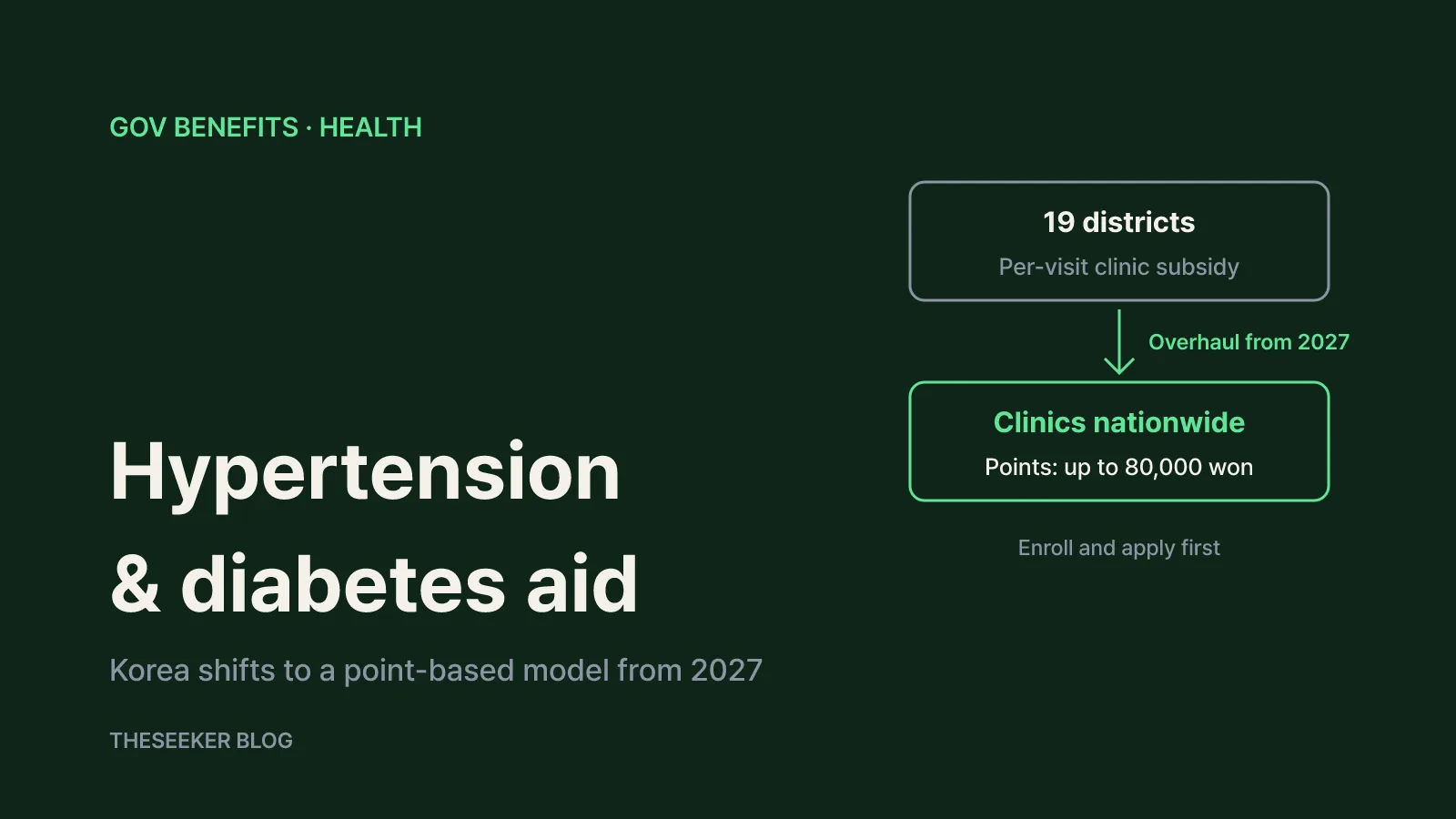
As of October 2026, people in Korea living with high blood pressure or diabetes can draw on two separate public programs. The first is the Hypertension and Diabetes Registration Management Program, run by the Korea Disease Control and Prevention Agency (KDCA) with local governments in only 19 districts, which has subsidized part of clinic and pharmacy costs for registered patients aged 65 and over. The second is the Primary Care Chronic Disease Management Program, run by the Ministry of Health and Welfare and the National Health Insurance Service (NHIS), which is available at participating neighborhood clinics nationwide and offers a lower copay on certain items plus a Health Practice Incentive worth up to 80,000 won a year in points.
The recent headlines about support "expanding nationwide after 14 years" refer to KDCA's announcement that it will overhaul the registry program into an integrated chronic disease management program. That does not mean today's per-visit subsidy is being rolled out across the country. The plan changes how money reaches patients, from automatic per-visit discounts to points earned through participation, while widening who can be managed. The details below come from the ministry's press release and Korean news coverage of KDCA's briefing and the October 2026 parliamentary audit. Final guidelines are still being written, so check with your local public health center (bogeonso) or NHIS before and after the change takes effect.
Two programs currently cover hypertension and diabetes costs
The KDCA registry program (19 districts)
Patients who register with a designated clinic and a local registration and education center receive help staying on treatment and preventing complications. According to Yonhap, the program started in one local government in 2007 and reached 19 in 2012, then stopped growing. That is 19 of Korea's 226 basic local governments, roughly 8.4%, as Medical Times (bosa) reported.
Registered patients aged 65 or older have received 1,500 won off the clinic fee and 2,000 won off the pharmacy fee at each visit, according to an August 2026 report. KDCA put the annual cap at roughly 42,000 to 66,000 won per person, with the higher figure covering cases such as having both conditions. Centers also call patients who drop out of care and offer education and counseling.
The registration centers' coalition says about 450,000 patients are enrolled, linked to 1,603 clinics and 2,325 pharmacies. If you live outside those 19 districts, you were never eligible for this subsidy. KDCA said only about 400,000 of roughly 6.09 million hypertension patients aged 65 and over, around 6.6%, were covered, and that budgets were running out early as the older population grew.
The primary care program (nationwide)
After about five years of pilots, the Ministry of Health and Welfare made this a permanent nationwide program on September 30, 2024. Patients get tests at a participating clinic, agree a one-year care plan, and receive education, counseling and lifestyle support. It is not tied to a region; what matters is whether your clinic takes part.
There are two financial benefits. Copay on the chronic disease management fee, related hypertension and diabetes tests and follow-up consultations falls from the standard 30% clinic outpatient rate to 20%. Patients who walk regularly or keep taking part in clinic services can also earn Health Practice Incentive points worth up to 80,000 won a year. It does not discount all medication or every bill.
What changes in 2027
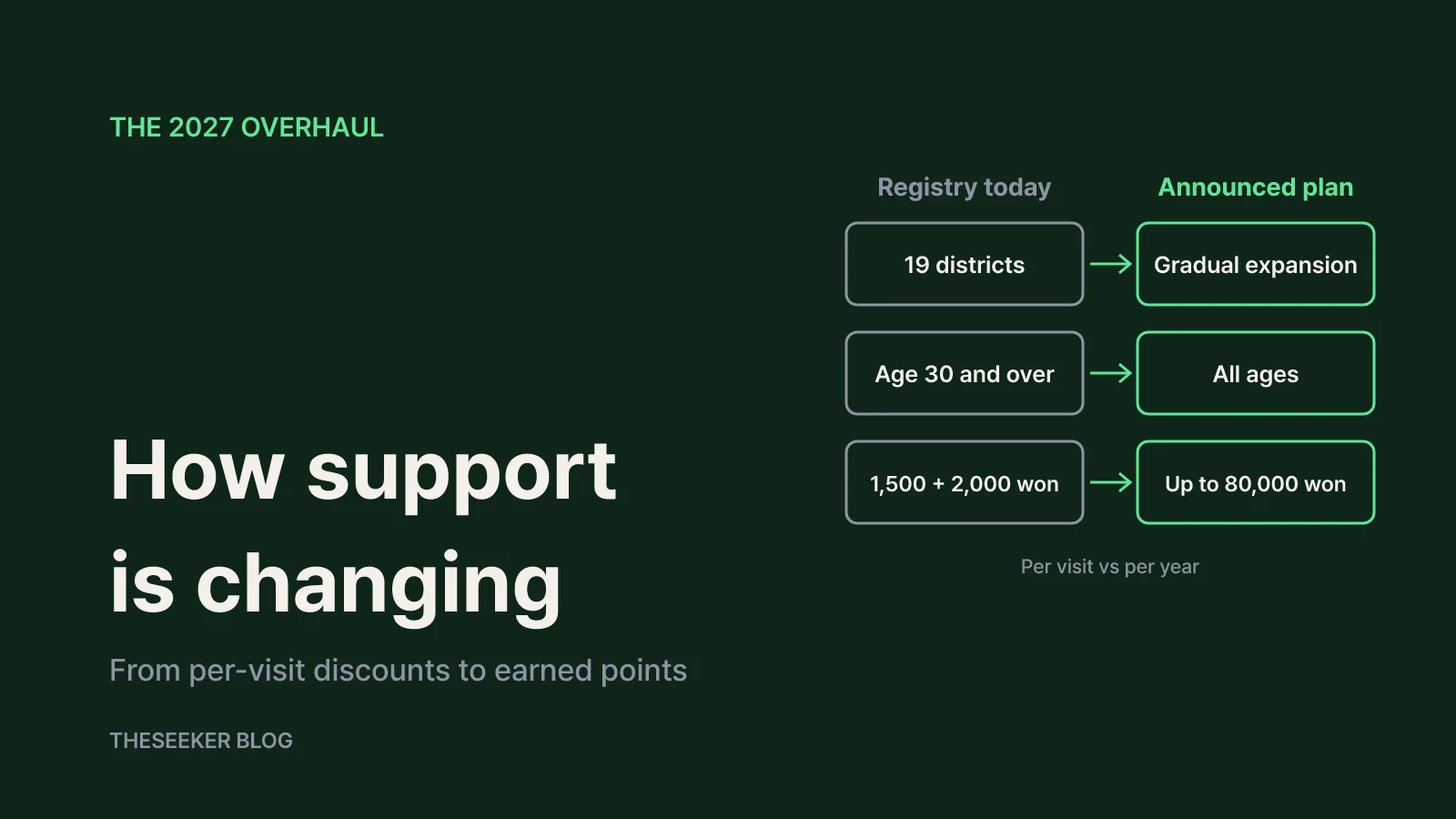
At a briefing on October 1, 2026, KDCA said it would gradually shift from an elderly-focused regional program to an all-age, multi-condition, nationwide system. At the October 8 parliamentary audit, KDCA Commissioner Lim Seung-kwan said the agency will merge the two programs into an integrated chronic disease management program from 2027.
← Swipe to see more
| Item | Current registry program | Announced direction |
|---|---|---|
| Coverage area | 19 districts | Gradual expansion |
| Registration age | 30 and over | All ages |
| Conditions | Hypertension, diabetes | Expanding to major chronic diseases |
| Cost support | 1,500 won clinic + 2,000 won pharmacy per visit (65+) | Health Practice Incentive, up to 80,000 won a year |
| Centers | Registration and education centers | Integrated chronic disease management centers |
| Funding | Central and local budgets | National Health Insurance |
The biggest shift is the cost support. Instead of a discount applied at every visit, patients would earn points by joining the primary care program and meeting activity conditions. KDCA argues this widens the benefit because anyone participating, regardless of age, can receive up to 80,000 won, and says existing registrants will keep receiving regular check-ins and reminders. To make points easier for older patients, the agency said points can now pay clinic bills directly at participating clinics. Clinics would handle ongoing treatment, while public health centers and the new centers focus on education and counseling.
How to check whether you qualify
- Diagnosis: Confirm you are being treated for hypertension or diabetes at a clinic. Both programs start from these two conditions.
- Where you live: Call your local public health center and ask whether your district runs the registry program. If not, the per-visit subsidy never applied, so go straight to the primary care program.
- Age: If you live in a registry district and are 65 or older, ask your center how your subsidy will be handled after the 2027 change.
- Your clinic: Ask the front desk whether it participates in the hypertension and diabetes management service. If not, ask the health center or NHIS for a nearby participating clinic.
Note that the 20% copay applies only to specified items once you enroll at a participating clinic, and the incentive must be applied for separately before points accrue.
How to apply for the Health Practice Incentive
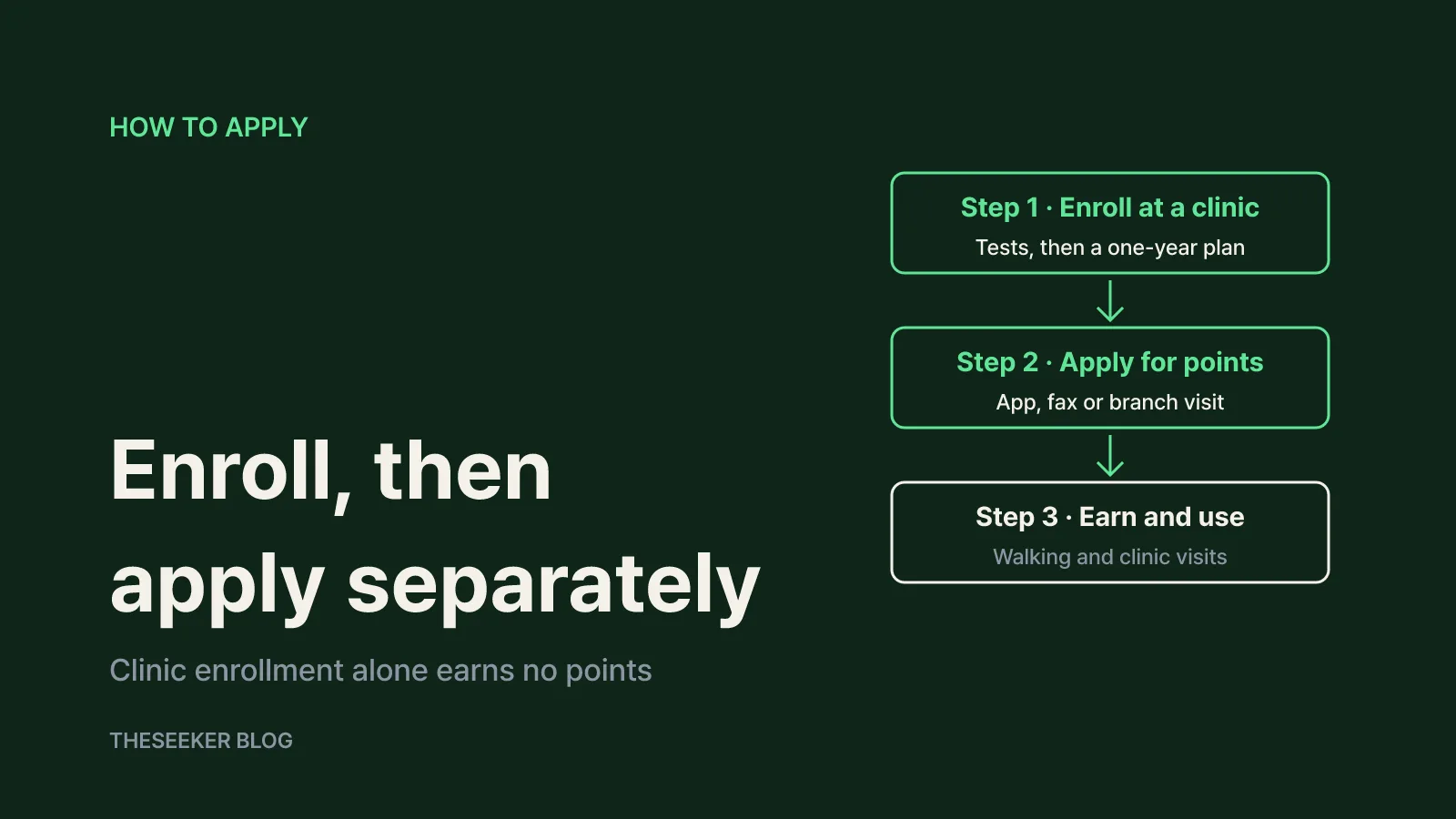
Step 1: Enroll at a participating clinic. Tell the clinic you want to join the management service. It will run tests and set up a one-year plan with follow-up visits.
Step 2: Apply for the incentive. The ministry's press release lists three routes:
- the NHIS app "The건강보험" or the website www.nhis.or.kr
- fax to an NHIS branch office
- in person at an NHIS branch office
If apps are difficult, visiting a branch is the most reliable option. Call ahead to ask what identification or consent is needed if a family member is helping.
Step 3: Earn and use points. Points build up through activities such as walking and continued participation in clinic services. At the 2024 launch, patients ordered a Health Practice Card through the Korea Minting and Security Printing Corporation's "chak" app and used it at clinics or designated online stores. KDCA has since said points can be used to pay directly at participating clinics, so ask your clinic which method it supports.
The debate and what current registrants should do
The plan is contested. The national coalition of registration and education centers has demanded that the government withdraw plans to end central funding for the clinic and pharmacy subsidy in 2027. It says about 5 billion won of the program's roughly 10 billion won central budget would be cut, with about 1 billion won used to add integrated centers in some areas.
At the October 8 audit, Professor Lee Won-young of Chung-Ang University's preventive medicine department said about 40% of 515 surveyed patients would stop clinic visits or medication if support ended, and argued that activity-based points disadvantage rural older patients with limited transport. Committee chair Lee Man-hee urged KDCA to listen to patients and providers before finalizing the merger, so details may still change.
If you are already registered:
- Keep any letters or texts from your registration center.
- Check now whether your clinic participates in the primary care program.
- Choose one incentive application route (app, fax or branch visit) with family before 2027.
- Discuss any changes to your treatment schedule with your doctor rather than adjusting on your own.
Final checklist before you apply
- Is your district a registry program area? Ask your public health center.
- Does your clinic offer the hypertension and diabetes management service? Ask the front desk.
- Have you both enrolled at the clinic and applied for the incentive?
- Do you know whether your points work by card or by direct payment at the clinic?
- Have you checked KDCA and local health center notices for the 2027 guidelines?
In short, this is not an automatic cash payment for anyone with a diagnosis. The 19-district subsidy is set to become point-based from 2027, while clinic enrollment and the Health Practice Incentive are already open nationwide. Confirm the final rules with your local health center and NHIS once they are published.
Sources
Frequently asked questions
I don't live in one of the 19 registry districts. Is there any support for me?
The 1,500-won clinic and 2,000-won pharmacy subsidy only applies to registered patients in those districts. Nationwide, you can enroll in the primary care chronic disease management service at a participating clinic, which lowers copay on specified items from 30% to 20%, and apply separately for the Health Practice Incentive worth up to 80,000 won a year in points.
When will the subsidy for registered patients aged 65 and over change?
The KDCA commissioner told the National Assembly that the program will be reorganized into an integrated chronic disease management program from 2027. KDCA plans to revise guidelines and brief local governments, and lawmakers have asked for careful review, so follow notices from your registration center and public health center.
How do I apply for the Health Practice Incentive?
Apply through the NHIS app "The건강보험" or www.nhis.or.kr, by fax to an NHIS branch, or in person at a branch. This is separate from enrolling in the management service at your clinic.
Is the 80,000 won paid in cash?
No. It is the annual maximum in points earned through activities such as walking and continued participation in clinic services. Points can be used toward clinic bills and other approved uses.
blog.theseeker.io/en/posts/hypertension-diabetes-care-cost-support-korea
Nathan Brooks
Nathan covers eligibility, application steps and deadlines for public support programs, working from government notices and starting with who qualifies.
Read our editorial standards