Found a Neglected Dog in Korea? How to Report and Get Help
Record what you see from a safe distance, call 112 if the situation is urgent, then report to the local district animal protection office or an animal protection center. Owned dogs and strays follow different paths.
 Owen Parker
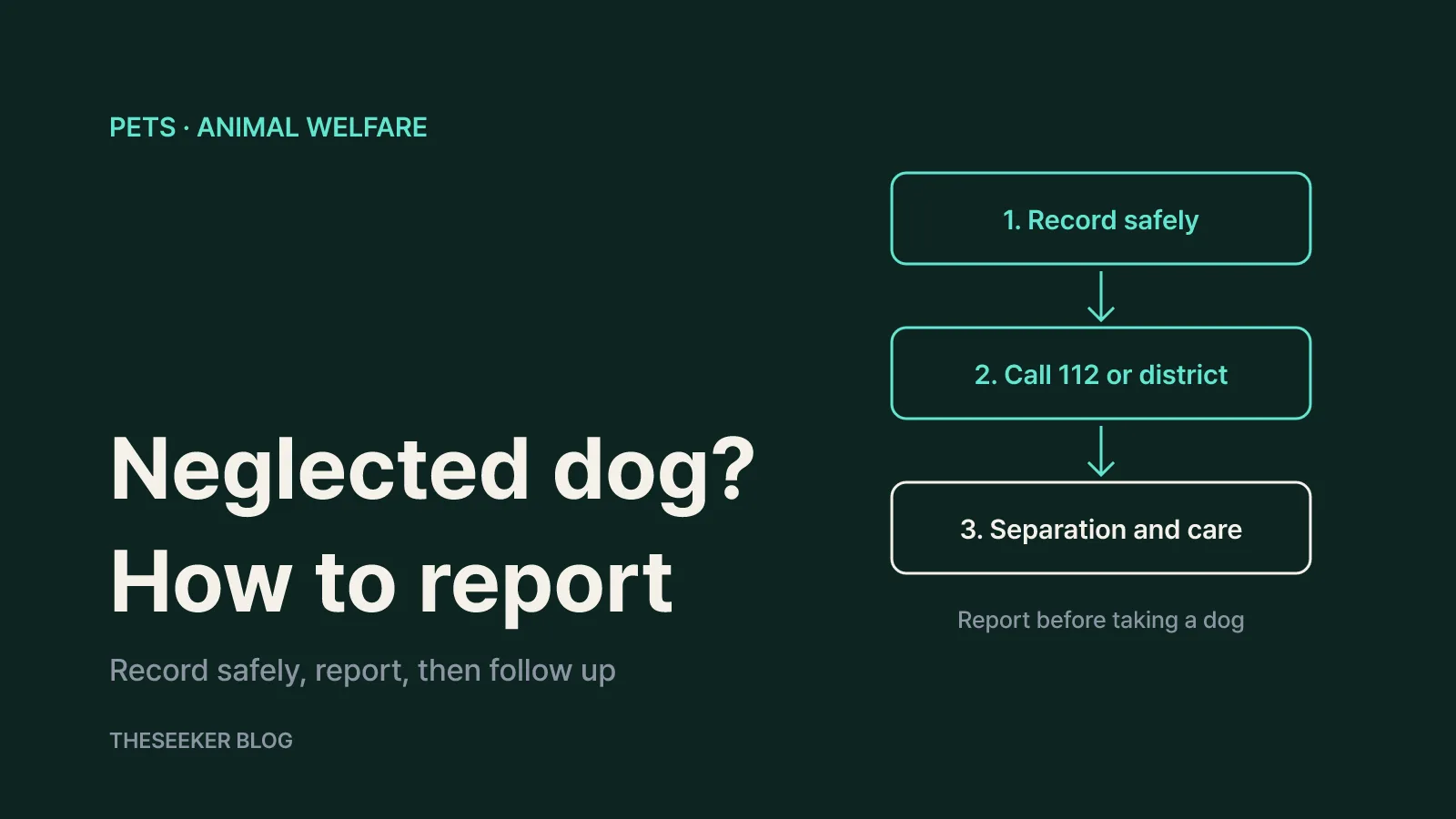
In this post
- First, decide which situation you are in: owned dog or stray
- Collect evidence safely and keep the originals
- Who to call, in order: 112, the district office, then a shelter
- What happens if officials confirm abuse
- Can you take the dog home?
- Penalties under the Animal Protection Act
- After you report
- Sources
- Frequently asked questions
As of October 2026, if you find a dog in South Korea that looks neglected or abused, the short answer is: record what you see from a safe distance, call 112 if the abuse is happening now or the danger is urgent, and also report it to the animal protection team at the local city, county or district office (si/gun/gu) or to an animal protection center. If the dog is a stray with no owner in sight, a report to the district office or a shelter is the standard route. Under Article 39 of Korea's Animal Protection Act, anyone who finds an abused, abandoned or lost animal may report it to the local government or an animal protection center.
A recent viral video of a starving dog being rescued has prompted many people, including foreign residents, to ask what they should actually do in the same situation. This guide is based on public guidance from Korea's national animal protection portal (animal.go.kr), the Ministry of Government Legislation's plain-language law service, the National Institute of Animal Science and Gyeonggi Province. It covers reporting steps and legal rules only. It does not cover first aid or judging a dog's medical condition; that is for the officials who respond and for veterinarians.
First, decide which situation you are in: owned dog or stray
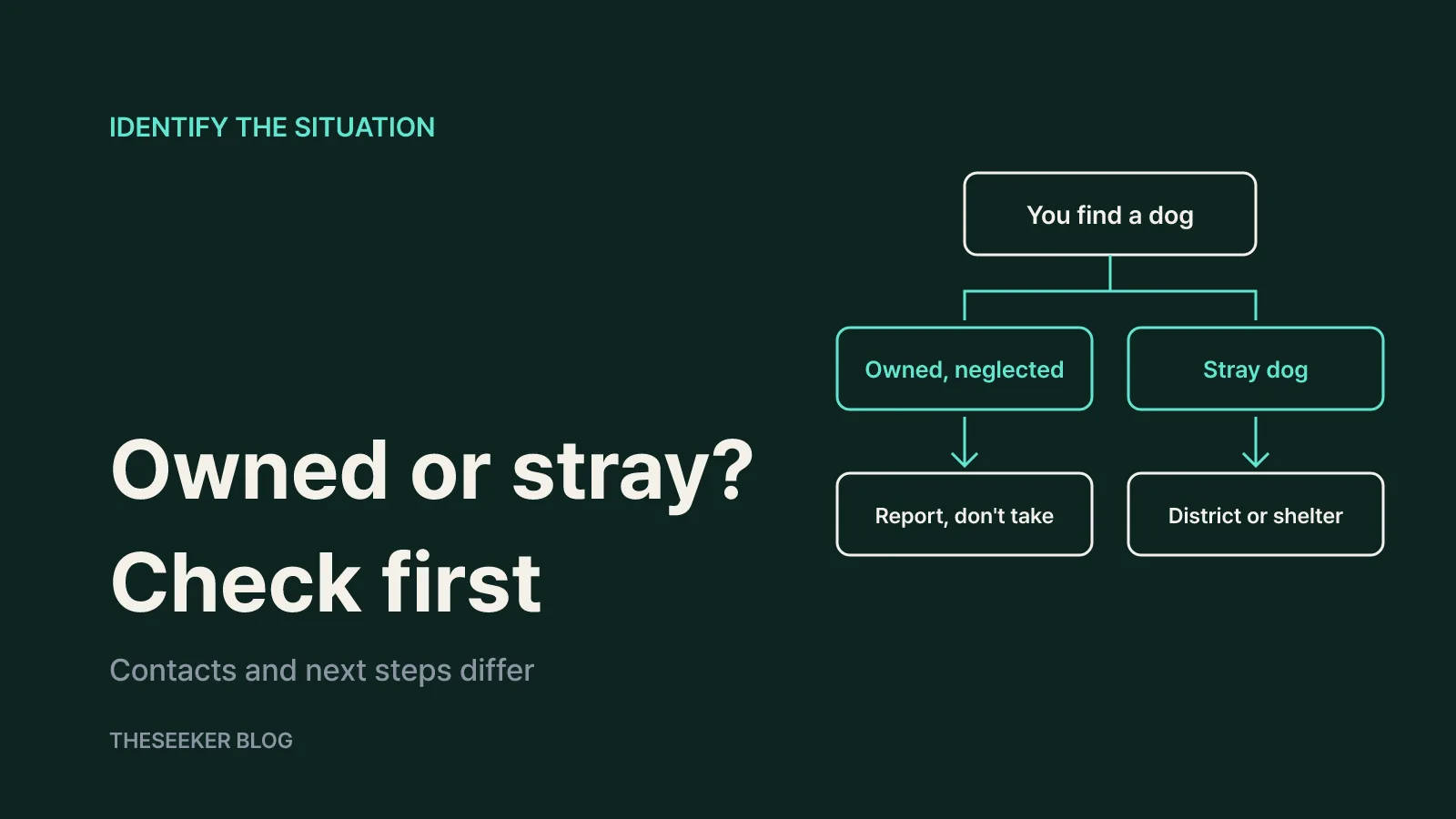
The right contact and the process that follows depend on whether the dog belongs to someone or is roaming without an owner.
An owned dog that seems neglected. A dog chained in a yard with an empty water bowl, no shelter from extreme heat or cold, and visible ribs may be a victim of neglect. Korean law does not limit abuse to hitting or injuring an animal. According to the government's legal guide, the Act defines animal abuse to include failing to take proper action against hunger or illness, or simply leaving an animal neglected (Article 2, item 9). Because the dog legally has an owner, you should not take it yourself. Report it so that officials can act.
A stray or abandoned dog. A dog wandering a road or park, or one that appears to have been dumped, falls under lost-and-abandoned animal reporting. The National Institute of Animal Science suggests you first check whether an owner is nearby, since the dog may have been let off the leash briefly or its owner may already be searching.
If you cannot tell which case applies, do not spend long deciding. Call 112 if the animal is in immediate danger; otherwise describe the situation to the district animal protection team and let them route it.
Collect evidence safely and keep the originals
Weak evidence is one of the main reasons abuse cases stall. Gyeonggi Province advises collecting photos and video before reporting, because a lack of evidence can make it hard to punish the person responsible. A practical checklist:
- Put your own safety first. Do not confront the person you suspect, do not enter private property, and do not move objects at the scene (VeganNews summary).
- Capture the whole scene. Include landmarks that identify the address, the chain or tether, empty food and water bowls, and whether there is any shelter.
- Write down time and place. Note when you saw it, the exact address, what you witnessed, how many animals there were and their visible condition. Separate what you saw yourself from what others told you.
- Build a dated record for ongoing neglect. Several days of the same scene show neglect far better than a single photo.
- Keep the original files. Store the originals and a copy separately rather than only an edited clip, and submit them to the agency handling the report.
One caution: Gyeonggi Province states that posting abuse photos or videos on YouTube or social media is illegal. Give your material to the police and the local government rather than publishing it. The same guidance says that if you find an animal that has already died, you should not bury it straight away; ask investigators to arrange a necropsy so the cause of death can be established.
Who to call, in order: 112, the district office, then a shelter
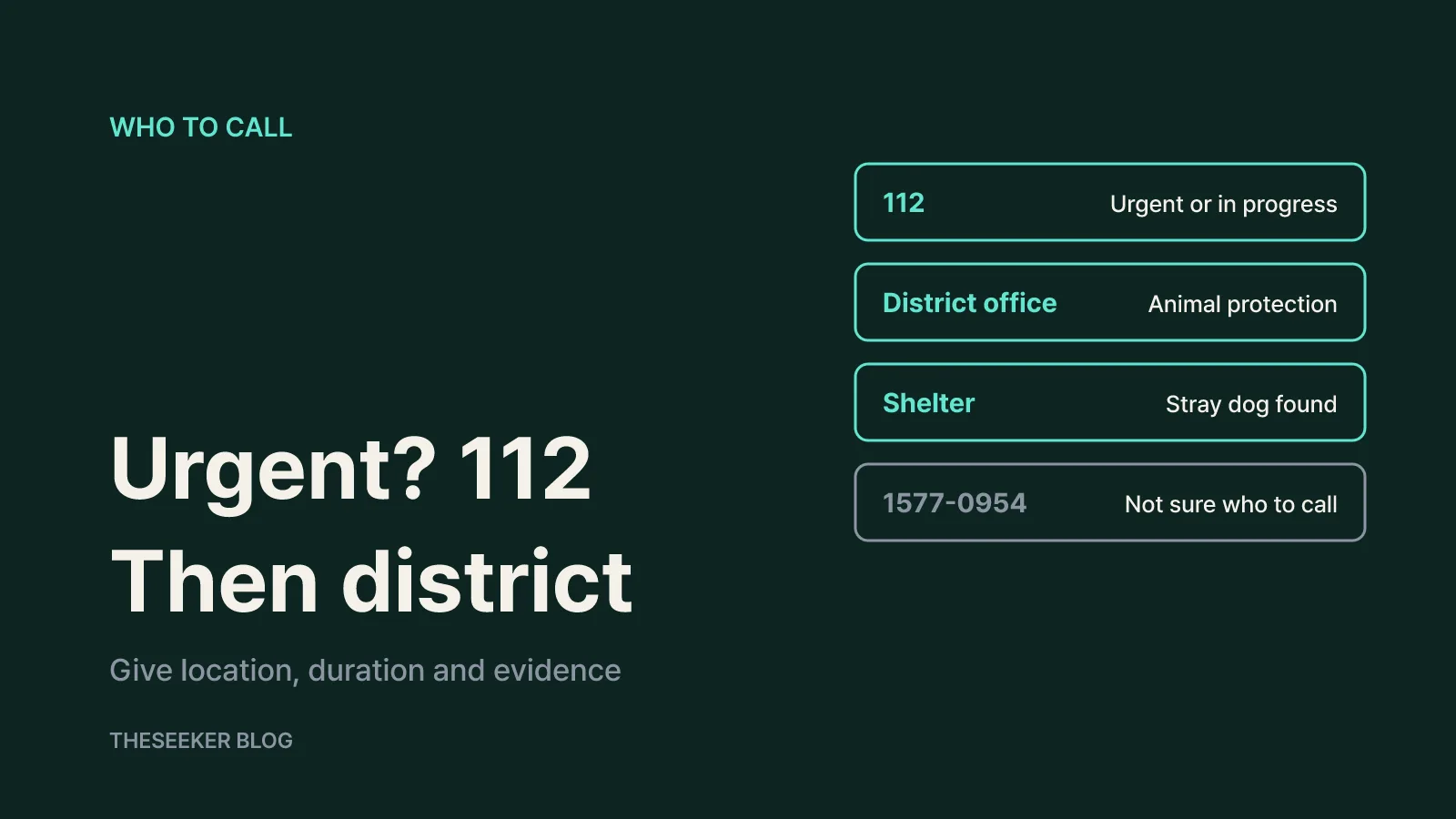
Once you have a record, report without delay. The sequence below covers most cases.
Step 1: Call 112 if it is urgent. If abuse is in progress or an animal's or a person's safety is at immediate risk, call the police on 112 and ask them to attend. Animal abuse is a criminal offence in Korea. Give the exact address and describe what is happening now (Gyeonggi Province guidance).
Step 2: Contact the local animal protection team. Each city, county and district office has staff responsible for animal protection, who act as animal protection inspectors. The national portal lists contacts for each local office. For long-running neglect that is not an emergency, you can start here.
Step 3: For strays, notify an animal protection center as well. The national portal asks people who find an ownerless animal in a public place to report it to the district office or an animal protection center. It also runs an online board for reporting found lost or abandoned animals, and a photo is required.
Not sure who to call? Try 1577-0954. The National Institute of Animal Science lists the animal protection counselling line, 1577-0954, as one way to report a found animal; it can help you reach the right local office.
Keep the report short and specific: the location, how long you have seen the problem, the dog's visible condition and what evidence you have. Korean law protects reporters: Article 39 provides that a reporter's identity must not be disclosed against their will (VeganNews summary).
What happens if officials confirm abuse
If abuse is confirmed, the local government can remove the dog from the owner and place it in protective care. When an animal is injured or appears to need treatment, Gyeonggi Province advises asking the attending police officer to request emergency separation through the local government's animal protection official. Under amendments that took effect in April 2023, the minimum separation period for abused animals was extended from three days to five days.
An owner who wants the dog back cannot simply collect it. According to the government's legal guide, an owner reclaiming an animal held because of abuse or inadequate care must submit a care plan intended to prevent a repeat.
A rescue does not always happen immediately. In that case, Gyeonggi Province suggests asking the police for guidance measures against the suspected abuser: a warning about possible penalties and monitoring around the site. Results are not always communicated to the person who reported, so note the date, the agency and the officer's name and follow up.
Can you take the dog home?
The urge to pick up a thin, frightened dog is understandable, but following the process protects both of you.
Do not take an owned dog. However badly it is kept, it still has a legal owner. Report it and let officials handle any seizure.
Report a stray before anything else. The government's legal guide says that if you cannot find a stray dog's owner, you should report it to the local government or a shelter, or hand it to a police station. The national portal warns that brokering or buying an ownerless animal without reporting it, or capturing it to sell, can bring up to two years in prison or a fine of up to 20 million won; capturing and killing one can bring up to three years or 30 million won.
Adopt through the notice process. Shelters must post a notice on the national portal for at least seven days. If no owner is identified within 10 days of the notice, the local government takes ownership and can rehome the animal under local ordinances. If you hope to adopt, say so when you report, then apply through the shelter after the notice period. If the original owner appears during the notice period, the dog is returned to them.
Penalties under the Animal Protection Act
The government's legal guide summarises the maximum penalties under Article 97:
← Swipe to see more
| Act | Maximum penalty |
|---|---|
| Abuse that kills an animal, such as by cruel methods | 3 years in prison or 30 million won |
| Injuring with tools or drugs, or leaving in extreme heat or cold to cause suffering | 2 years or 20 million won |
| Capturing and killing an ownerless animal | 3 years or 30 million won |
| Capturing an ownerless animal to sell, or knowingly brokering or buying one | 2 years or 20 million won |
| Abandoning a companion animal | Fine of up to 3 million won |
According to Gyeonggi Province, since the April 2023 amendments, breaching basic care duties, such as failing to provide minimum space or food, in a way that causes a companion animal's death also counts as abuse and carries up to three years or 30 million won. The same reform banned tethering dogs on leads shorter than 2 metres. A conviction can also include up to 200 hours of mandatory classes or a treatment programme. Courts set actual sentences case by case, so read the table as statutory maximums.
In a 2022 national survey, 13.1% of respondents said they would take no action after witnessing animal abuse, and the top reason (45.6%) was not wanting to get into a dispute (Gyeonggi Province). Reporter protection and these penalties are reasons not to stay silent.
After you report
- Follow up. Record the agency, officer and date, and ask about the outcome a few days later.
- Keep documenting. If nothing changes, add dated records and report again.
- Check shelter notices. If you reported a stray, look for it under protected animals on animal.go.kr and contact the shelter if you want to adopt.
Recording safely, reporting to the right place and following through is the most reliable way to turn concern for a neglected dog into real help.
Sources
Frequently asked questions
What number do I call to report animal abuse in Korea?
Call 112, the police, if abuse is happening now or the situation is urgent. For non-emergency neglect, contact the animal protection team at the local city, county or district office. The counselling line 1577-0954 can help you find the right office.
Will the owner find out that I reported them?
Article 39 of the Animal Protection Act provides that a reporter's identity must not be disclosed against their will. Even so, avoid confronting anyone at the scene and submit evidence you gathered from a safe distance.
Can I keep a stray dog I found in Korea?
Report it first to the local government or an animal protection center, or hand it to a police station. Shelters post a notice for at least seven days; if no owner is identified within 10 days of the notice, the local government owns the dog and can rehome it. Ask to adopt through the shelter.
Should I post abuse videos online to raise awareness?
Gyeonggi Province states that posting abuse photos or videos on YouTube or social media is illegal. Submit the original files to the police and the local government as evidence instead.
What if the dog is not rescued after I report?
Ask the police for guidance measures against the suspected abuser, such as a warning and monitoring of the site. Check the outcome with the officer in charge and report again with new dated evidence if the neglect continues.
blog.theseeker.io/en/posts/neglected-dog-animal-abuse-report-rescue-korea
Owen Parker
Owen covers the care, health and costs of living with pets, drawing on guidance published by public agencies and veterinary associations.
Read our editorial standards