EV Downsides: Charging Hassles, Winter Range, Resale Value
Most EV regret comes down to where you charge, how cold your winters are and how long you plan to keep the car. Here is what official test data and large fleet studies say, plus a checklist to run before you buy.
 Ryan Mitchell
In this post
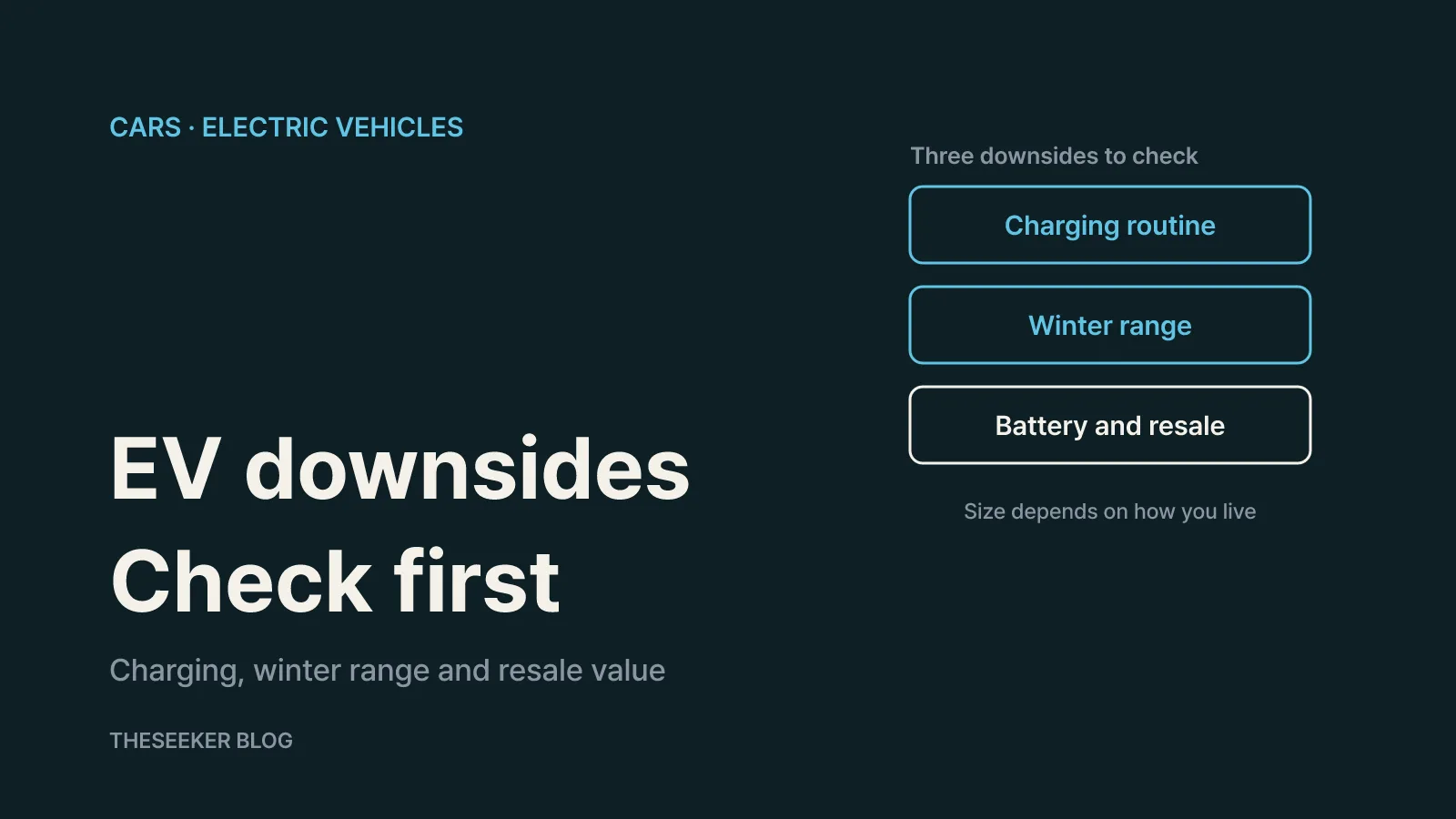
The biggest downsides of electric cars are charging logistics if you cannot plug in at home, a noticeable range loss in cold weather, and resale values that can suffer because buyers cannot easily see a battery's condition. None of these hits every driver equally. As of October 2026, U.S. government test guidance, Korean certification data and a large real-world battery study all point to fairly specific conditions that make each downside bigger or smaller. This guide breaks down the common reasons people regret buying an EV and turns them into questions you can answer before signing anything.
A quick note on framing. Headlines claiming EVs are "junk after three years" usually generalize from a handful of cases, while claims that an EV is "always cheaper to own" often skip charging access and how long you will keep the car. Below, only verifiable figures are used, and where no reliable number exists, the guide tells you what to check instead.
Charging hassles: home charging changes everything
For many owners, the first frustration is not range but routine. With a gas car, refueling is a five-minute stop. With an EV that depends on public charging, you have to find a working charger, confirm it is free, wait while it charges and sometimes move the car afterward. Drivers who can charge overnight in a garage or at work barely notice this. Drivers who rely on public DC fast chargers repeat the process every week.
Fast charging is also slower near the top of the battery. Geotab's battery health analysis notes that DC charging speeds drop significantly after about 80% state of charge, a behavior known as tapering. On a road trip, that means stopping around 80% and planning the next stop is usually quicker than waiting for 100%. If you often drive long distances, that planning becomes part of every trip.
Home charging has its own costs. According to the U.S. Department of Energy's Alternative Fuels Data Center, a residential Level 1 setup can cost from $0, if no extra equipment is needed, to $900, while a residential Level 2 charger typically ranges from $380 to $690. Installation for a home Level 2 unit is cited at roughly $1,300 per connector before labor and permitting, and the total depends heavily on your existing wiring and whether an electrical service upgrade is required. The AFDC also stresses that installations should be handled by a licensed electrical contractor with the proper permits. Renters and condo owners should confirm with the landlord or association before assuming home charging is possible.
In practice, charging pain sorts drivers into three groups:
- Those with reliable home or workplace charging, for whom charging happens while the car is parked anyway.
- Those relying on public fast chargers, for whom charging time becomes part of the weekly schedule.
- Frequent long-distance drivers or people in areas with sparse chargers, who need to plan routes and check charger reliability in advance.
Winter range: look for cold-weather numbers, not just the sticker
Cold-weather range loss is well documented. Fueleconomy.gov, run for the U.S. Department of Energy and EPA, says that at 20°F with the cabin heater on, EV range can drop by 41% in mixed city and highway driving, and efficiency by roughly 39%. About two-thirds of the extra energy goes to heating the cabin. Without the heater, range is only about 12% lower than at 75°F. In other words, most winter loss comes from keeping you warm, not from the battery alone. These estimates come from a 2019 AAA test, so newer models with heat pumps may do better, but the direction is clear.
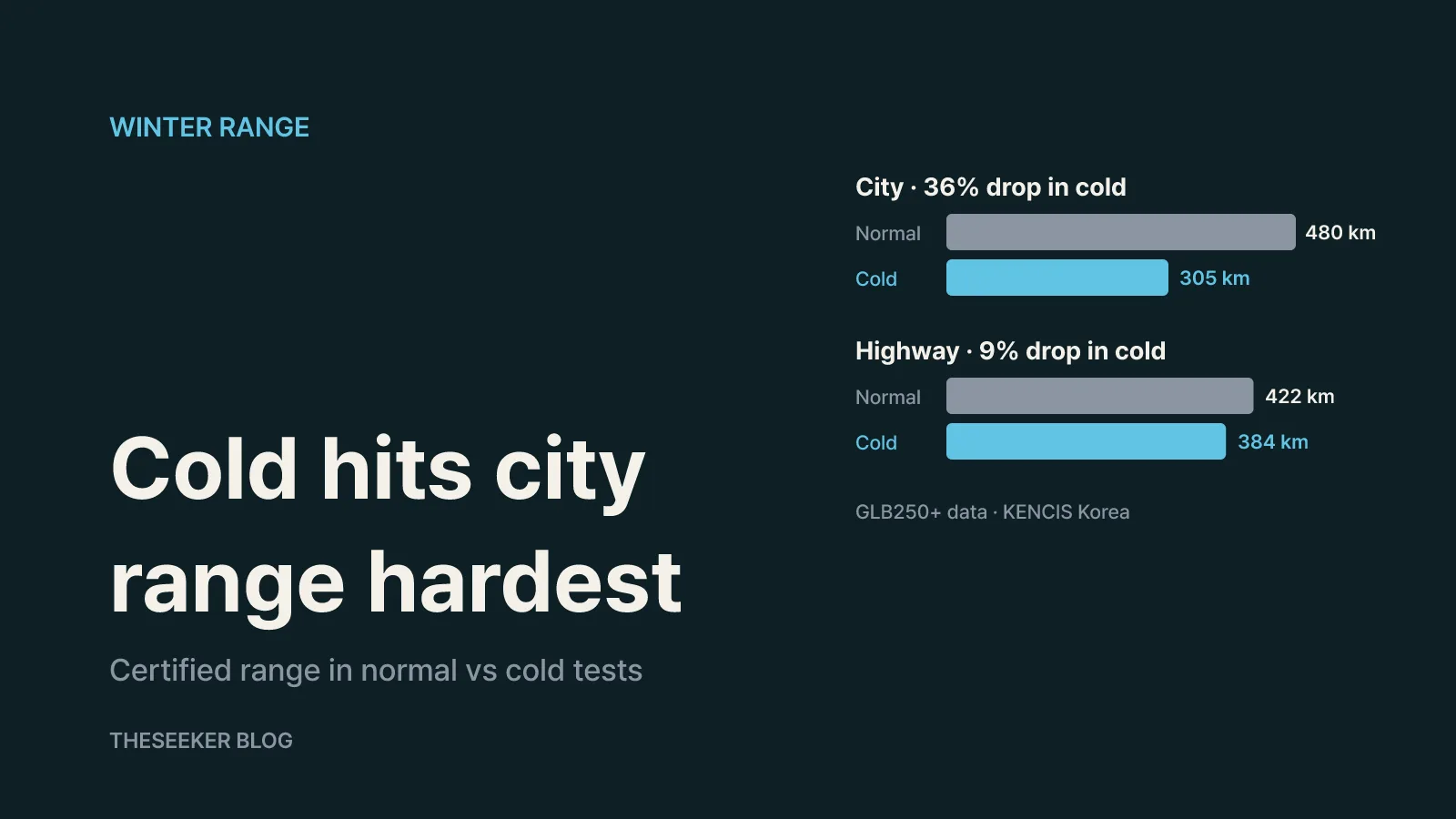
The EPA range on a U.S. window sticker does not split out a cold-weather figure, which is why Korea's certification data is a useful illustration. South Korea's National Institute of Environmental Research publishes certified EV range at both room temperature and low temperature, broken into city, highway and combined. For example, the Mercedes-Benz GLB250+ certified there on October 26, 2026 is listed at 454 km combined at room temperature and 340 km combined in the cold, so the cold figure is about 75% of the normal one.
The city-versus-highway split is even more revealing. The same car's city range falls from 480 km to 305 km, about 36%, while its highway range drops from 422 km to 384 km, about 9%. Stop-and-go traffic keeps the heater running longer for every mile covered. If your winter commute is mostly congested urban driving, plan around the worst case rather than the advertised combined figure.
Fueleconomy.gov's mitigation tips are simple: preheat the cabin while the car is still plugged in, use heated seats instead of blasting the cabin heater, park in a garage when you can, and check tire pressure, which drops in cold weather and increases rolling resistance.
Battery life and resale value: separate the two worries
Concerns about weak used EV prices mix two questions. Does the battery actually wear out quickly? And even if it does not, will the market still pay less? Treating them separately makes the decision clearer.
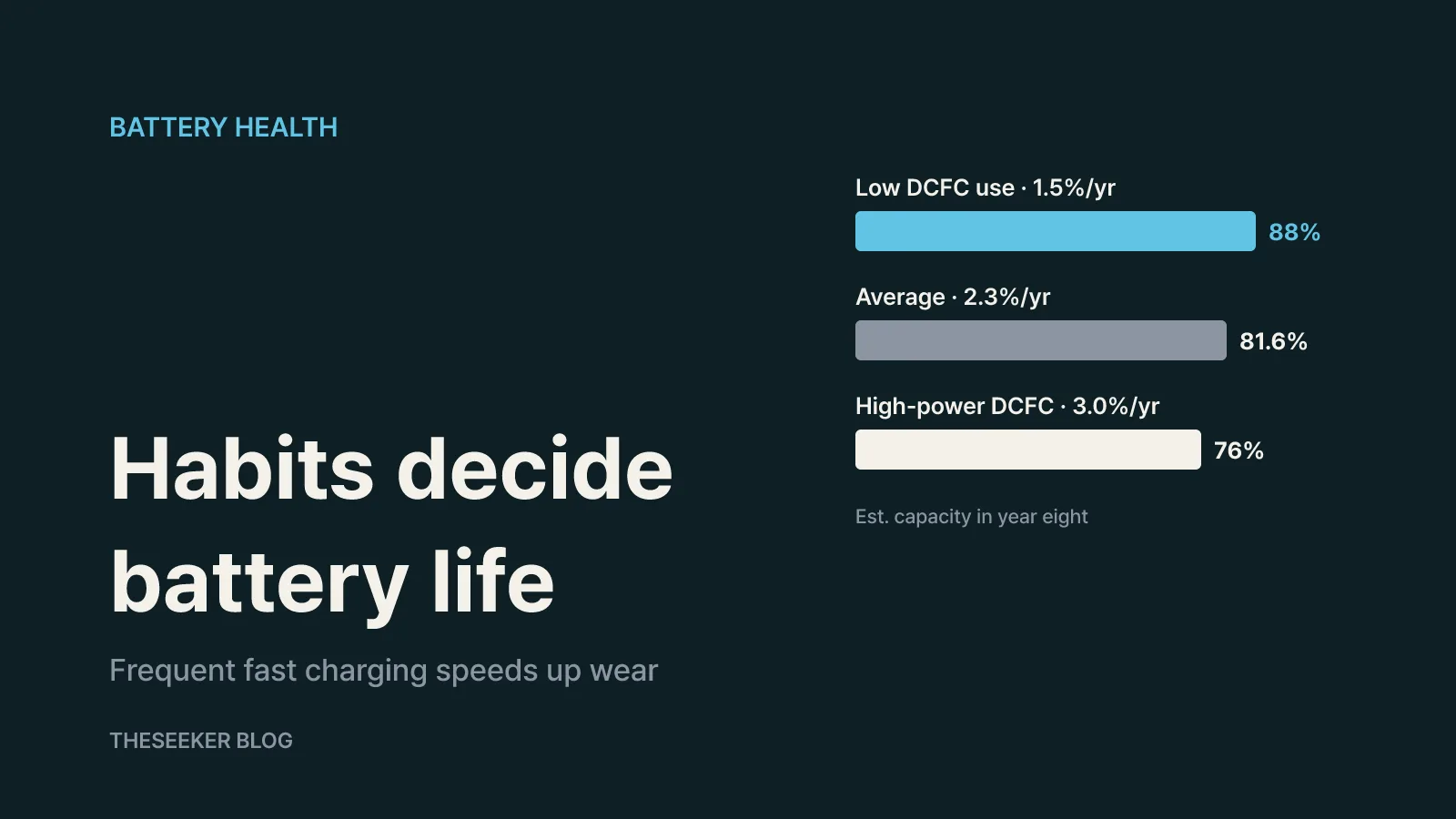
On the first question, the data is more reassuring than the headlines. Geotab analyzed telematics data from more than 22,700 vehicles across 21 models and found an average capacity loss of 2.3% per year, which projects to about 81.6% of original capacity after eight years. Charging habits mattered a lot. Vehicles using DC fast charging for less than 12% of sessions lost about 1.5% per year, while those that fast charged frequently and often above 100 kW lost about 3.0% per year, projecting to roughly 88% versus 76% after eight years. Vehicles in hot climates degraded about 0.4 percentage points faster per year than those in mild climates, and many EVs showed a sharper drop in the first year or two before leveling off. The dataset is mostly fleet vehicles, so individual cars can differ, but it does not support the idea that batteries are finished after a few years.
The study also challenges the strict 20-80% charging rule. Degradation only sped up noticeably when vehicles spent more than 80% of their total time at very high or very low charge levels, partly because manufacturers build hidden software buffers into the battery. Occasionally charging to full is far less important than relying on high-power fast charging every day.
On the second question, resale value can be weak even when the battery is healthy. Used buyers struggle to verify battery condition, new models keep improving range and charging speed, and new-car price cuts or changes in purchase incentives shift the baseline for used prices. Geotab notes that degradation affects resale value as well as range and performance. That makes your ownership horizon important: if you plan to trade in after a few years, depreciation is a larger share of total cost, while long-term owners should focus more on battery warranty terms.
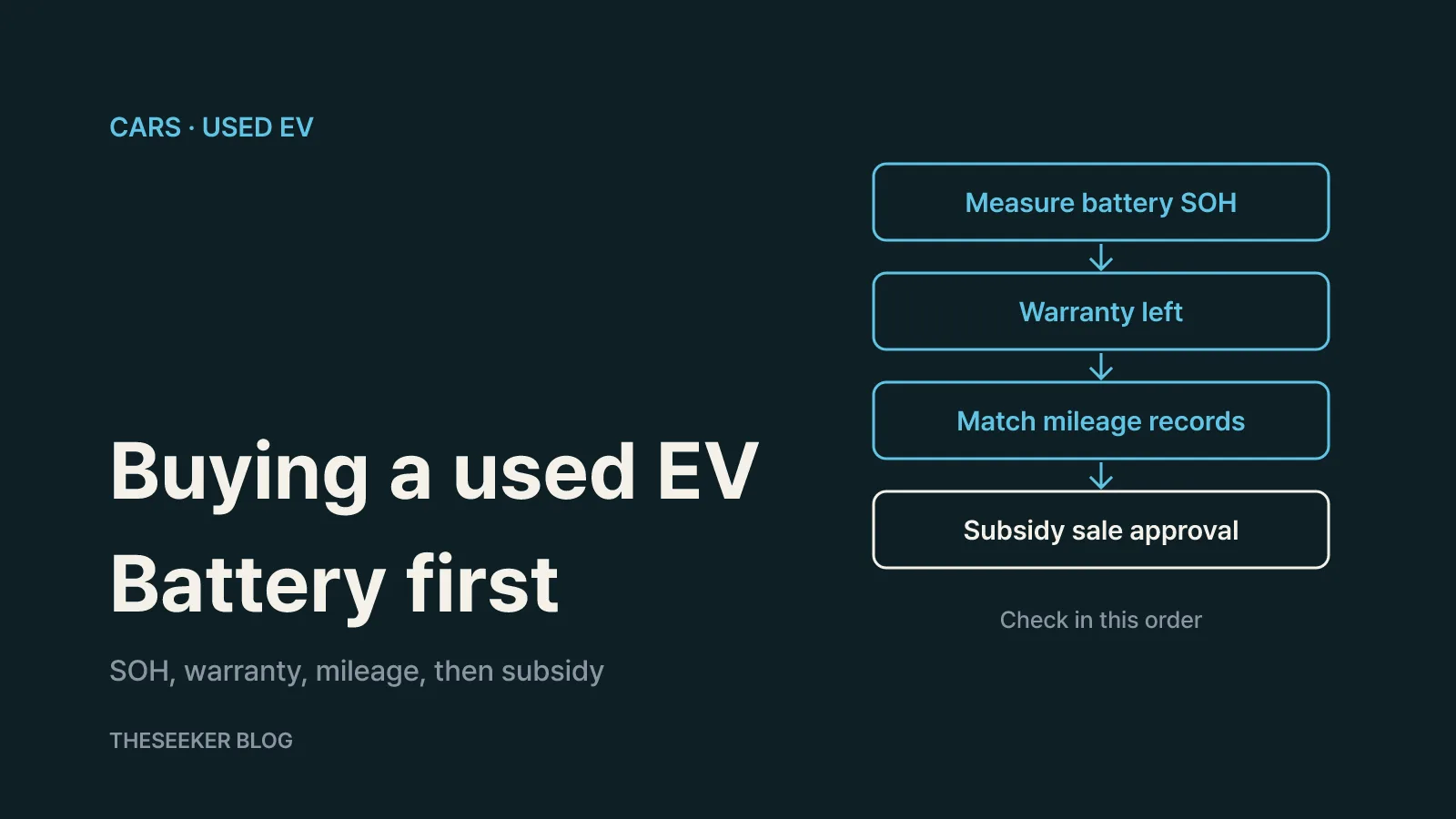
Whether buying used or selling, documented battery health is your best defense. Ask whether a dealer or the car's own diagnostics can report state of health (SOH), and confirm the remaining battery warranty period, mileage limits and whether coverage transfers to the next owner.
Pre-purchase checklist
If you can answer yes to most of these, EV downsides are likely to feel small. If many answers are no, compare a hybrid or other options side by side.
- Do you have reliable Level 1 or Level 2 charging at home or work, and have you confirmed installation is allowed and what it will cost?
- Is your typical daily mileage comfortably below the car's realistic winter range in your kind of driving?
- For winter road trips, do you know where fast chargers are on your routes, and are you comfortable stopping at around 80%?
- Have you decided how long you will keep the car and included expected depreciation in your total cost?
- Have you checked the battery warranty's years, mileage limits and transferability?
- Will you need high-power fast charging almost daily? If so, have you accounted for potentially faster battery wear?
The goal is not to decide whether EVs are good or bad, but to know how large each downside will be in your own situation. Settling charging access, winter driving patterns and ownership length up front prevents most of the regret people only discover after purchase. Figures change by model and test date, so recheck certification data and warranty documents right before you sign.
Sources
- KENCIS 전기차 1회충전주행거리 인증현황 (국립환경과학원)
- Fuel Economy in Cold Weather (fueleconomy.gov, U.S. DOE·EPA)
- How long do electric car batteries last? The updated guide to real-world EV battery health (Geotab)
- Procurement and Installation for Electric Vehicle Charging Infrastructure (Alternative Fuels Data Center, U.S. DOE)
Frequently asked questions
How much range do electric cars lose in winter?
It depends on the model and driving. Fueleconomy.gov says range can drop 41% at 20°F with the heater on in mixed driving, but only about 12% without cabin heating. Korean certification data shows one 2026 model keeping about 75% of its combined range in the cold, with a much larger loss in city driving than on the highway.
How long do EV batteries last?
Geotab's analysis of more than 22,700 vehicles found average capacity loss of 2.3% per year, projecting to about 81.6% after eight years. Frequent high-power fast charging raised that to about 3.0% per year. Individual vehicles vary, so check battery health reports and warranty terms.
Is it bad to only use DC fast charging?
It works, but it can speed up battery wear. In the same study, vehicles with low fast-charging use lost about 1.5% per year versus about 3.0% for frequent high-power users. Charging also slows sharply above roughly 80%, adding time at each stop.
What should I check before buying a used EV?
Ask for a battery state-of-health report, confirm the remaining battery warranty period and mileage limit, and check whether coverage transfers to you. If you drive in cold climates, compare the model's real-world winter range as well.
blog.theseeker.io/en/posts/electric-car-downsides-charging-winter-range-resale
Ryan Mitchell
Ryan covers buying, insuring and maintaining a car, checking terms against manufacturer and agency publications so the options are easy to compare.
Read our editorial standards