Certifications in Your 50s in Korea: How to Choose
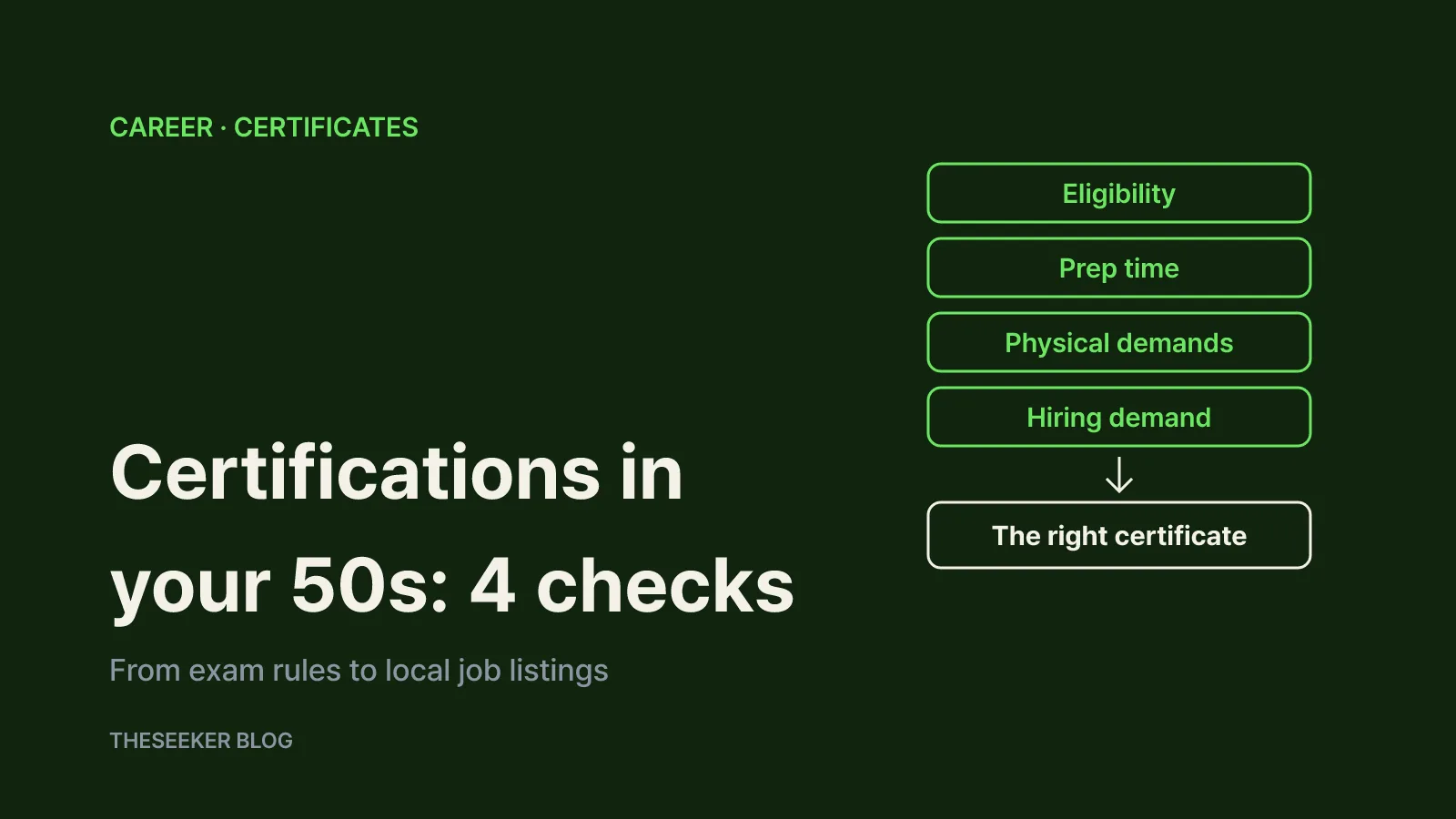
Choosing a certification in your 50s in Korea works best when you screen it on 4 checks: eligibility, preparation time, physical demands and local hiring demand. Here is what the official rules say about Craftsman-level exams, the care worker licence and training subsidies.
 Hannah Price
In this post
- Screen every certification on 4 checks
- The entry barrier: Craftsman exams have no restrictions
- Care work: 320 training hours, then a state exam
- Technical trades: what to check before a Craftsman exam
- Paying for training: the Tomorrow Learning Card
- Turning a certificate into a job
- Sources
- Frequently asked questions
As of October 2026, the most reliable way to choose a certification in your 50s in Korea is to screen every option on 4 checks before you pay for a course: who is allowed to sit the exam, how long preparation takes, how physically demanding the work is, and whether employers near you actually ask for it. Two routes stand out because their entry rules are clear. Korea's national technical qualifications at the Craftsman (gineungsa) level have no eligibility restrictions at all, and the care worker (yoyang bohosa) licence is open to anyone who completes a set training course and passes a state exam. Training fees can be partly covered by the government's Tomorrow Learning Card, though you will usually pay a share yourself. Everything below is drawn from the public notices of the bodies that run these schemes, and no certificate on its own guarantees a job.
Screen every certification on 4 checks
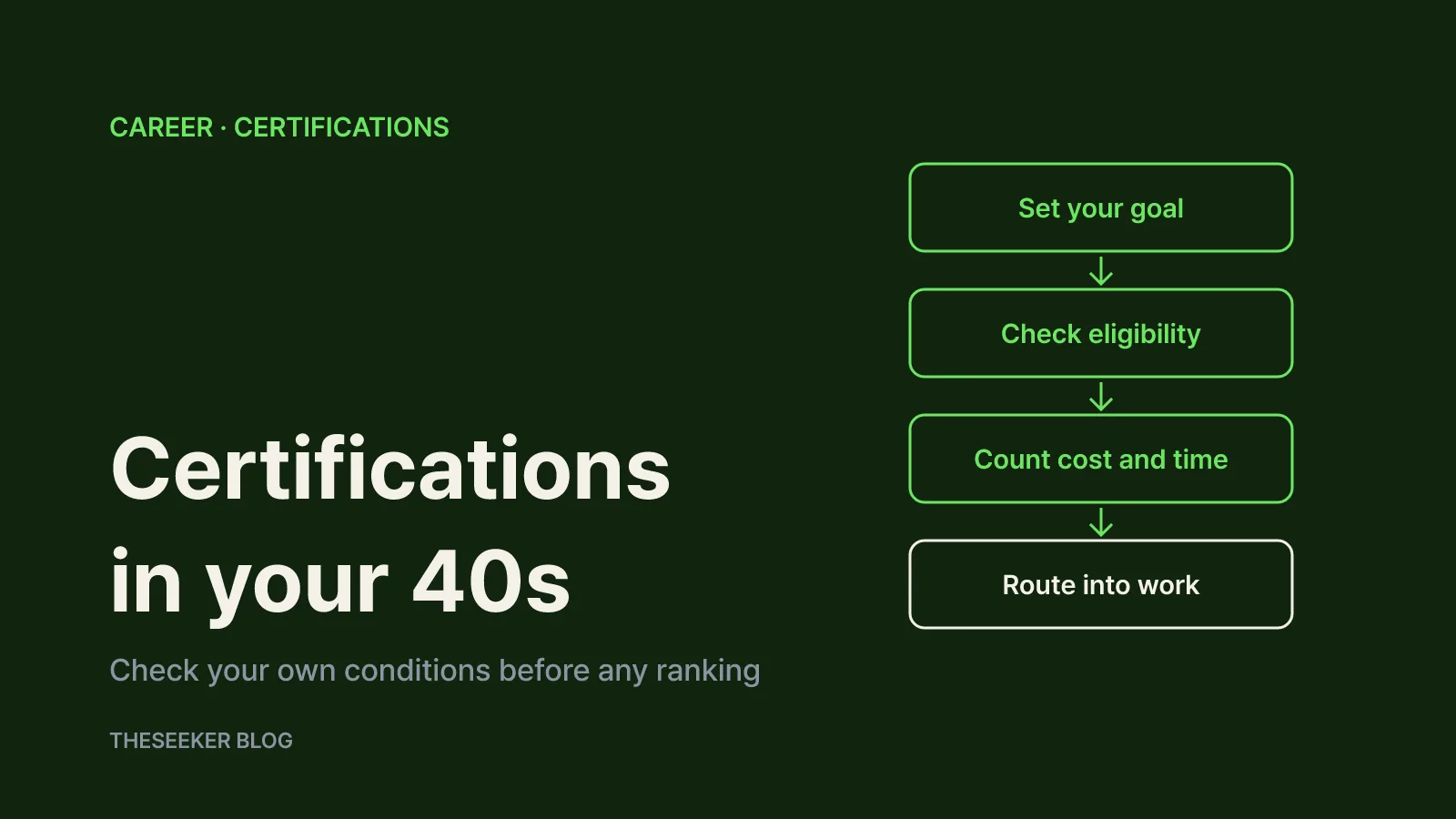
Lists of "best certifications for people over 50" rarely know anything about your situation. Before you shortlist anything, fill in four columns.
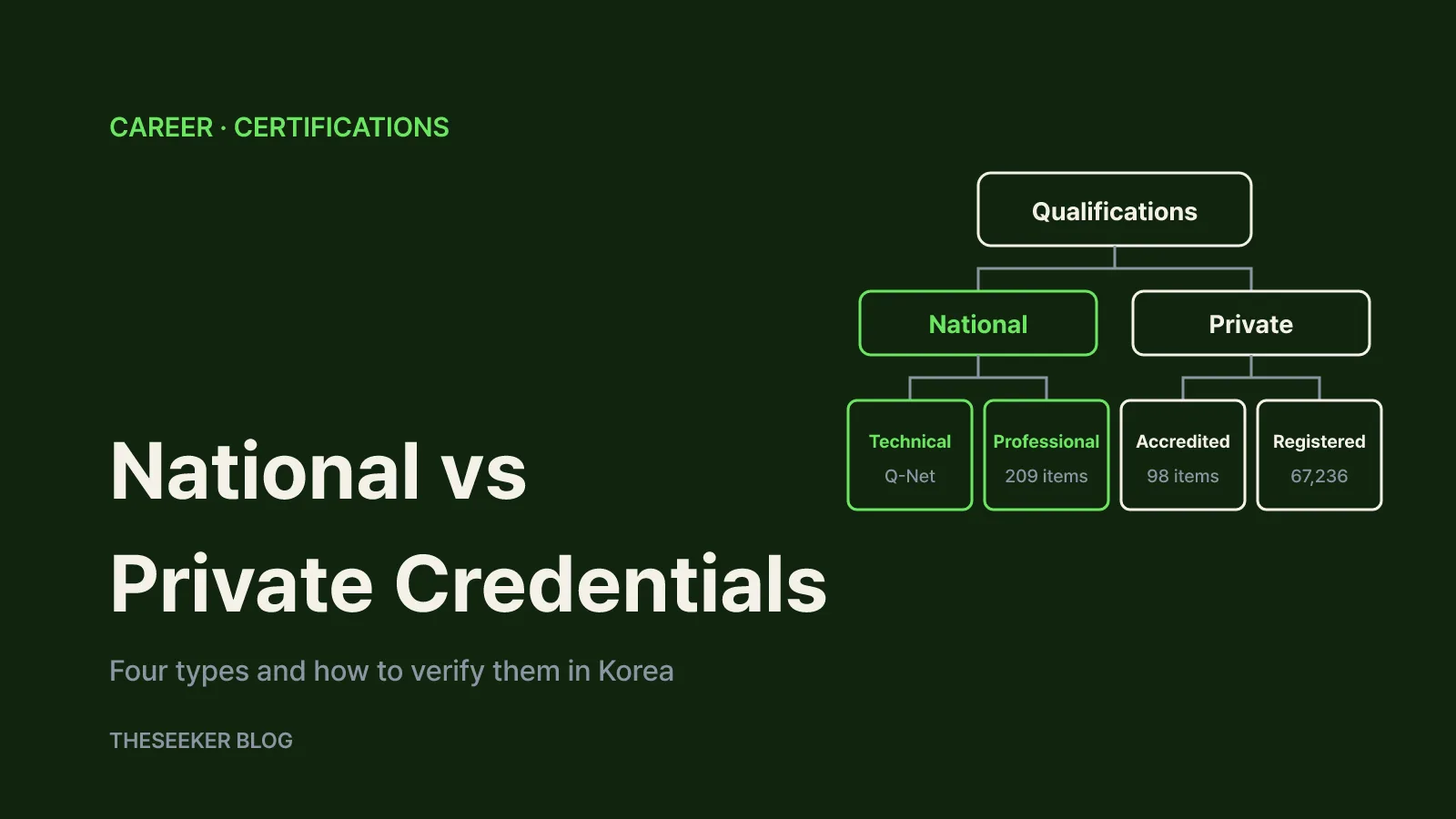
Eligibility. Some qualifications require a degree or years of relevant experience, so you may not be able to apply yet. In Korea, national technical qualifications set different rules for each grade, while national professional licences and private certificates are governed by their own agencies.
Preparation time. Whether there are separate written and practical exams, or a mandatory number of training hours, decides when you can realistically start earning. If you are living on savings or severance after leaving a long-term employer, a few months matters.
Physical demands. Care work means helping people move, wash and eat. Many technical jobs happen outdoors, in shifts or around noise and dust. Passing an exam is one question; doing the work every day is another.
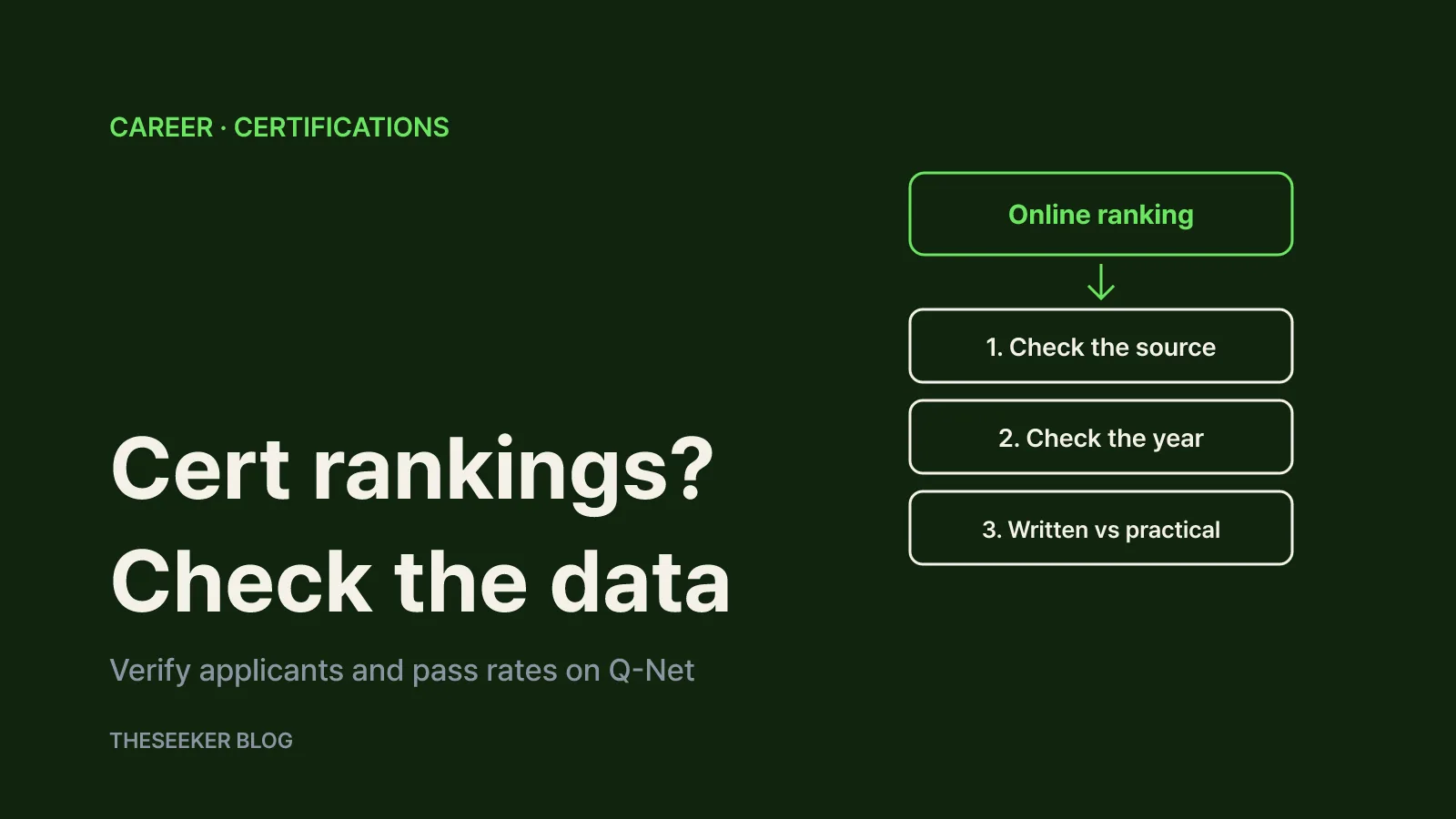
Local hiring demand. The same certificate can be in steady demand in one city and rarely requested in another. Search the government job portal Work24 (work24.go.kr) for the certificate name plus your area, and note whether listings make it mandatory or merely preferred, and what hours they offer.
Whatever survives all four columns is your real shortlist.
The entry barrier: Craftsman exams have no restrictions
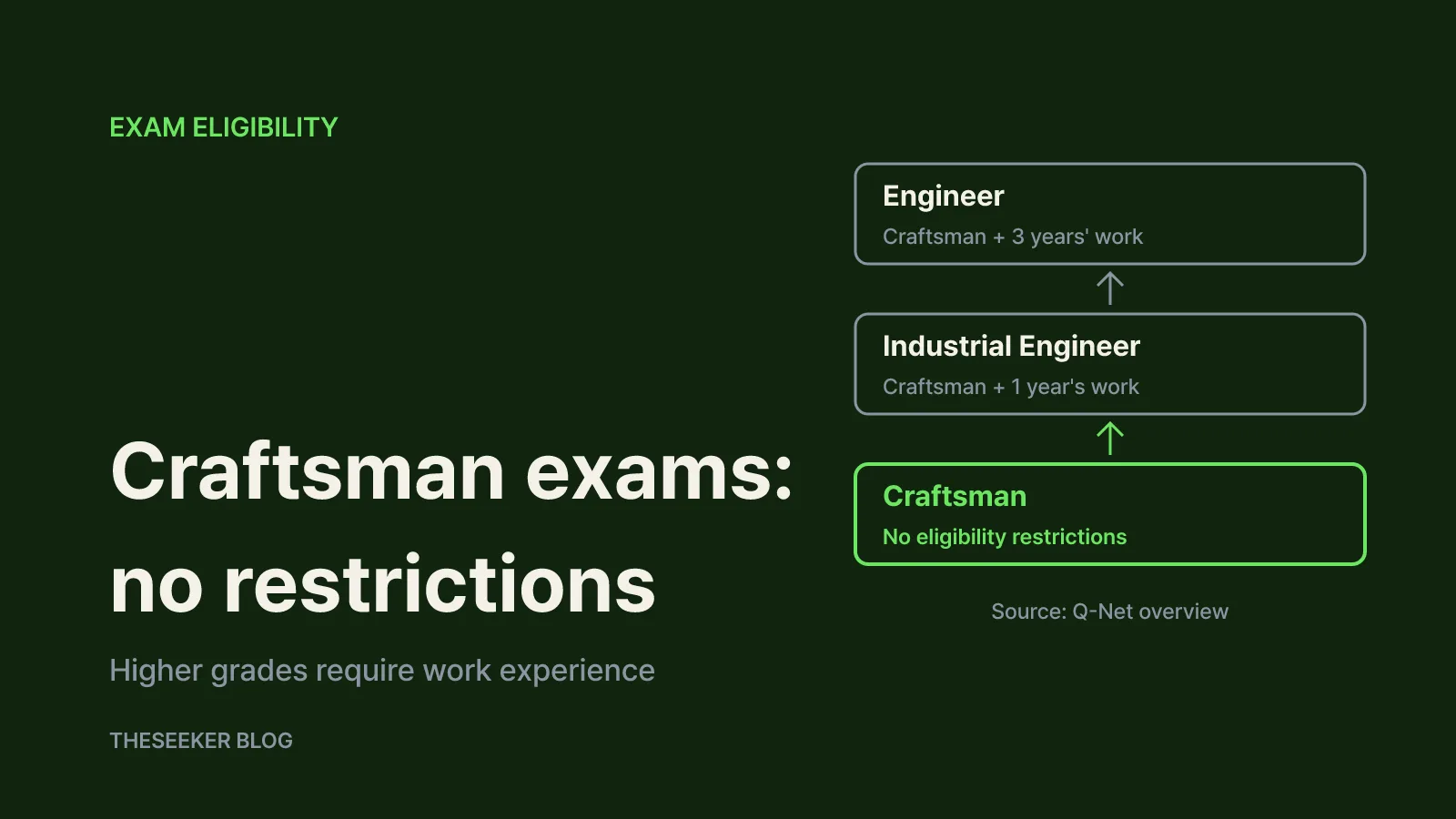
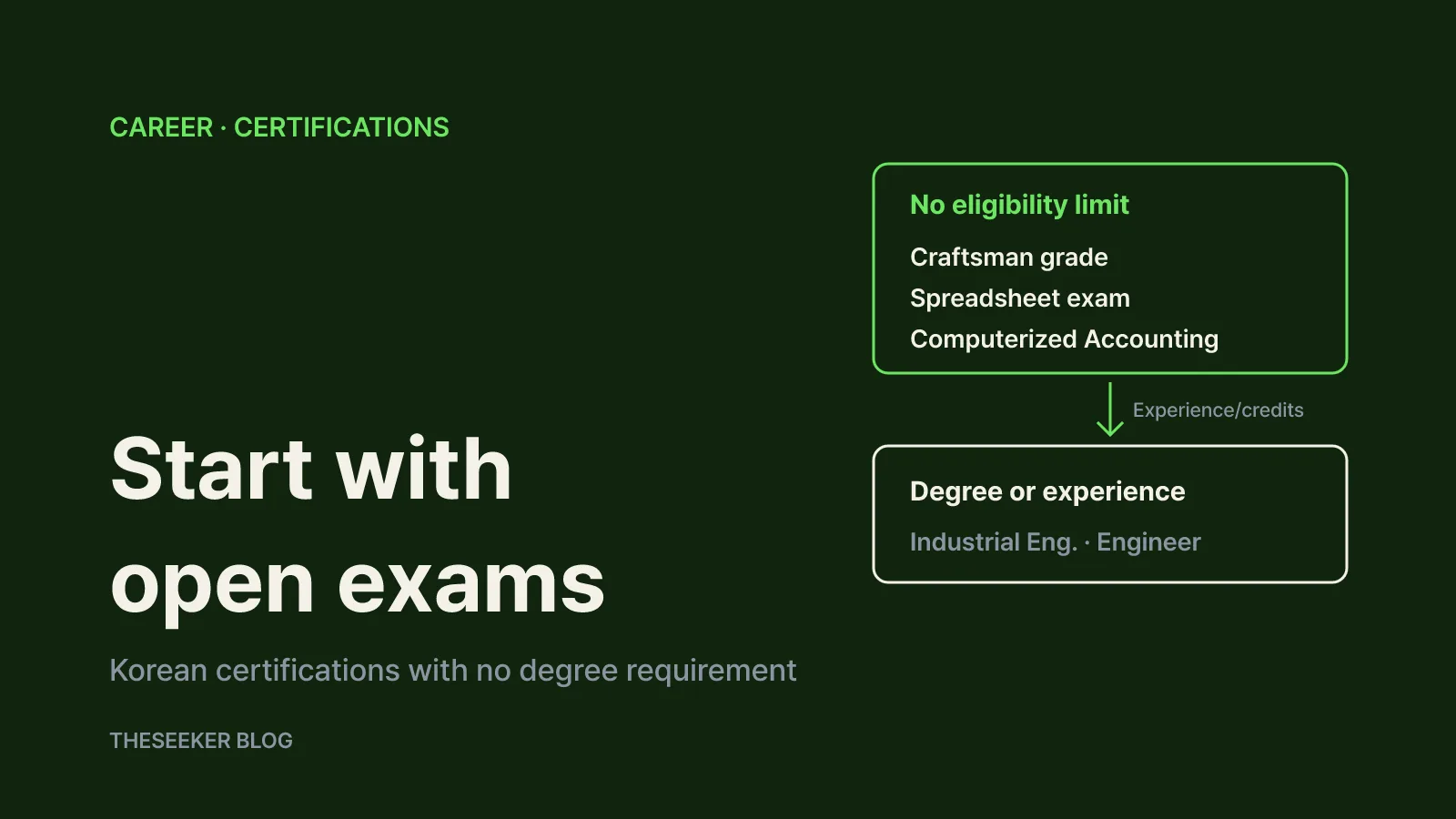
The first rule to understand is how eligibility rises with each grade. According to the Q-Net eligibility overview run by HRD Korea, the Craftsman grade has no eligibility restrictions. Age, education and work history do not matter. Familiar examples include the forklift operator, landscaping and Korean cuisine cook Craftsman qualifications.
The next grade up, Industrial Engineer, introduces conditions. The same overview lists options such as 1 year of practical experience after earning a Craftsman qualification, graduation from a related junior-college programme, or 2 years of practical experience. The Engineer grade asks for, among other routes, 1 year of experience after an Industrial Engineer qualification, 3 years after a Craftsman qualification, a related university degree, or 4 years of practical experience.
For someone in their 50s without a related background, the practical path is usually to start at Craftsman level, build field experience, and move up later. If you spent decades in the same field, however, your experience may already qualify you for a higher grade. What counts is experience in the "same or similar job field", so compare the duties on your employment certificate with the field of the exam on Q-Net.
One caution: Q-Net notes that service-field qualifications (grade 1, grade 2 or single grade) set eligibility separately for each subject. Do not assume the Craftsman rule applies to them. National professional licences, such as licensed real estate agent, are run by other agencies with their own notices.
Care work: 320 training hours, then a state exam
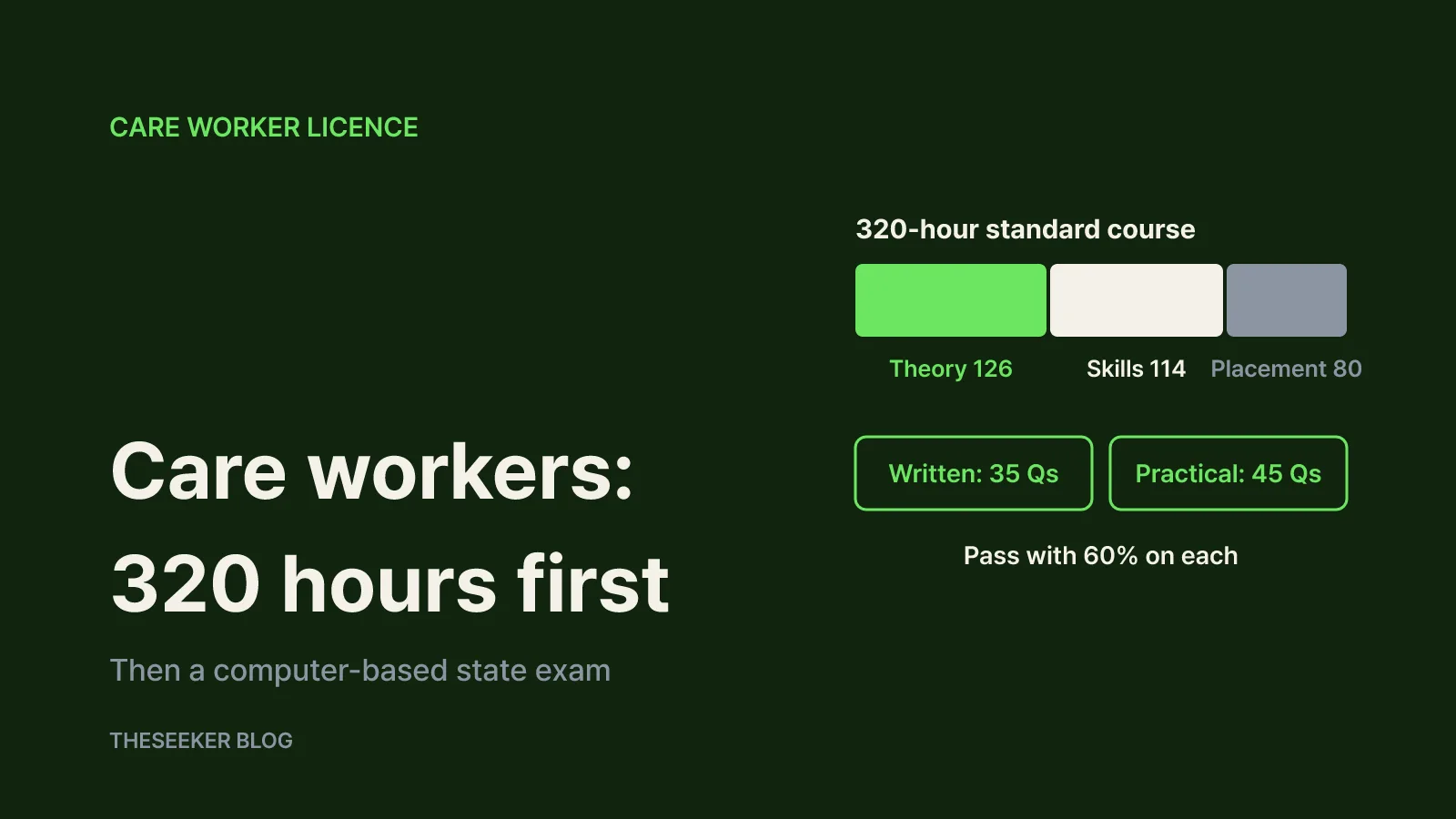
The care worker licence appears on almost every list aimed at people over 50, and it follows three steps: training, exam, licence. The Korea Health Personnel Licensing Examination Institute (KHPLEI) states that applicants must complete the 320-hour standard course at a training institution designated by a provincial or metropolitan government. Holders of certain national licences, including nurses, nurse assistants, physical therapists, social workers and occupational therapists, complete a 40 to 50 hour course instead.
The Incheon Metropolitan City guide splits the 320 hours into 126 hours of theory, 114 hours of practical skills and 80 hours of field placement, and says there is no education or age requirement to enrol. People with at least 1 year (1,200 hours) of recognised caregiving experience take shortened courses of 223, 203 or 183 hours, so check whether your past work is recognised before you register.
The exam is computer-based and held at KHPLEI test centres. The written section has 35 questions and the practical section 45, and you must score at least 60% on each. To receive the licence you apply after passing, including a medical certificate issued within the previous 30 days, and the licence is issued within 30 days of submitting the documents.
KHPLEI also lists disqualifications, such as certain mental illnesses (unless a specialist confirms fitness), drug addiction, adult guardianship, or an unfinished prison sentence. Graduates of the revised 320-hour course introduced on 1 January 2024 are treated as having completed dementia training, which allows them to provide cognitive-activity home care to long-term care recipients with dementia in grades 1 to 5.
Think concretely about the physical side. KHPLEI describes the work as helping with hygiene, meals and medication, toileting, exercise and bathing, plus cleaning, laundry and cooking. Use the 80-hour placement to judge whether residential care or home visits suit you better.
Technical trades: what to check before a Craftsman exam
Because Craftsman exams are open to everyone, they are an easy starting point, but working conditions vary widely. For each candidate:
- Exam format. On the subject's Q-Net page, check the written and practical subjects and whether the practical test is hands-on. Hands-on tests need a training centre where you can practise with equipment.
- Exam calendar. Some subjects run on fixed dates, others more frequently. Schedules are announced each year, so rely on the current year's notice.
- Real job requirements. Search Work24 for the subject name to see whether employers also want a driving licence or experience, and what the hours and locations are.
- Work environment. Outdoor work, shifts and exposure to noise or dust should match your health.
A qualification that builds on your previous career is easier to explain in interviews and may meet the experience rules for higher grades.
Paying for training: the Tomorrow Learning Card
The Work24 guide to the Tomorrow Learning Card explains that the card is valid for 5 years and covers 3 million won of training fees over 5 years. Certain groups, including insured fixed-term, temporary, part-time and day workers, basic livelihood recipients and people with disabilities, can receive an extra 2 million won, up to a 5 million won total.
Points that matter in your 50s:
- The age exclusion starts at 75. The exclusion for large-company employees applies only to those earning 3 million won or more a month and under 45, so it does not cover workers in their 50s. Other exclusions, such as civil servants and private school staff, still apply.
- You pay a share. Trainees typically cover 15% to 55% of the fee, depending partly on the course's average employment rate.
- Register as a job seeker first if you are unemployed.
- Courses of 140 hours or more require a training consultation, online or at a job centre, where staff can also recommend courses and certificates.
- Dropping out costs you. Quitting without a valid reason cuts your limit by 200,000 won, 500,000 won or 1 million won for the first, second and third time.
People without stable employment on courses of 140 hours or more may also receive a training allowance: 5,800 won per attended day for 5 or more hours a day (up to 116,000 won a month), or 2,500 won for shorter days (up to 50,000 won). It may not be paid if attendance falls below 80% or while you receive unemployment benefits.
Turning a certificate into a job
- Shortlist three options that pass the 4 checks.
- Validate with real listings on Work24 for your area. Work24 also has a mid-career centre section for people over 40.
- Confirm dates and rules with the body that runs each exam: Q-Net for Craftsman exams, KHPLEI for care workers.
- Budget the true cost after the card subsidy, your own share and any allowance.
- Link it to your CV in one or two sentences that connect the new skill to your past work.
A certificate opens a door; it is not the destination. Start with facts you can verify, test demand in your area, and the choice becomes far more manageable.
Sources
Frequently asked questions
Which Korean national qualifications can I take in my 50s with no prerequisites?
According to Q-Net, the Craftsman grade of national technical qualifications has no eligibility restrictions, so age, education and experience do not matter. Service-field qualifications set their own rules per subject, so check each one separately.
How long does it take to become a care worker in Korea?
New applicants complete a 320-hour course (126 hours theory, 114 practical, 80 field placement) at a designated institution, then take a computer-based exam at KHPLEI. You need at least 60% on both the 35-question written and 45-question practical sections. Relevant experience or certain licences shorten the course.
Can people in their 50s get the Tomorrow Learning Card?
Yes, unless another exclusion applies. Work24 lists people aged 75 or over as excluded, along with groups such as civil servants. The card covers 3 million won over 5 years, with an extra 2 million won for some groups, and trainees usually pay 15% to 55% of fees.
Will a certification guarantee re-employment?
No. Demand for the same certificate varies by region and job type. Before you start, search Work24 listings for the certificate and your area to see whether it is required and what the working conditions are.
blog.theseeker.io/en/posts/certifications-for-50s-reemployment-korea
Hannah Price
Hannah covers job searching, the workplace and preparing for professional exams, confirming dates and requirements against notices from the bodies that run them.
Read our editorial standards