Certifications in Your 40s in Korea: How to Choose One
Picking a Korean certification in midlife works best when you check purpose, exam eligibility, cost and the path into real work, in that order. Here is how Q-Net tiers and the Tomorrow Learning Card fit in.
 Hannah Price
In this post
- Start with your goal: career change, re-employment or side work
- Check eligibility by tier before you study
- Your experience is your advantage in midlife
- Budget time and money with the Tomorrow Learning Card
- Mind the gap between passing and getting hired
- A five-step checklist before you choose
- Sources
- Frequently asked questions
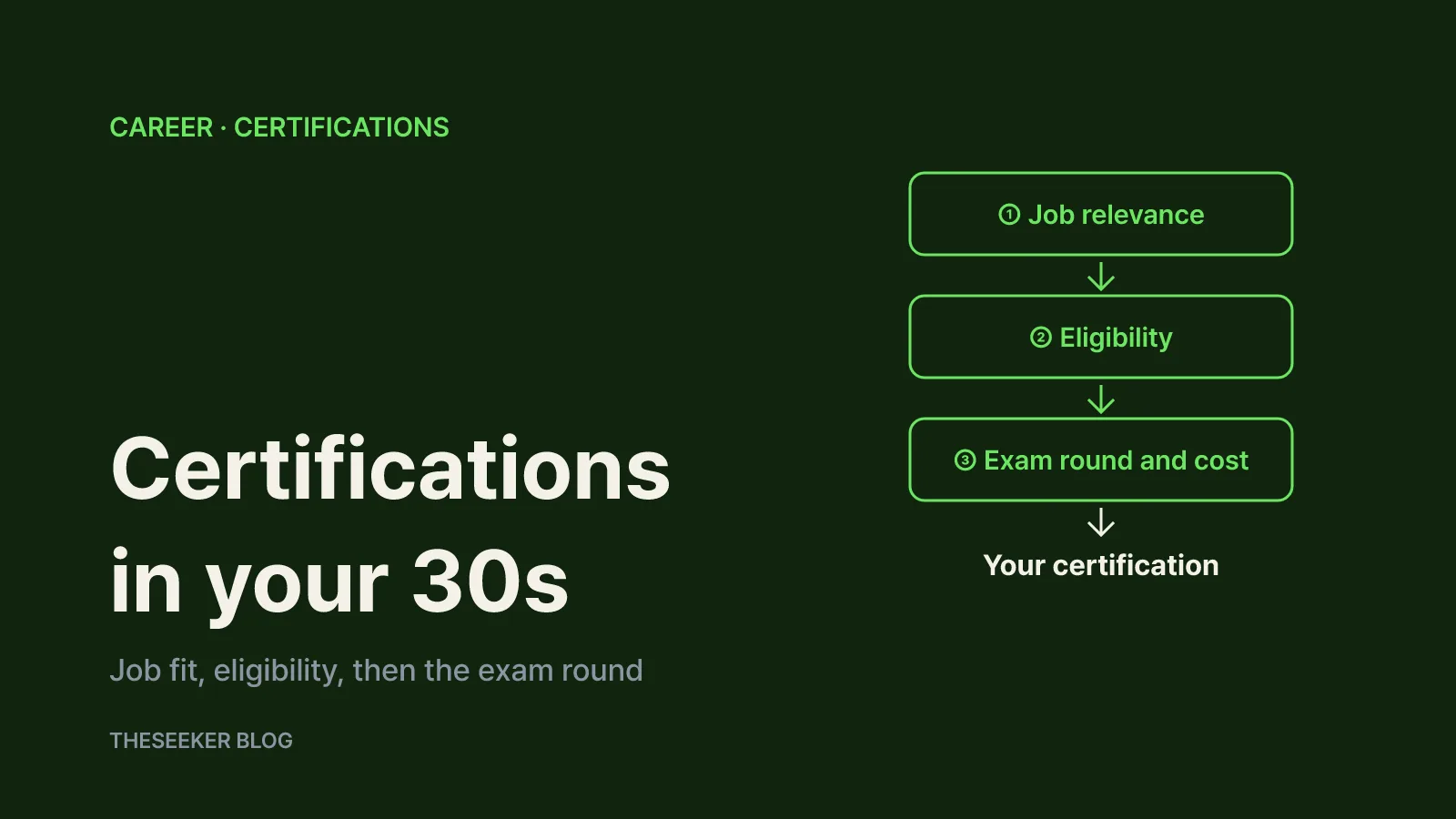
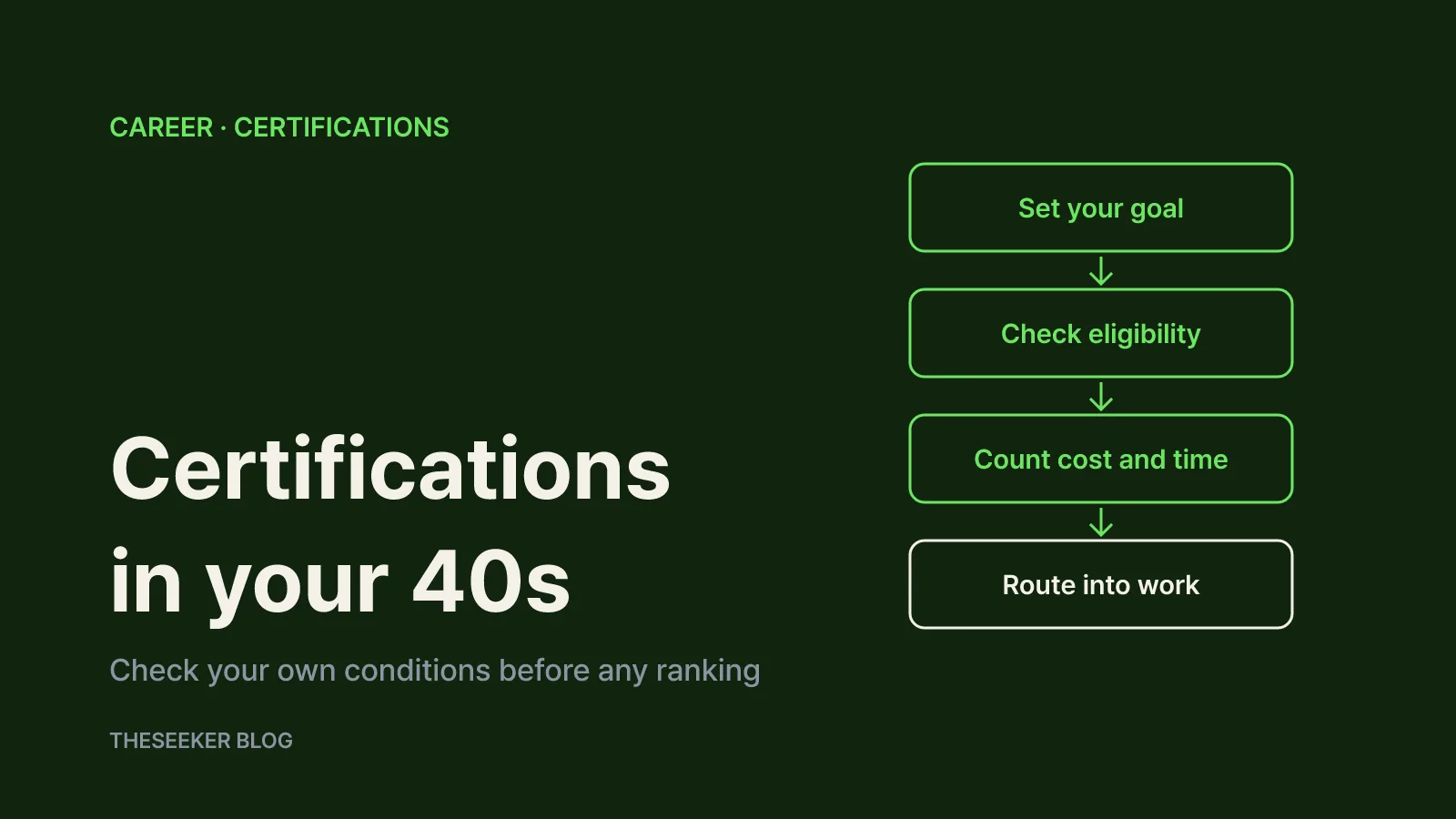
As of October 2026, the most useful way to choose a certification in your 40s in Korea is not to start from a "top certifications" list. Instead, work through four questions in order: why you want it (career change, re-employment or side work), whether you are eligible to sit the exam now, whether you can afford the time and training cost, and whether there is a realistic route from the certificate into paid work. Answering those questions usually narrows a long list down to two or three candidates that actually fit your situation.
Searches for certification recommendations in Korea, including ones aimed specifically at people in their 40s, keep coming up, and videos about people who earned a forklift licence but struggled to get into the driver's seat have been widely shared. That tension is the point of this guide: a certificate can open a door, but it does not promise a job or an income. Rather than ranking specific qualifications, this article explains the decision criteria using two official sources: the eligibility overview on Q-Net, run by HRD Korea (Human Resources Development Service of Korea), and the Tomorrow Learning Card guide on Work24, the government employment portal.
Start with your goal: career change, re-employment or side work
The same certificate can be excellent for one goal and nearly useless for another, so write your goal down in a single sentence first.
← Swipe to see more
| Goal | Key question | Check first |
|---|---|---|
| Career change | Does it build on my current experience? | Whether your field counts as the same or a related job area, and whether you can sit a higher tier |
| Re-employment | Will it help me get hired after a gap? | What job ads require beyond the certificate: experience, licences, training |
| Side work | Can I fit it around my main job? | Exam dates, practical-test preparation time, how you would find clients or shifts |
If you are changing jobs within a field, a higher-tier certificate in the same area works as proof of the experience you already have, and it is easy to explain in an interview. If you are switching to an unrelated field, the bigger challenge is usually how to get your first relevant experience, not the exam itself.
For re-employment, separate jobs where the certificate is mandatory from those where it is only a plus. A practical way to do this is to search a target occupation on Work24's job listings, read around ten ads, and note what repeats in the requirements section. For side work, think about how you would actually get assignments before you think about passing.
Check eligibility by tier before you study
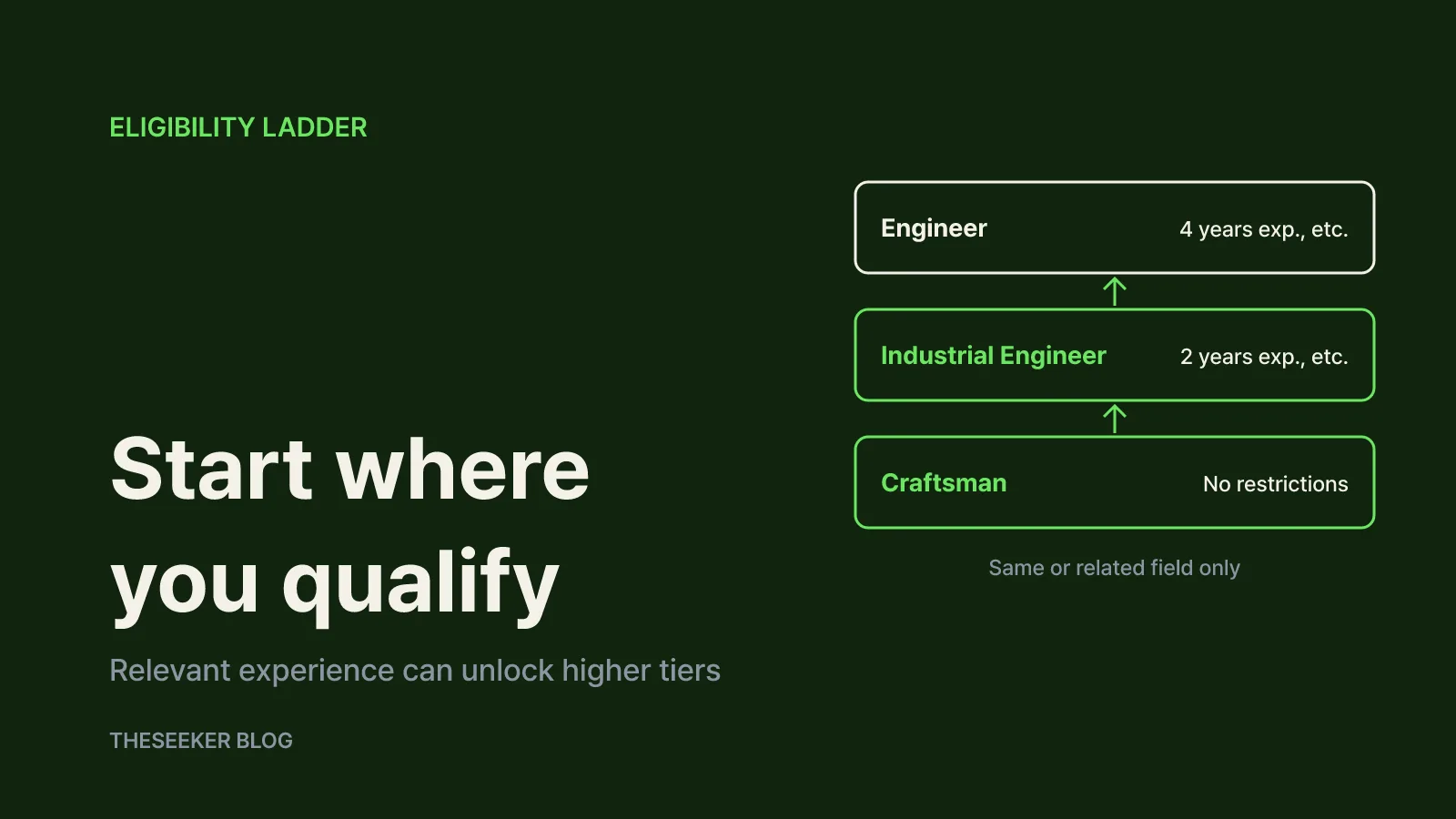
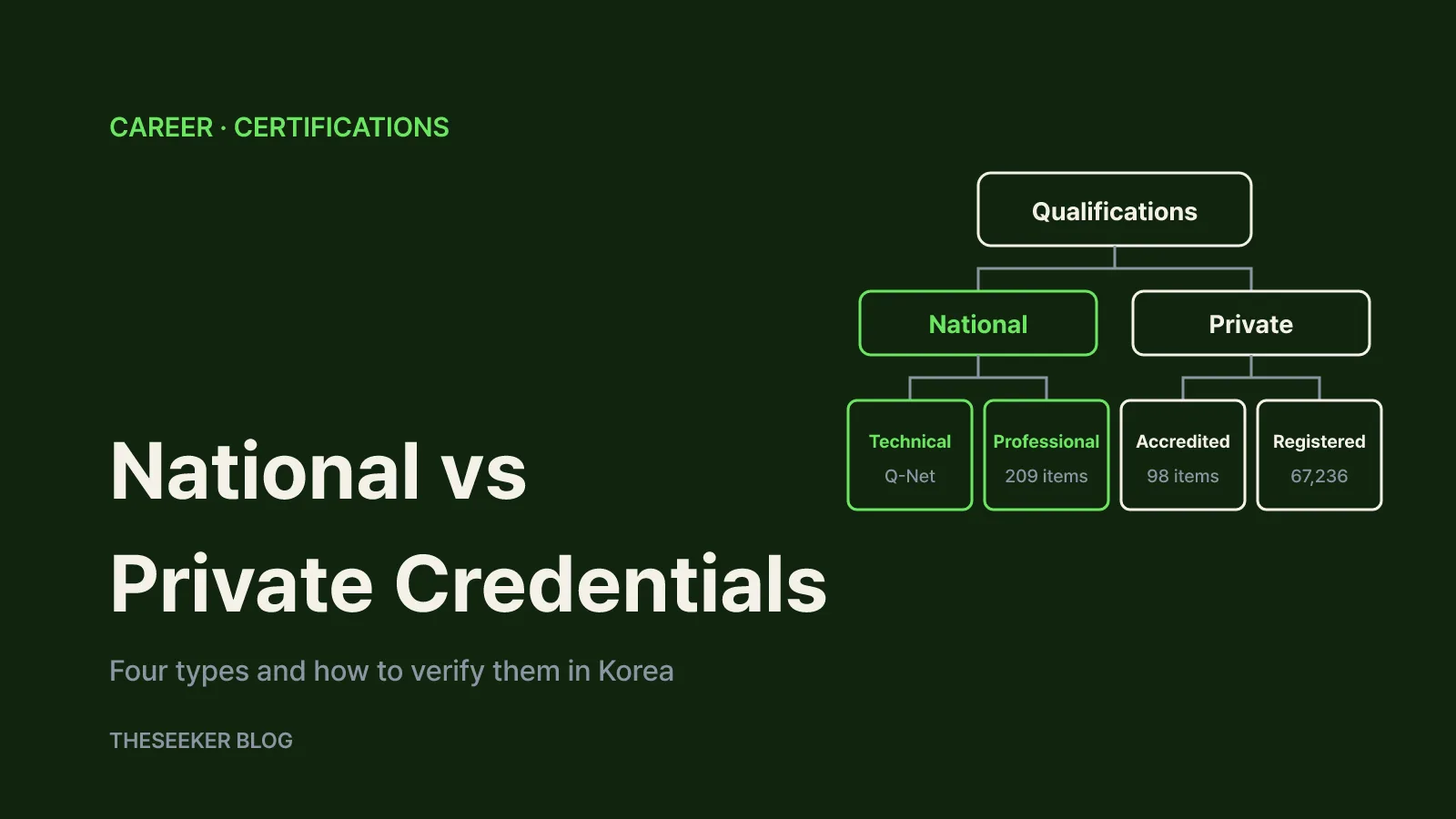
Korea's National Technical Qualifications are graded in tiers, and each tier has its own entry requirements. According to Q-Net's overview for technical and craft fields, the main routes include the following (this is a partial summary):
← Swipe to see more
| Tier | Example eligibility routes |
|---|---|
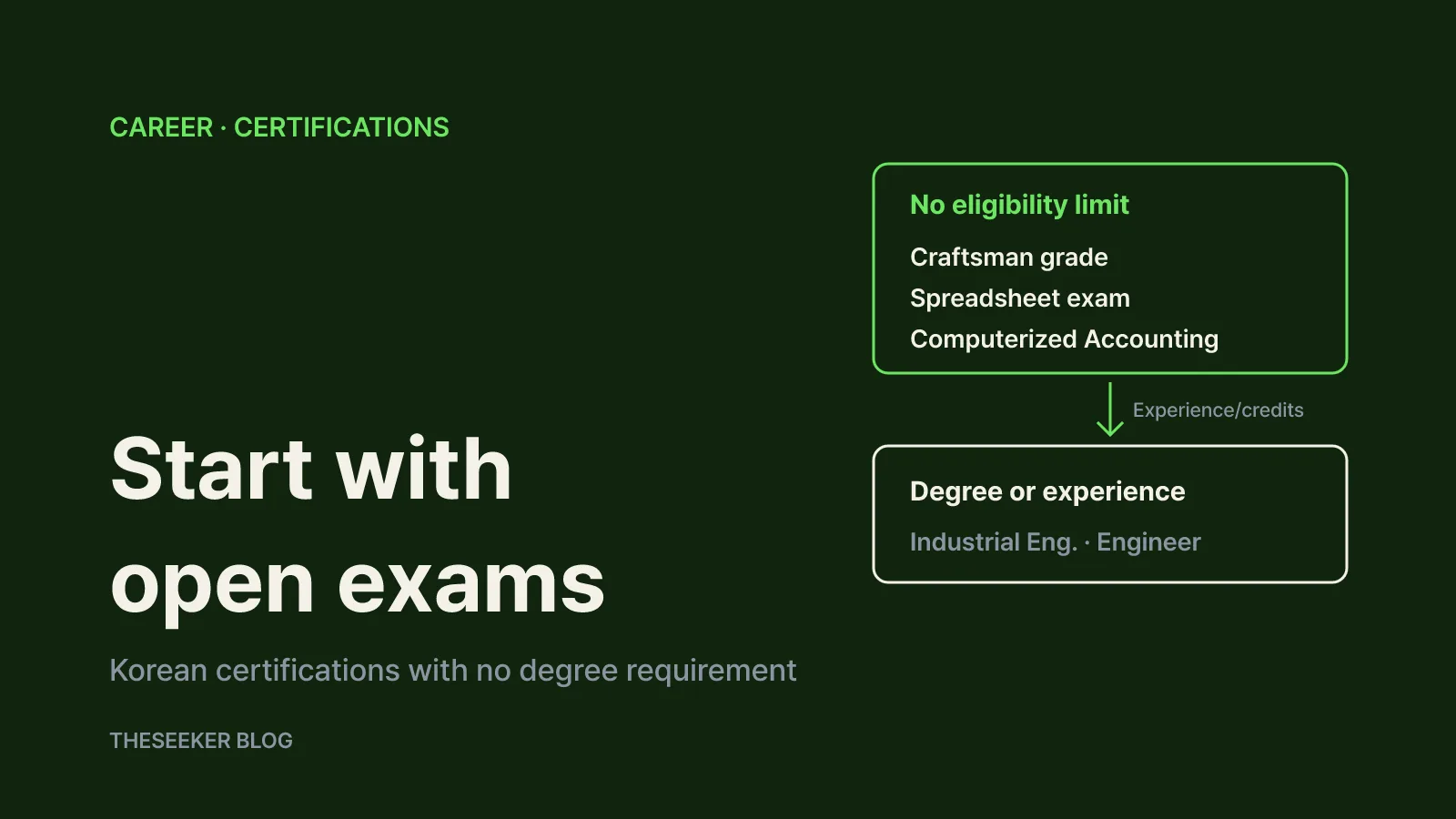
| Craftsman (기능사) | No eligibility restrictions |
| Industrial Engineer (산업기사) | Craftsman plus 1 year of experience; graduate or expected graduate of a related university or college programme; 2 years of experience, among others |
| Engineer (기사) | Industrial Engineer plus 1 year; Craftsman plus 3 years; related university degree; 4 years of experience, among others |
| Master Craftsman (기능장) | Industrial Engineer or higher plus 5 years; Craftsman plus 7 years; 9 years of experience, among others |
| Professional Engineer (기술사) | Engineer plus 4 years; Industrial Engineer plus 5 years; Craftsman plus 7 years; 9 years of experience, among others |
"Experience" here means work in the same or a related job field as the qualification you are applying for, not any job at all. Detailed rules for technical fields are set out in an annex to the National Technical Qualifications Act Enforcement Decree, while service-field qualifications set their own requirements item by item, so check the specific qualification page if you are looking at a service-field certificate.
The practical takeaway: the Craftsman tier, which includes qualifications such as the forklift operator and electrical craftsman certificates, is open to anyone regardless of education or work history. From there, a ladder exists to higher tiers as you build relevant experience.
Your experience is your advantage in midlife
Most people in their 40s have a decade or more of work behind them, and that matters. Under the Q-Net rules, four years of relevant experience is one route to the Engineer exam, and two years is one route to the Industrial Engineer exam. If your current work counts as the same or a related field, you may be able to skip the lower tiers entirely.
Someone with years in facilities maintenance, manufacturing, construction or electrical work, for example, could look at a same-field Industrial Engineer or Engineer qualification. That kind of certificate tells a new employer your experience has been checked against a national standard. Whether your experience is recognised is not your call, though: it is assessed by HRD Korea based on documentation. Use the eligibility self-check on Q-Net before committing to months of study.
Q-Net also lists holding a same-tier qualification in a same or related field as one eligibility route. If you earned a certificate years ago, check its tier and field; you may be closer to the next level than you think. If you are moving into a completely new field, though, your past experience will not help much with eligibility, and starting at the Craftsman tier is often the realistic option.
Budget time and money with the Tomorrow Learning Card
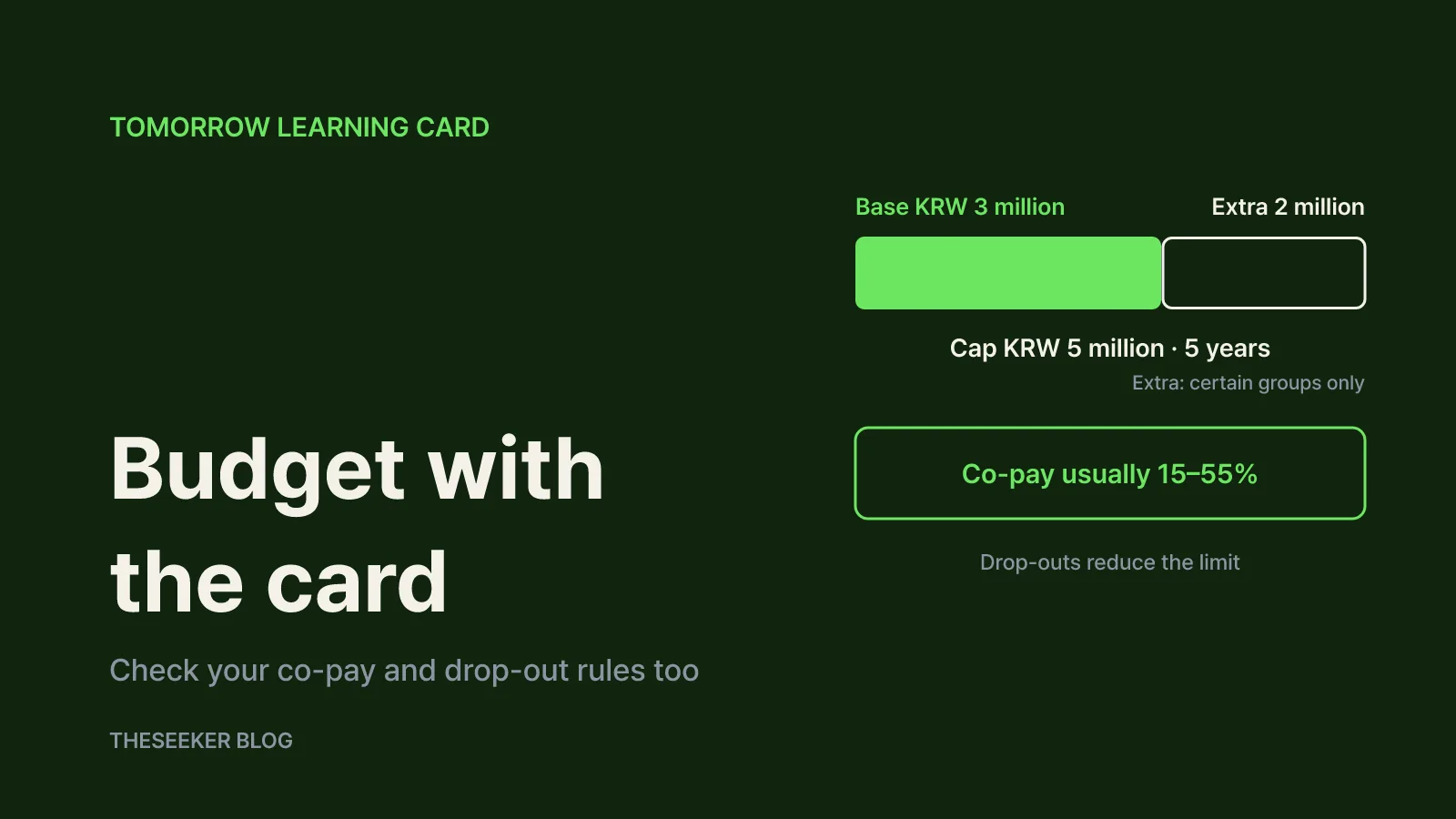
Training courses and practical-test practice can be expensive. The National Tomorrow Learning Card (국민내일배움카드) subsidises job-related training. According to Work24:
- Limit: KRW 3 million over five years from issue, with an extra KRW 2 million for certain groups such as insured fixed-term, dispatched, part-time or daily workers (total cap KRW 5 million).
- Validity: five years; any unused balance expires.
- Your share: usually 15–55% of the approved fee, set within a 0–55% range based on factors such as the course occupation's average employment rate and participation type in the National Employment Support Programme.
- Training allowance: up to KRW 116,000 a month for people without stable jobs taking courses of 140 hours or more, not paid if attendance falls below 80% or while receiving unemployment benefits.
One exclusion is worth reading carefully if you are in your 40s: workers at large companies earning KRW 3 million or more a month and under 45 are excluded. All three conditions must apply, so a large-company employee aged 45 or over is not excluded by that rule alone, although other exclusions (for example public servants, private school staff, and people aged 75 or over) still apply. This guide does not cover eligibility for foreign nationals; ask the Employment and Labor customer centre (1350) if that applies to you.
There are penalties too. Dropping out without an unavoidable reason such as illness reduces your remaining limit by KRW 200,000, 500,000 or 1 million for the first, second and third time. Courses of 140 hours or more require a training consultation before enrolment, and unemployed applicants must register as job seekers on Work24 first.
Mind the gap between passing and getting hired
A certificate shows you met an exam standard; employers also want to know whether you can work safely in their environment and whether you have done similar work. To check that gap before you commit:
- Collect job ads for the role and tabulate what is mandatory, what experience is required and what is preferred.
- Look at what entry-level positions actually involve: assistant duties, training periods, hours and location.
- Confirm any extra licences, training or health requirements from the ads and the relevant agency.
- Use the midlife services listed on Work24, such as the Middle-aged Job Hope Centre (중장년내일센터), or an Employment Centre consultation.
For side work, add one more step: confirm whether you can contract directly or need to be employed by a company.
A five-step checklist before you choose
- Goal: Have you written your goal in one sentence?
- Eligibility: Have you confirmed the tier and eligibility on Q-Net, including whether your experience qualifies you for a higher tier?
- Cost and time: Have you estimated fees, your card co-payment and the timeline from written to practical exam?
- Route to work: Have you read at least ten job ads and listed requirements beyond the certificate?
- Staying power: Can you finish alongside work and family commitments, knowing the drop-out penalties?
A certificate that clears all five checks is a genuinely good fit. Exam schedules, eligibility rules and subsidy terms can change, so recheck Q-Net and Work24 right before you apply.
Sources
Frequently asked questions
Are there Korean national certifications with no eligibility requirements?
Yes. Q-Net states that the Craftsman (기능사) tier has no eligibility restrictions, which covers qualifications such as the forklift operator and electrical craftsman certificates. Service-field qualifications set their own requirements, so check each one.
Can my work experience qualify me for a higher-tier exam?
Possibly. Four years of experience in the same or a related job field is one route to the Engineer (기사) exam, and two years is one route to Industrial Engineer (산업기사). HRD Korea assesses your documents, so use the Q-Net eligibility self-check first.
Does the Tomorrow Learning Card cover the full course fee?
Usually not. Most learners pay 15–55% of the approved fee, within a 0–55% range depending on the course and personal circumstances. The limit is KRW 3 million over five years, with KRW 2 million extra for certain groups.
Will a certificate guarantee me a job in my 40s?
No. It is one requirement among several. Read job ads for your target role to see what experience, licences or training they also expect, and check what entry-level positions look like.
blog.theseeker.io/en/posts/certifications-in-your-40s-korea-how-to-choose
Hannah Price
Hannah covers job searching, the workplace and preparing for professional exams, confirming dates and requirements against notices from the bodies that run them.
Read our editorial standards