Korean Certifications With No Degree Requirement
Which Korean national certifications can high school graduates and humanities majors take right away, and how the Industrial Engineer and Engineer grades open up later.
 Hannah Price
In this post
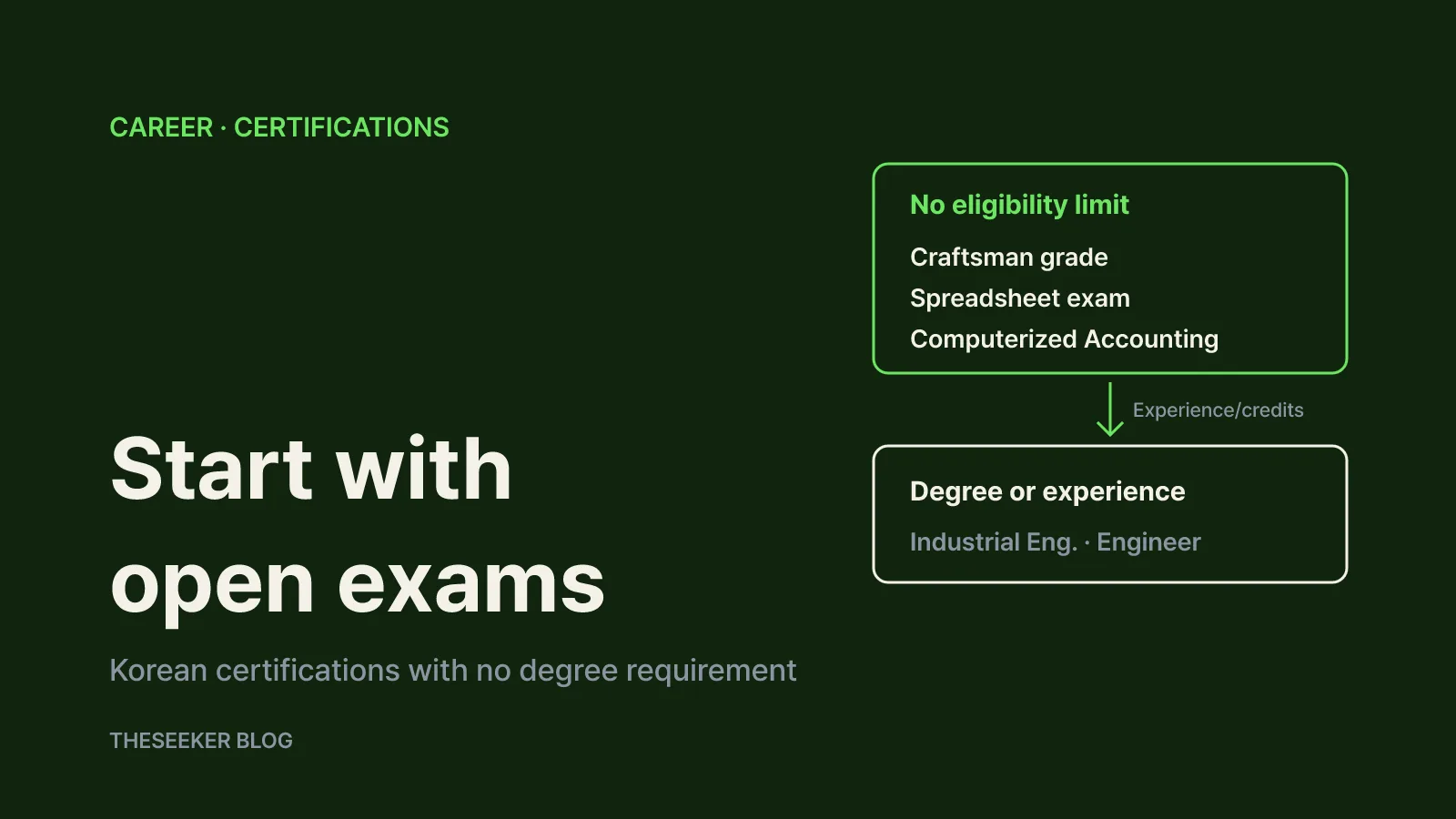
As of October 2026, if you are a high school graduate or a humanities (liberal arts) graduate looking for a Korean certification you can sit without meeting an education requirement, start with two groups: the Craftsman (기능사) grade of Korea's National Technical Qualifications, which has no eligibility restriction at all, and service-field qualifications whose notices say eligibility is unrestricted, such as the Computer Specialist in Spreadsheet & Database (컴퓨터활용능력) and Computerized Accounting (전산회계운용사) exams. The higher Industrial Engineer (산업기사) and Engineer (기사) grades require a relevant degree, work experience or a lower certificate, but there are documented routes in. Everything below is based on Q-Net, the Korean statute and the administering body's exam guides.
How Korea decides who can sit an exam
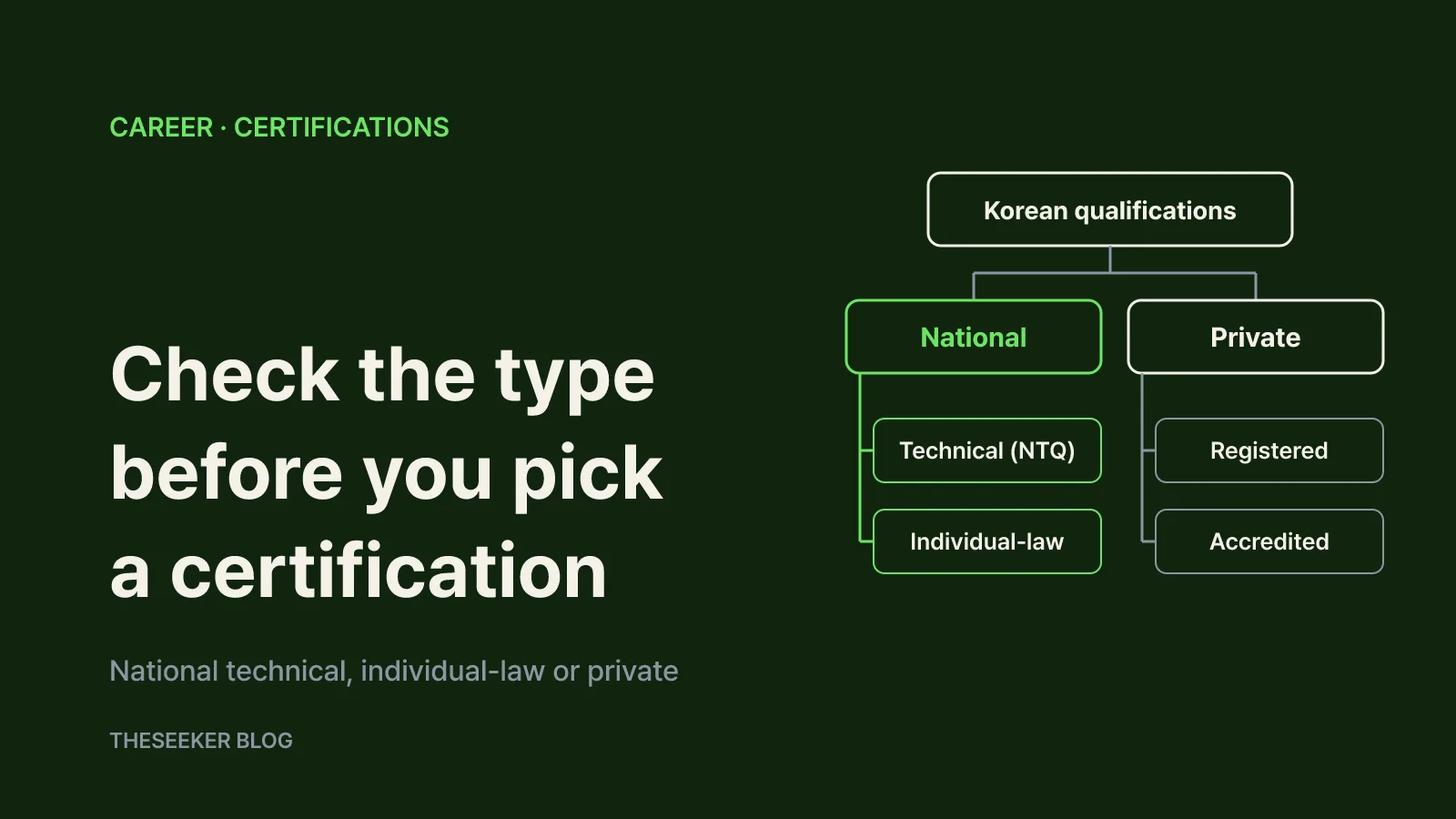
Korea's National Technical Qualifications are organised by grade: Professional Engineer (기술사), Master Craftsman (기능장), Engineer, Industrial Engineer, Craftsman, plus a separate service field. In a published reply, the Ministry of Employment and Labor explained that eligibility can be based on education, experience, other qualifications or completed training, that meeting any one qualifying condition is enough, and that the Craftsman grade has no eligibility requirement (Korea Law Information Center, Ministry interpretation). The detailed rules sit in Appendix 4-2 of the Enforcement Decree of the National Technical Qualifications Act.
Q-Net, the official portal run by HRD Korea, summarises the same structure on its eligibility overview. Craftsman is marked "no restriction". From Industrial Engineer upward, you need a degree, experience or another certificate. For the service field (grades 1, 2 or a single grade), eligibility is set item by item, and Q-Net points readers to Appendix 11-4 of the Enforcement Rules for the full list.
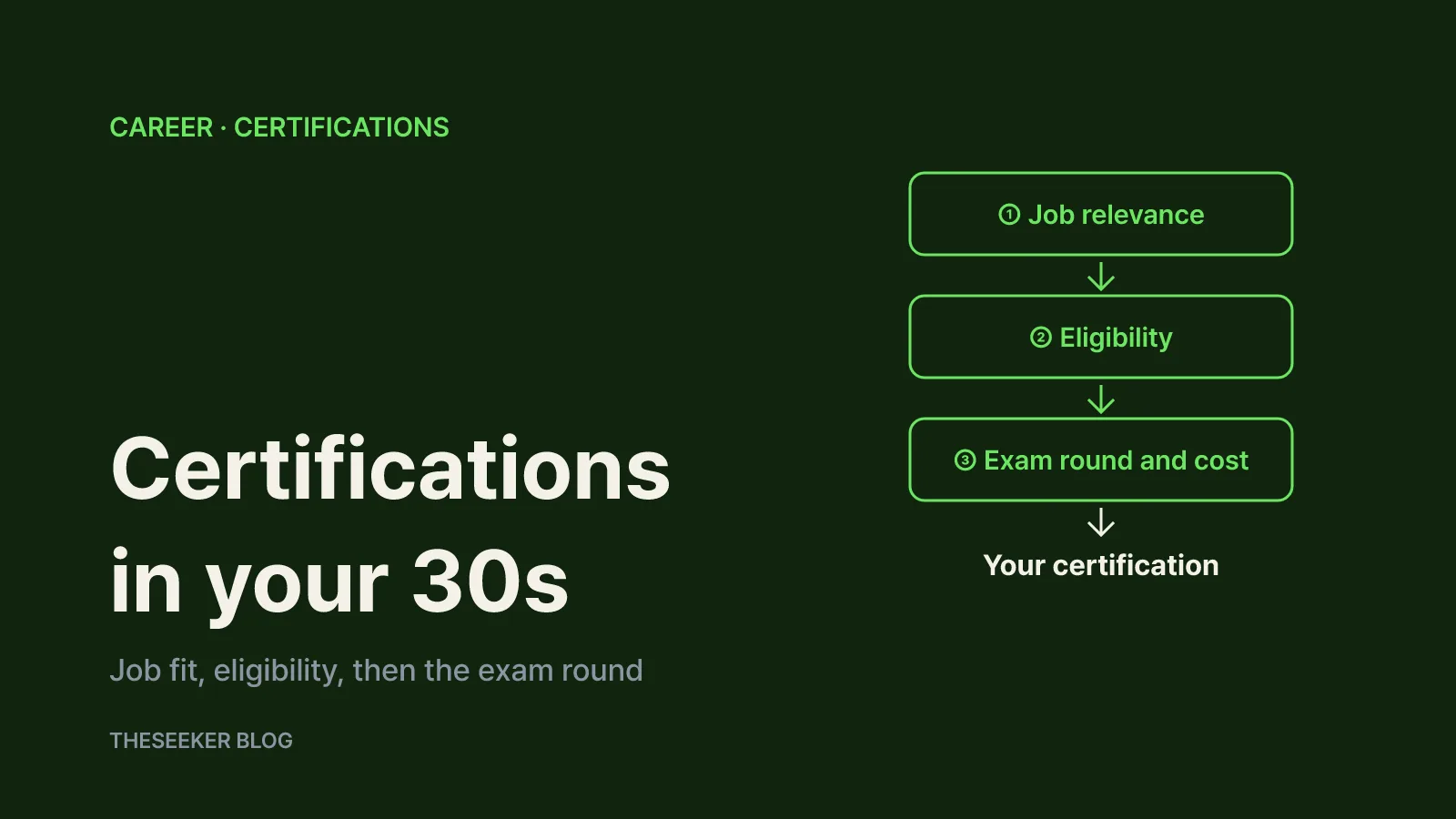
That means the common question "which certification should I get without a degree?" really splits into two:
- What can I take now? Any Craftsman exam, plus service-field exams whose notices state no restriction.
- What can I move up to later? Industrial Engineer and Engineer, through experience or recognised credits.
Certifications you can take with no education requirement
The Craftsman grade is open to everyone. Many Craftsman items map directly onto hands-on jobs, such as electrical work, cooking, baking, hairdressing, welding and vehicle maintenance, so it is a practical starting point for high school graduates or career changers. Many of these exams lean heavily on a practical test, so budget for practice space, materials and possibly a training course.
If you are aiming for office work, look at the office qualifications administered by the Korea Chamber of Commerce and Industry (KCCI).
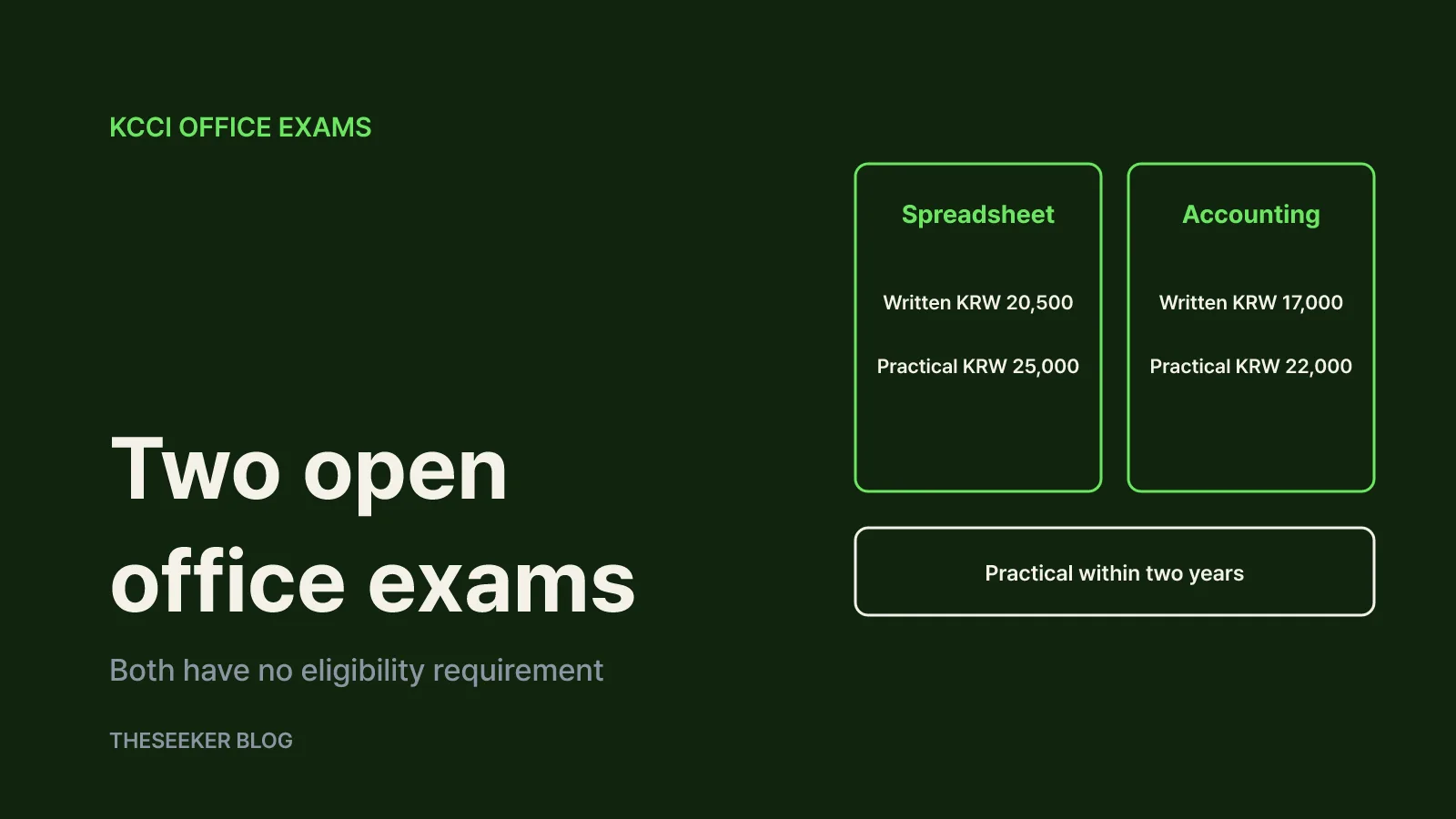
Computer Specialist in Spreadsheet & Database (컴퓨터활용능력) tests spreadsheet and database skills. According to the KCCI exam guide, eligibility is unrestricted, and you can take the practical exam within two years of passing the written exam. Level 1 has a 60-question, 60-minute written test and a 90-minute practical (45 minutes per subject). Level 2 has a 40-question, 40-minute written test and a 40-minute practical. To pass the written exam you need at least 40 out of 100 in every subject and an average of 60 or more; the practical requires 70 or more (both subjects for Level 1). Fees are KRW 20,500 for the written exam and KRW 25,000 for the practical. KCCI also lists credit recognition under Korea's Academic Credit Bank System (14 credits for Level 1, 6 for Level 2) and preferential treatment in hiring or promotion at about 100 public bodies and public companies.
Computerized Accounting (전산회계운용사) tests your ability to run accounting information through an accounting system. The KCCI exam guide states that eligibility is unrestricted and that the practical must be taken within two years of passing the written exam. There are three levels: Level 3's written test covers accounting principles in 25 questions over 40 minutes; Level 2 covers financial and cost accounting in 40 questions over 60 minutes; Level 1 covers financial, cost and tax accounting in 60 questions over 80 minutes. Fees are KRW 17,000 (written) and KRW 22,000 (practical). Credit Bank recognition is 18 credits for Level 1 and 14 for Level 2. Candidates currently choose between New sPLUS and CAMP sERP for the practical, but CAMP sERP will be dropped from 1 January 2027, so new candidates are safer practising on New sPLUS.
Where humanities graduates get stuck on higher grades
Holding a bachelor's degree does not automatically let you sit an Engineer exam. Under Appendix 4-2, the education route for Engineer is for graduates (or expected graduates) of a related department, meaning a department the Minister of Employment and Labor designates as related to that item (Korea Law Information Center). The key question is whether your department counts as related for the specific exam.
Because recognition varies by item, there is no single answer to "can humanities majors take Engineer exams?". Use Q-Net's eligibility self-check with the exact item and your department before applying. If your department is not recognised, use the experience or lower-certificate routes instead.
Also remember the paperwork. For grades with eligibility requirements, you prove eligibility with graduation or employment certificates after passing the written exam. Decide which condition you are applying under before you register and prepare the documents early. Craftsman candidates do not face this step.
Three routes from a high school diploma to higher grades
Q-Net's overview and Appendix 4-2 describe several routes. Three matter most for high school graduates.
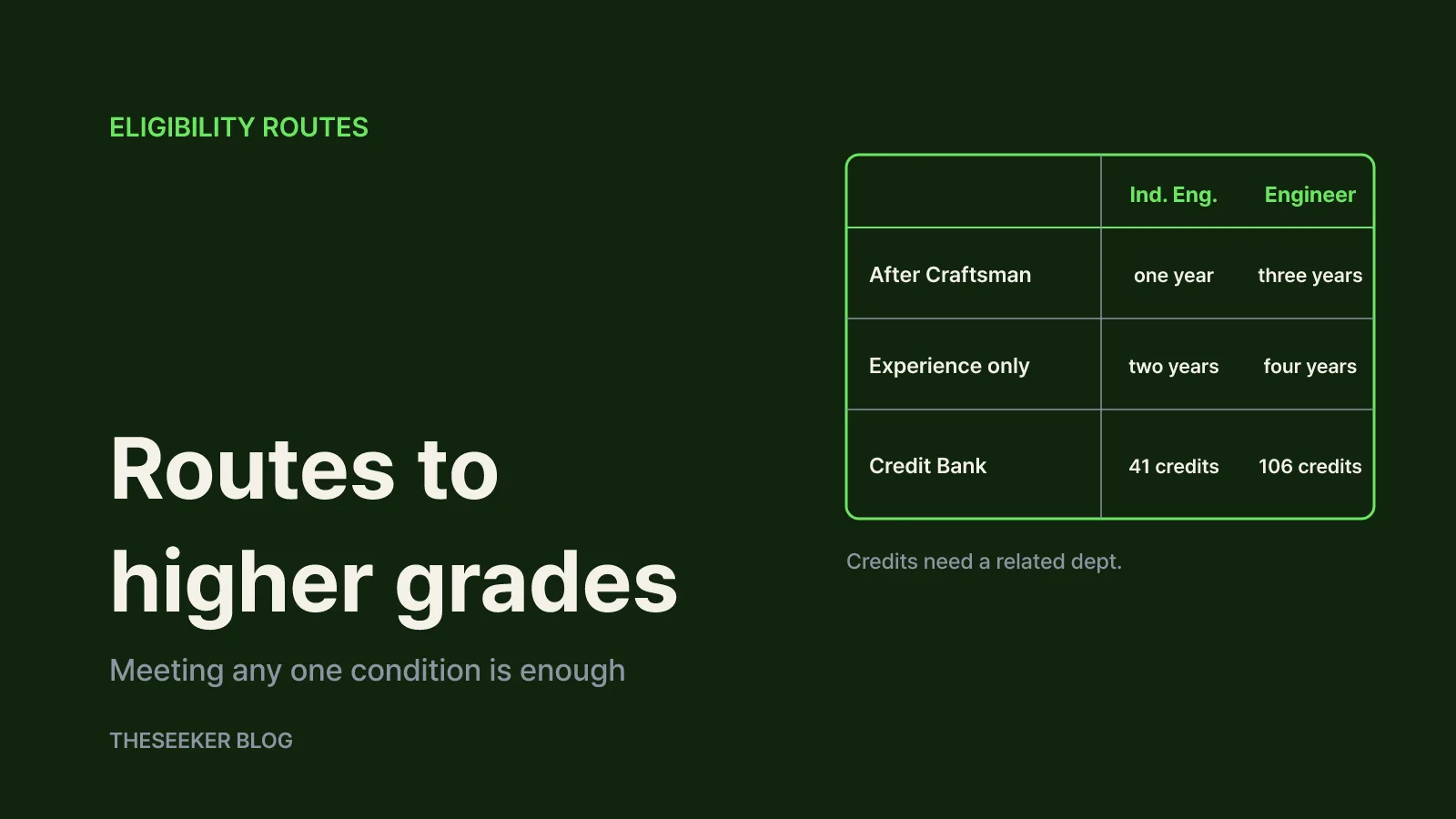
1. Craftsman plus experience. After earning a Craftsman certificate, one year of experience in the same or a similar job field qualifies you for Industrial Engineer, and three years qualifies you for Engineer. An Industrial Engineer certificate plus one year of experience also qualifies you for Engineer. This is why Craftsman is often the first step: it helps you get hired, and the job then builds the experience the next grade requires.
2. Experience alone. Without any certificate, two years of experience in the same or a similar field qualifies you for Industrial Engineer, and four years for Engineer. Only time spent on work related to the target item counts, not your total time employed.
3. Recognised credits. The notes to Appendix 4-2 state that people with 106 or more credits recognised under the Act on Recognition of Credits are treated as expected university graduates (with a condition that at least 18 of those credits come from sources other than converted university credits), 81 or more as expected graduates of a three-year college, and 41 or more as expected graduates of a two-year college. The education routes still carry the related-department condition, so the field you study matters. Certifications such as the two KCCI exams above can contribute recognised credits.
These routes can run in parallel. Because you only need to meet one condition, use whichever you reach first.
Choosing by target job
Starting from a list of certifications leads to decision paralysis. Narrow it down instead:
- Write down your target job in one line, such as office admin, bookkeeping, electrical maintenance or kitchen work. Collect about five job postings and list the certifications they prefer.
- Pick an unrestricted certification in that field first. For office or accounting roles, that means the spreadsheet or computerized accounting exams; for technical roles, the relevant Craftsman item.
- Check the path upward. Confirm on Q-Net that an Industrial Engineer or Engineer item exists in the same job field, so future experience counts as same or similar field experience.
- Estimate the cost, including exam fees (for example KRW 20,500 and KRW 25,000 for the spreadsheet exam, KRW 17,000 and KRW 22,000 for computerized accounting), study materials, practice setup and possible retakes.
- Put deadlines in your calendar, especially the two-year window between passing the written exam and taking the practical.
Humanities graduates can also play to their background. Business or economics graduates may find the accounting subjects familiar, and spreadsheet skills are widely useful in office applications. If you want to move into a technical field far from your major, starting with Craftsman and building experience can be faster than chasing the education route.
Checklist before you apply
- Grade and eligibility: Is it a Craftsman exam, or a service-field item whose notice says eligibility is unrestricted?
- Administering body: Some national technical qualifications, including the two office exams above, are run by KCCI. Check dates and registration on its site.
- Written-pass validity: Do you need to take the practical within two years?
- Software and equipment: The spreadsheet exam uses MS Office LTSC 2021; the accounting exam allows only a basic calculator (no Windows, scientific or financial calculators).
- Upgrade plan: If you are aiming higher, have you confirmed which condition you will use and checked related-department recognition on Q-Net?
- Evidence: If you plan to use experience, will your employer be able to issue the employment certificate you need?
Eligibility, fees and exam formats can change with each notice. The figures here were checked in October 2026 on Q-Net, the Korea Law Information Center and KCCI's certification site, so open the notice for your exam session again just before you register.
Sources
Frequently asked questions
Can a high school graduate in Korea take an Engineer (기사) exam?
Not immediately, but there are routes. A Craftsman certificate plus three years of experience in the same or a similar field, an Industrial Engineer certificate plus one year, or four years of relevant experience all qualify. With 106 or more recognised credits you are treated as an expected university graduate, but the education route also requires a related department.
Can humanities or liberal arts majors take Engineer exams?
The education route requires a degree from a department recognised as related to that exam. Recognition differs by item, so check Q-Net's eligibility self-check with your exact department. If it is not recognised, use the Craftsman or experience routes.
Which Korean national certifications have no eligibility requirement?
Every Craftsman (기능사) exam is unrestricted. Service-field items vary; for example, KCCI states that the Computer Specialist in Spreadsheet & Database and Computerized Accounting exams have no eligibility requirement.
How long do I have to take the practical after passing the written exam?
For both KCCI office exams covered here, you can take a practical exam held within two years of passing the written exam. After that, you need to pass the written exam again.
Which software should I practise on for the Computerized Accounting practical?
Candidates currently choose New sPLUS or CAMP sERP, but KCCI has announced that CAMP sERP will be removed from 1 January 2027. If you are starting now, New sPLUS is the safer choice.
blog.theseeker.io/en/posts/no-degree-required-certifications-korea-high-school-liberal-arts
Hannah Price
Hannah covers job searching, the workplace and preparing for professional exams, confirming dates and requirements against notices from the bodies that run them.
Read our editorial standards