Korea's National Health Checkup in Your 20s: Who Qualifies
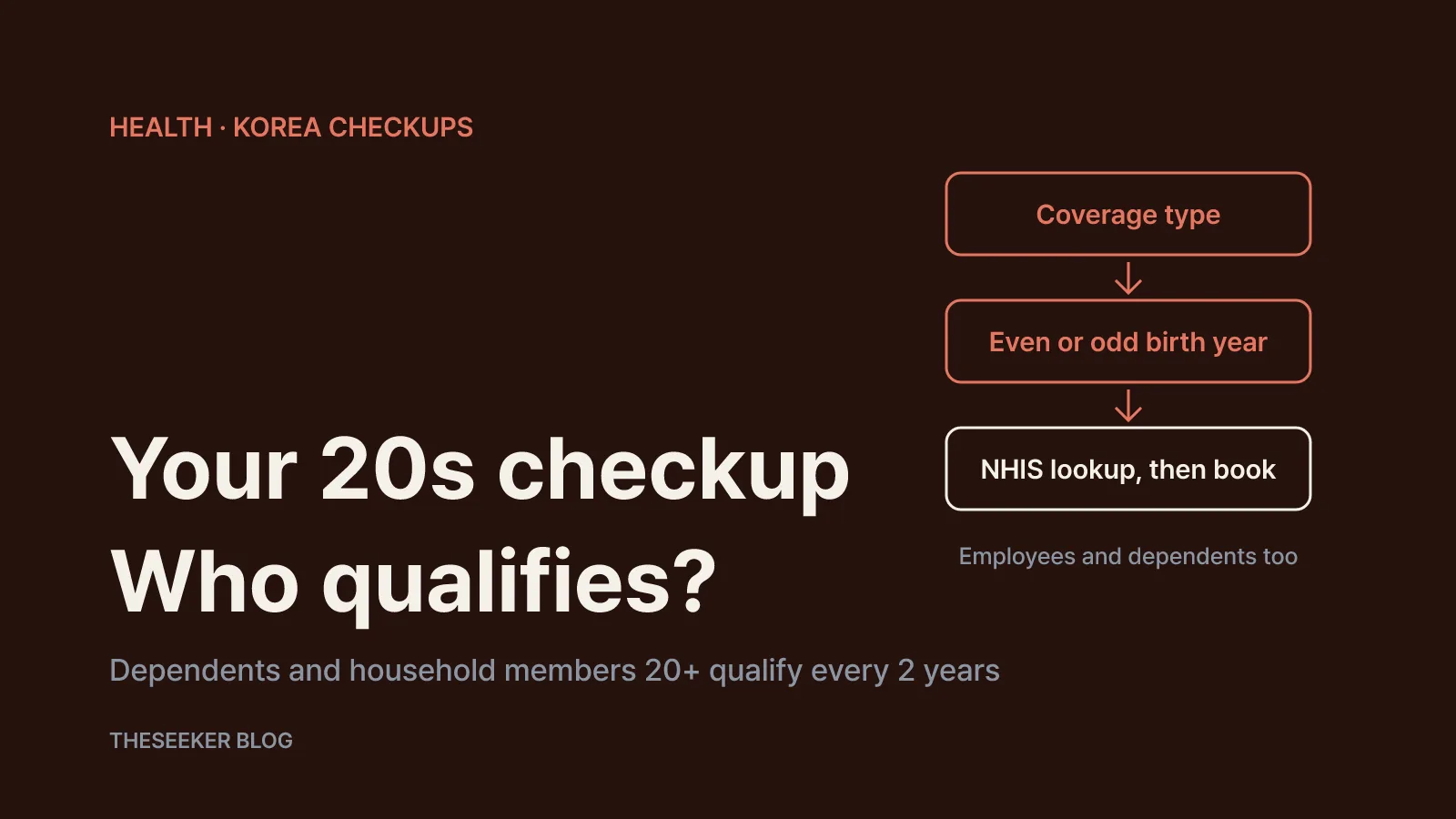
If you are covered by Korea's National Health Insurance and are 20 or older, you are usually eligible for the general health checkup every two years. Here is how eligibility works, how to look it up, and which tests apply in your 20s.
 Sophia Reed
In this post
- Who qualifies in their 20s: eligibility by coverage type
- The even/odd birth-year rule
- How to check whether you are eligible
- Standard tests included in your 20s
- Extra screenings worth knowing about in your 20s
- Cholesterol panel for men 24 and older
- Mental health screening every two years (ages 20 to 34)
- Cervical cancer screening for women 20 and older
- What is not included yet
- Preparing for the day and using your results
- Sources
- Frequently asked questions
As of October 2026, the short answer is yes: people in their 20s can get Korea's national general health checkup (일반건강검진). If you are an employee insured through your workplace, you qualify regardless of age. If you are a dependent on a parent's employer plan, or a household member under a self-employed (regional) subscriber, you qualify once you are 20 or older. The catch is timing: the checkup usually runs once every two years, and your year is set by whether you were born in an even or odd year.
This guide walks through who is eligible under each type of coverage, how to confirm your status, and what the screening actually includes for someone in their twenties, based on guidance from Korea's Ministry of Health and Welfare, the public health portal and the National Cancer Information Center.
Who qualifies in their 20s: eligibility by coverage type
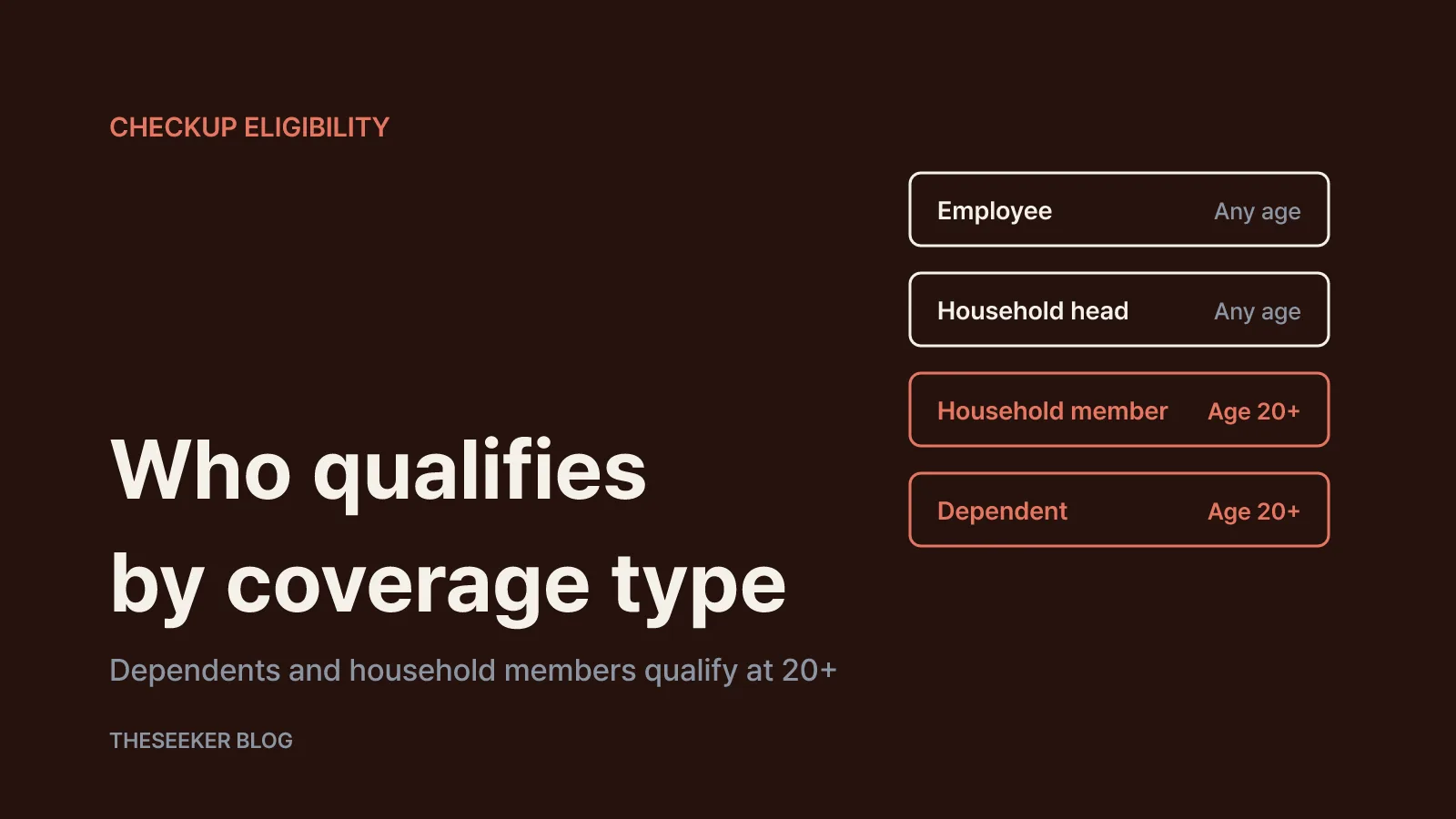
Korea's public health portal (e-Health) lists the 2026 general checkup program, and the Ministry of Health and Welfare's checkup page sets out the same eligibility groups. For people in their 20s, the relevant groups are:
- Employee subscribers (직장가입자): anyone insured through an employer, with no minimum age. Office workers are screened once every two years; non-office (manual or production) workers are screened every year.
- Heads of regional households (지역가입자 세대주): freelancers or self-employed people who are the head of their own regional subscriber household.
- Regional household members aged 20+: adults living in a household covered under a regional (non-employer) subscriber, such as a self-employed parent.
- Dependents aged 20+ (피부양자): students or job seekers listed as dependents on a family member's employer coverage.
- Medical Aid recipients: household heads and members aged 20 to 64.
In practice, almost everyone in their 20s who is covered by National Health Insurance or Medical Aid falls into one of these groups. A common misconception is that dependents are excluded. They are not: the official guidance explicitly includes dependents aged 20 and older.
The even/odd birth-year rule
The general checkup runs on a two-year cycle, split by birth year. People born in an even-numbered year are eligible in even-numbered years, and those born in an odd-numbered year are eligible in odd-numbered years. A Korea.kr policy article explains the same rule from a participant's point of view.
Since 2026 is an even year, people born in 2000, 2002 or 2004, for example, are in this year's cohort. If you were born in an odd year, your next eligible year is 2027. The main exception is non-office employees, who are eligible every year. Age- and sex-specific tests are added when you reach the relevant age.
Your eligible year runs until December 31. If you are in the 2026 cohort and have not been screened yet, the simplest move is to book within the next two months, ideally before clinics get busy at year-end. If you do miss your year, the Korea.kr article notes that the NHIS website has a menu for people who missed the previous year's checkup to request being added to the current year's list.
How to check whether you are eligible
Rather than guessing from your birth year alone, confirm through official channels:
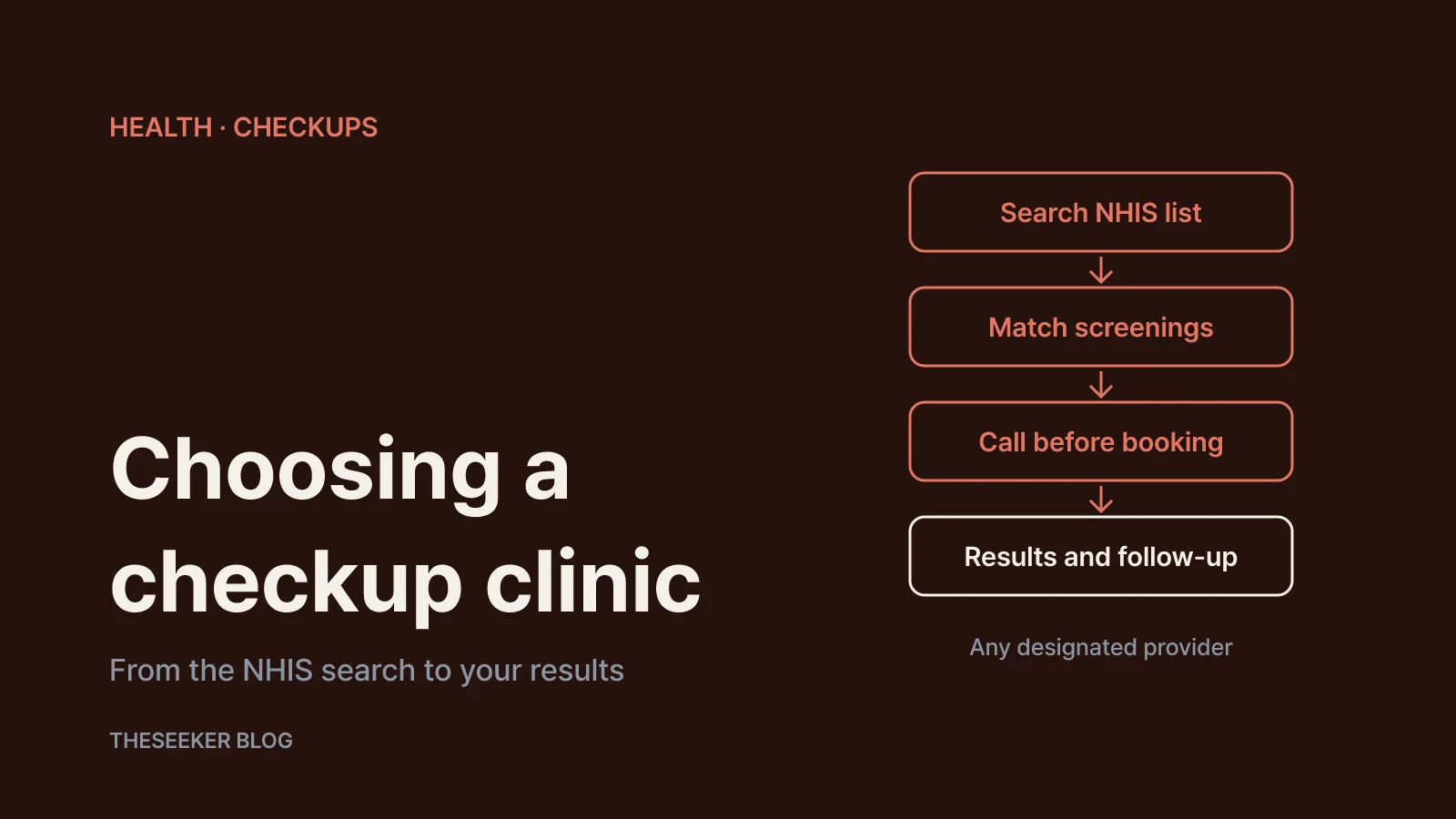
- Look for your notice. The National Health Insurance Service (NHIS) sends eligible people a checkup form and notice as an electronic document through Naver, PASS or KakaoTalk, and mails a paper copy only to those who do not receive the electronic version, according to the e-Health program page.
- Use the NHIS lookup. The NHIS website has a checkup eligibility lookup (검진대상 조회). After identity verification it shows whether you are eligible this year and for which screenings.
- Try the mobile app. The "The 건강보험" app offers checkup menus and a search tool for designated clinics.
- Lost the form? You can print an eligibility certificate (검진대상 확인서) from the NHIS website instead.
- Still unsure? Call the NHIS customer center at 1577-1000 or the health and welfare helpline at 129.
If the lookup says you are not eligible, double-check your birth year parity first, then consider whether your coverage changed recently, for example moving from dependent status to your own employer plan.
Standard tests included in your 20s
For people in their 20s, the checkup centers on the common items given to every participant. According to the e-Health 2026 test list, these are:
- Questionnaire and consultation with a physician about lifestyle and medical history
- Body measurements: height, weight, obesity index and waist circumference
- Blood pressure, vision and hearing
- Chest X-ray
- Urine test (urine protein)
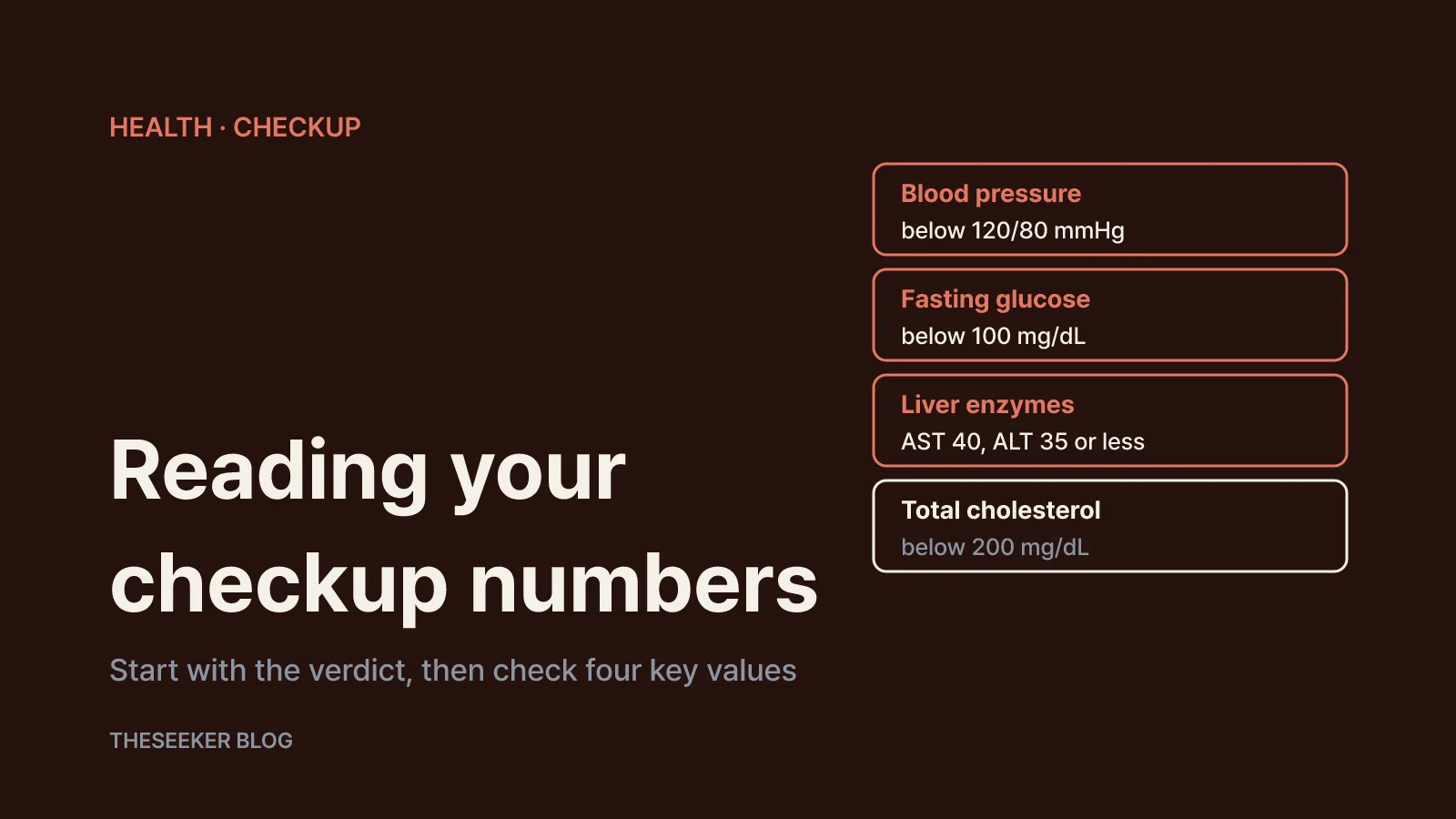
- Blood tests: hemoglobin, fasting blood glucose, AST, ALT and gamma-GTP (liver markers), serum creatinine and eGFR (kidney function)
- Oral (dental) exam
The real value for a healthy 25-year-old is a baseline. Recording your blood pressure, fasting glucose and liver markers while you feel fine gives you something to compare against two years later, which is especially useful during years of late nights, irregular sleep or frequent drinking.
Extra screenings worth knowing about in your 20s
Some age- and sex-specific items can apply in your twenties. Check your lookup result or form to see which ones are included for you.
Cholesterol panel for men 24 and older
The four-part lipid panel (total cholesterol, HDL, triglycerides and LDL) is offered every four years to men aged 24 and older and women aged 40 and older, per the Ministry of Health and Welfare. Men in their late 20s may therefore see it on their form, while women in their 20s will not get it as part of the national checkup.
Mental health screening every two years (ages 20 to 34)
This is the biggest recent change for young adults. Depression screening used to happen once a decade, at ages such as 20 and 30. Since 2025, people aged 20 to 34 receive a depression screen (PHQ-9) every two years, plus a newly added early psychosis screen (CAPE-15) on the same cycle. Both are short self-report questionnaires. The Korea.kr article explains that the change targets early detection because major conditions such as depressive and bipolar disorders often first appear in young adulthood. Answer honestly; the result is a starting point for a conversation with the examining doctor, not a diagnosis.
Cervical cancer screening for women 20 and older
Among Korea's national cancer screenings, the one that applies in your 20s is cervical cancer screening. The National Cancer Information Center lists women aged 20 and older as eligible for a Pap smear every two years. Stomach and breast cancer screening start at 40 and colorectal screening at 50. Bring the cancer screening notice from NHIS and your ID to a designated cancer screening clinic, and ask when booking whether you can do it on the same day as the general checkup.
What is not included yet
Hepatitis B testing happens at 40, hepatitis C antibody testing at 56, and lifestyle assessments at 40, 50, 60 and 70. Their absence from your form is expected. If you have symptoms or specific risk factors, see a doctor separately rather than waiting for the national program.
Preparing for the day and using your results
You can go to any designated clinic, regardless of your registered address. Find one through the NHIS website or app and book ahead.
- Bring ID: a resident registration card, driver's license or passport.
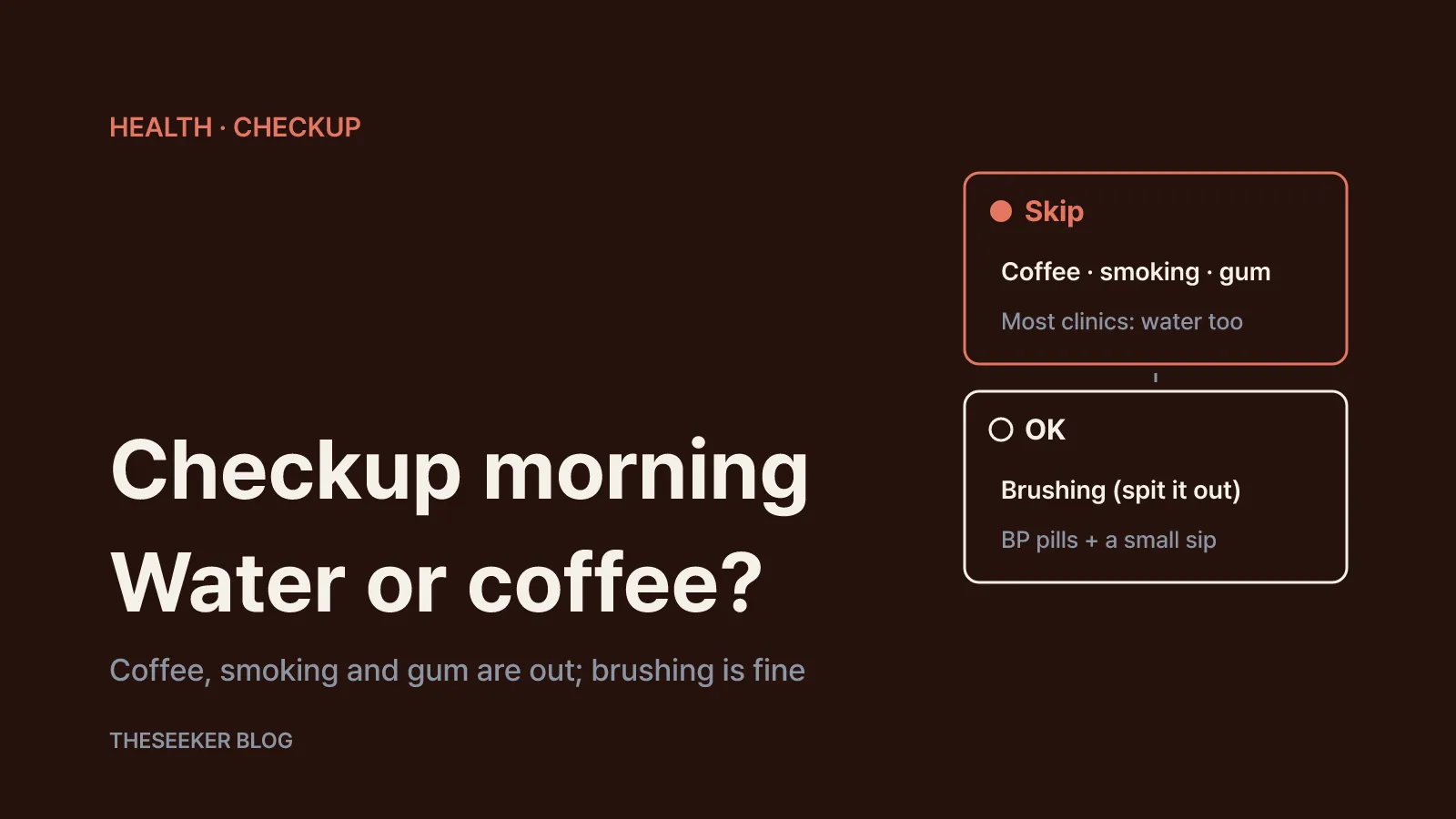
- Fast as instructed: fasting blood glucose is measured, so follow the clinic's fasting instructions. A morning appointment makes this easier.
- Prepare your history: note any medications, drinking and smoking habits, and family history.
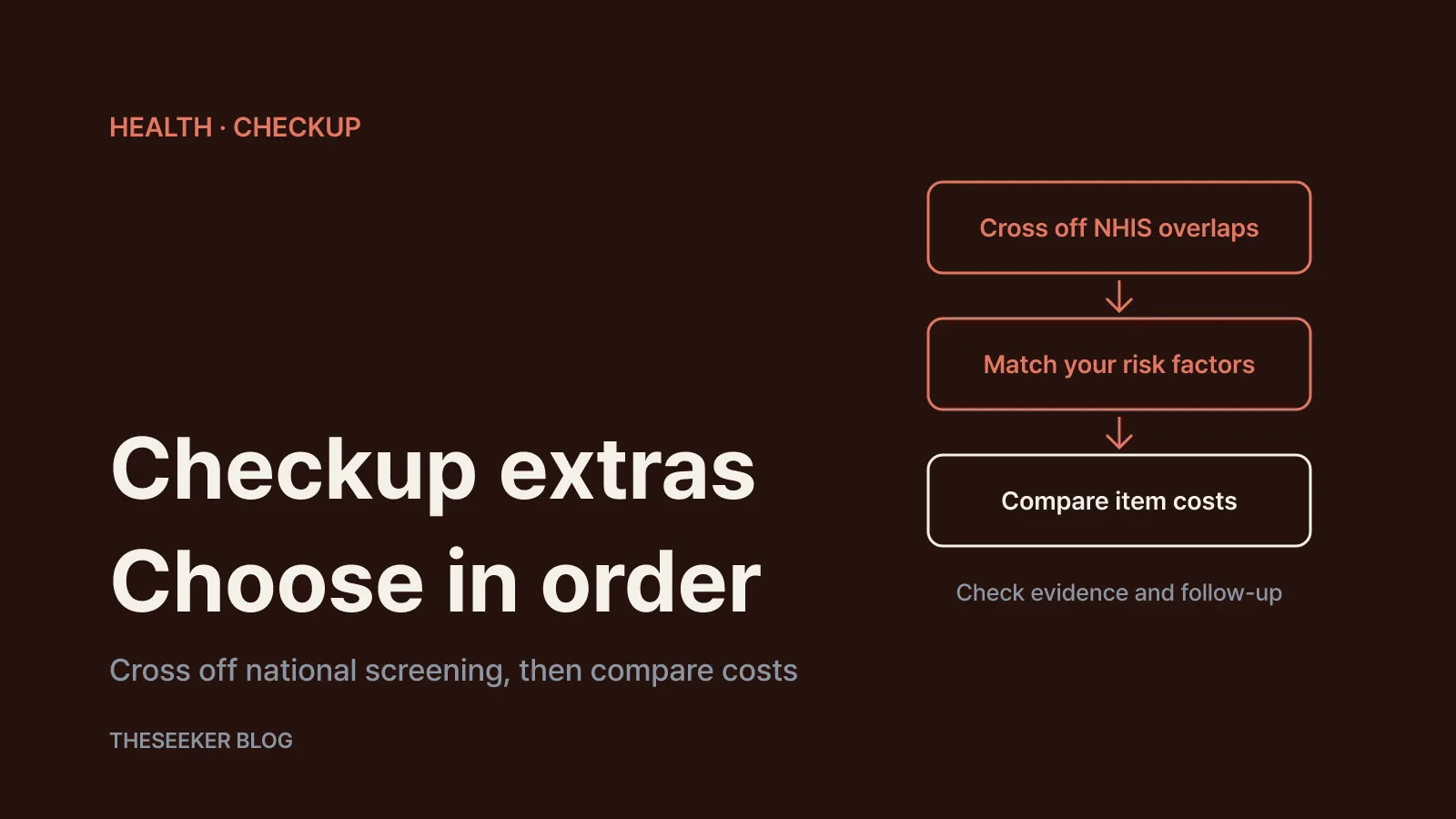
- Separate optional add-ons: clinics may suggest extra tests outside the national program. Ask at check-in which items are part of the national checkup and which are optional, and whether the optional ones cost extra.
Afterward, compare results with your previous checkup using the results menu on the NHIS website. If any item is flagged for attention, review the related habits and follow the guidance on your result sheet about seeing a doctor.
For people in their 20s, the national checkup is less about finding disease and more about building a reliable personal record. Taking it every two years costs little time and gives you the clearest picture of how your health changes over the decade.
Sources
Frequently asked questions
I'm a university student covered as a dependent on my parent's insurance. Am I eligible?
Yes. Dependents aged 20 and older are eligible for the general checkup every two years, in the year matching their even or odd birth year. You can confirm through the NHIS eligibility lookup after identity verification.
As an employee, do I get checked every year or every two years?
Office workers are screened once every two years, following the even/odd birth-year rule. Non-office workers are eligible every year.
What happens if I miss my checkup year?
Your eligible year runs to December 31, so booking before then is simplest. According to Korea.kr, the NHIS website also offers a menu where people who missed the previous year can request to be added to the current year's list.
Does the checkup in your 20s include a cholesterol test?
The four-part lipid panel is offered every four years to men aged 24 and older and women aged 40 and older, so men in their late 20s may receive it while women in their 20s do not.
Is there a national cancer screening for women in their 20s?
Yes. Women aged 20 and older can receive cervical cancer screening with a Pap smear every two years at a designated cancer screening clinic.
blog.theseeker.io/en/posts/national-health-checkup-in-your-20s-eligibility
Sophia Reed
Sophia covers checkups, nutrition and everyday health habits, drawing on guidance published by public health agencies and medical societies.
Read our editorial standards