How to Choose Optional Checkup Tests in Korea
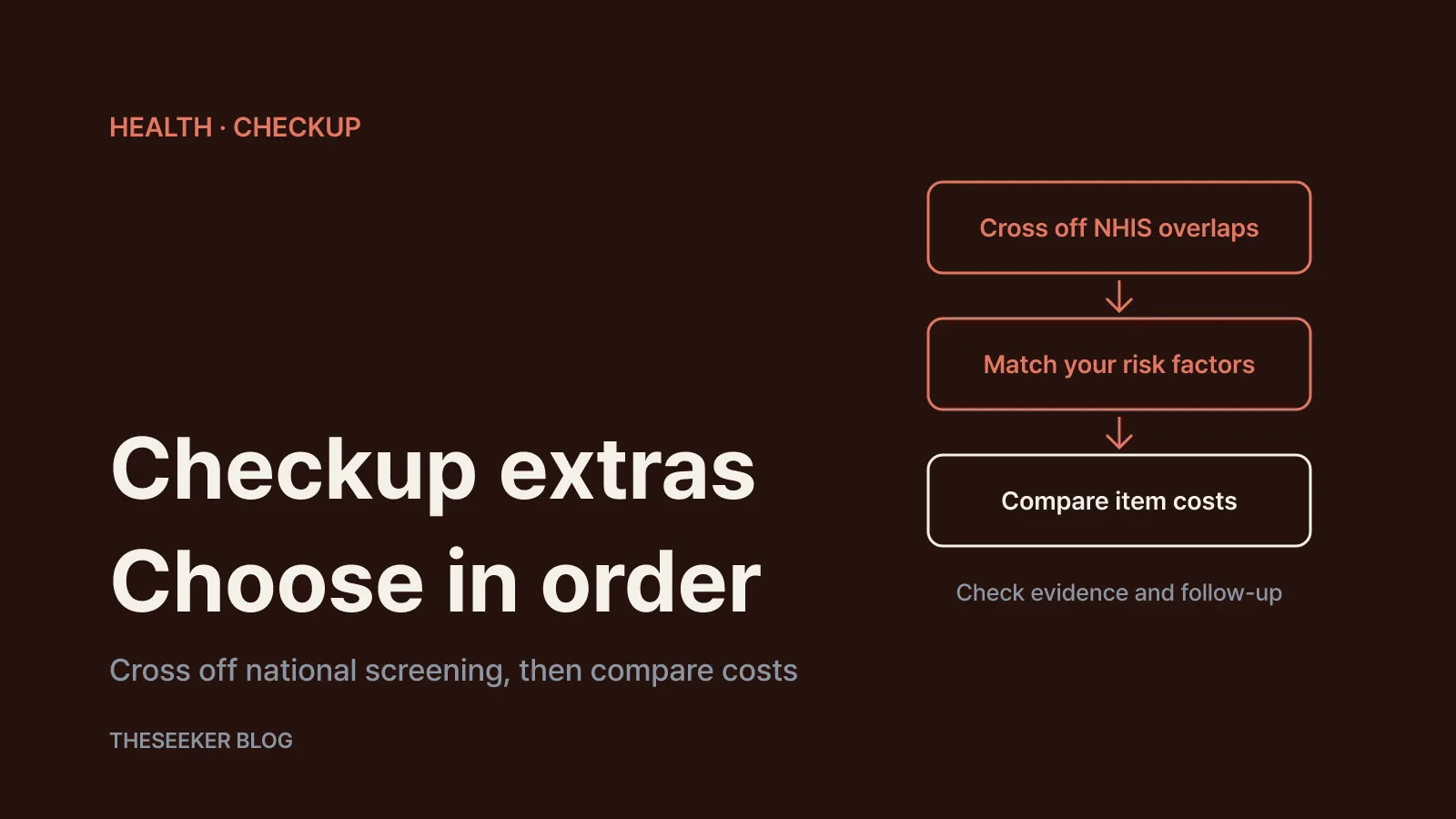
Cross off what Korea's free national screening already covers, keep only tests tied to your own risk factors, then compare the remaining prices with HIRA's non-covered fee lookup.
 Sophia Reed
In this post
As of October 2026, the smartest way to choose optional tests for a health checkup in Korea is not to buy the biggest package. Start by crossing off everything the National Health Insurance Service (NHIS) already screens you for this year, keep only the extras that connect to your age, sex and lifestyle risks, and then compare prices for what is left. Korea's general health checkup and national cancer screening have fixed ages and intervals, and insurance pays most or all of the cost. If you skip that step, you can easily end up paying privately for a test you were entitled to almost free.
This guide is for anyone insured under Korea's National Health Insurance, including foreign residents enrolled through work or as regional subscribers, who is looking at a hospital's comprehensive checkup menu or the optional list in a company checkup. It is based on criteria published by the NHIS and the Korea Disease Control and Prevention Agency (KDCA). If you already have symptoms or a diagnosed condition, a regular clinic visit may be a better starting point than a screening package.
Know what the national checkup already gives you
According to the KDCA national health information portal, the core items of the general health checkup are a consultation, body measurements (height, weight, waist circumference, obesity index), vision and hearing tests, blood pressure, a chest X-ray, blood tests (hemoglobin, fasting glucose, AST, ALT, γ-GTP, serum creatinine and eGFR), a urine test and a dental check. Together these cover anemia, diabetes, liver function and kidney function. The NHIS pays the full cost of the general checkup, and Medical Aid recipients are covered by national and local government.
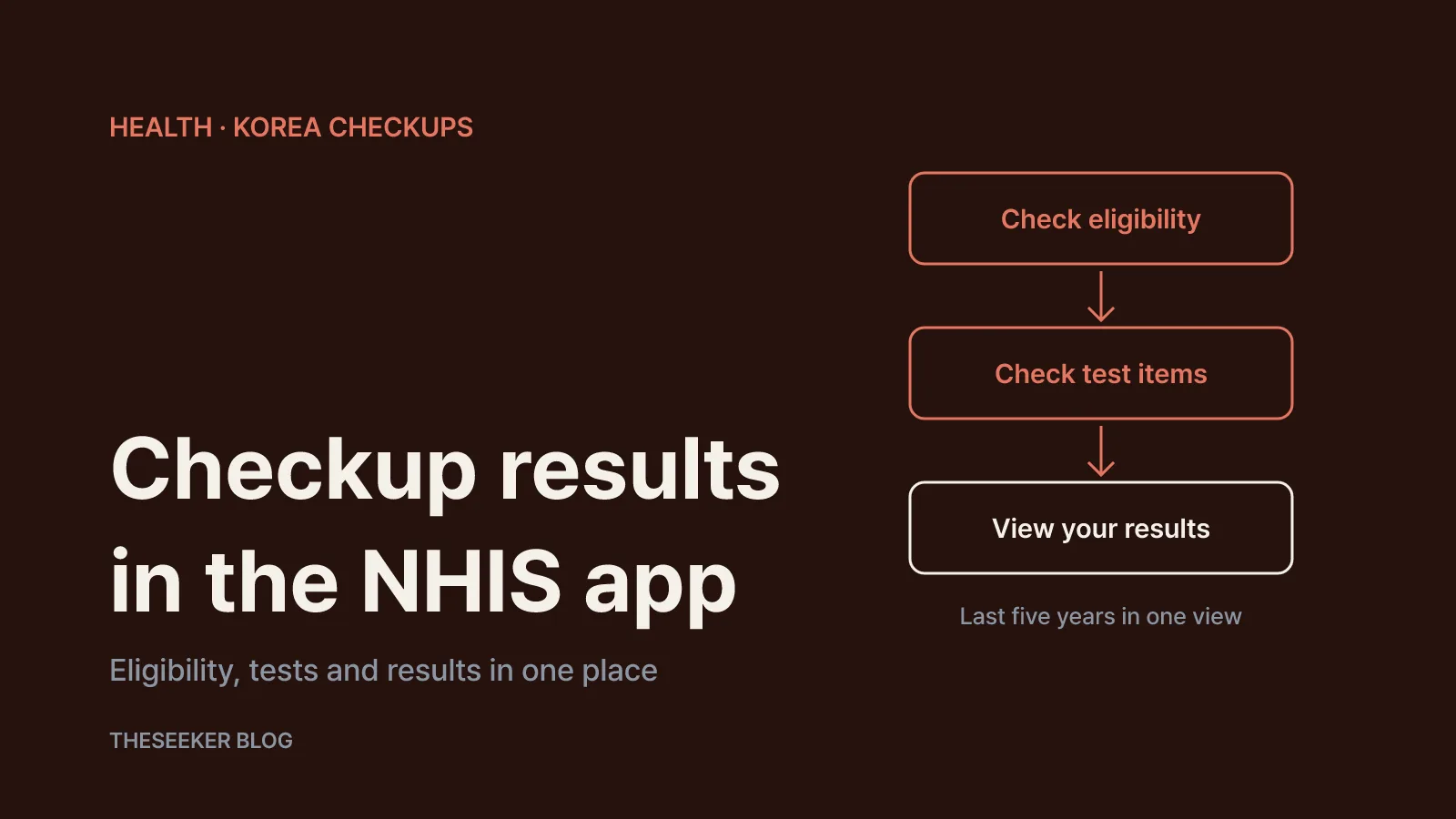
Eligibility usually runs on a two-year cycle: people born in even years are invited in even years, and those born in odd years in odd years. Non-office (manual) workers are eligible every year. You can confirm whether you are eligible this year on the NHIS website or in the 건강보험25시 (Health Insurance 24/7) app. If you missed last year's checkup, the KDCA notes that you can request it this year through the NHIS catch-up service without extra charge.
Cancer screening is a separate program. Per the NHIS cancer screening page, the NHIS pays 90% and you pay 10%, except cervical and colorectal cancer screening, which the NHIS covers in full. People in the bottom 50% of insurance contributions who are on the national cancer screening list, and Medical Aid recipients, pay nothing.
Mark the age-based tests you are already due for
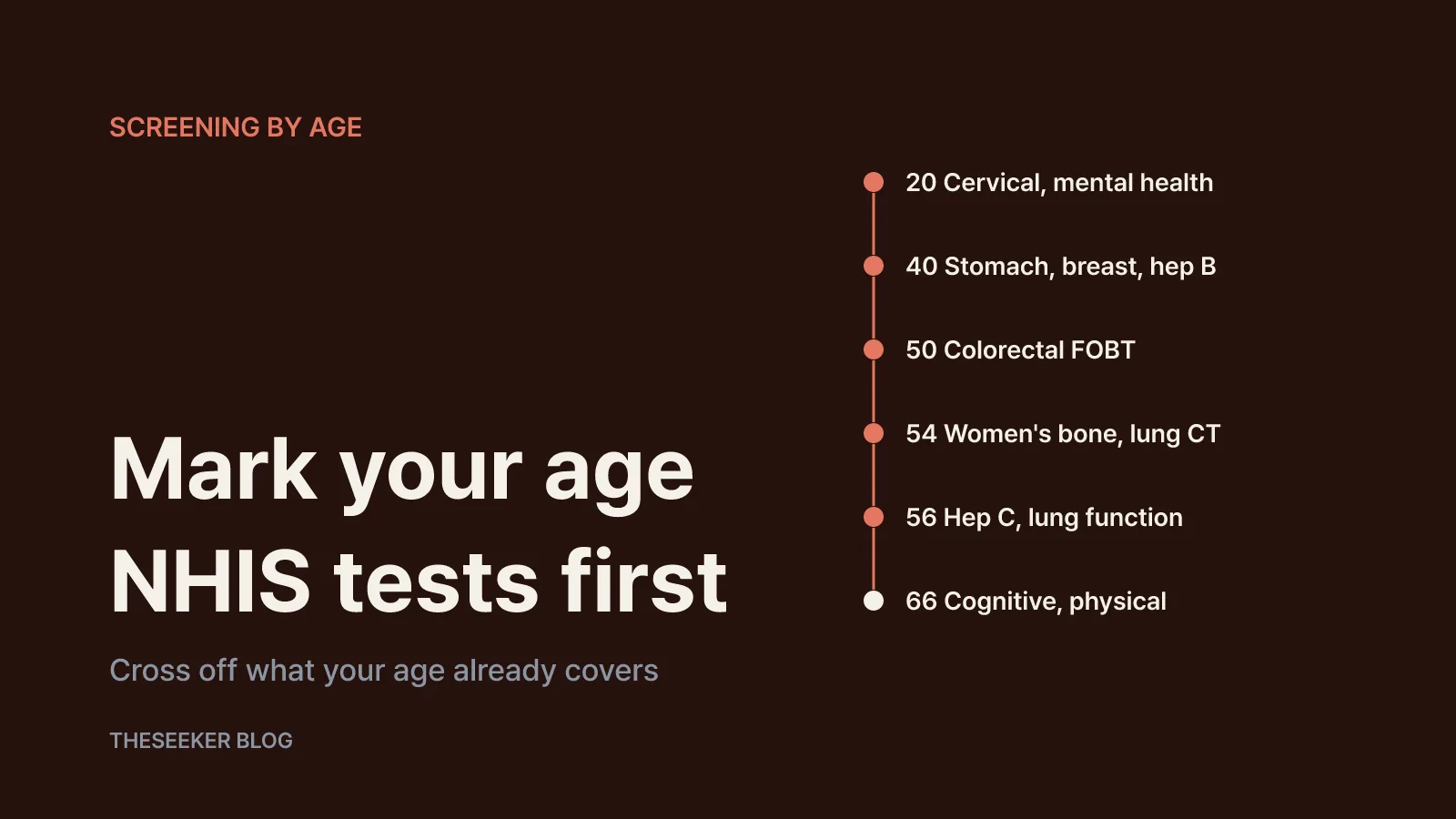
The national program changes with age, so mark what applies to your age this year before you open any package brochure. The KDCA lists these sex- and age-specific items, citing the 2026 revision of the checkup standards:
- Ages 20 to 34: depression (PHQ-9) and early psychosis (CAPE-15) screening every two years.
- Ages 35 to 39: one depression screening within this band; then once in each decade from the 40s to the 70s.
- Age 40: hepatitis B test (except known carriers or immune people), a lifestyle assessment and a dental plaque test.
- Women at 54, 60 and 66: bone density scan.
- Age 56: hepatitis C antibody test; lung function testing at 56 and 66.
- Age 66 and older: cognitive impairment screening (KDSQ-C) every two years, and a physical function (fall-risk) test at 66, 70 and 80.
- Ages 50, 60 and 70: the lifestyle assessment (tobacco, alcohol, exercise, nutrition, obesity) repeats.
For cancer, the NHIS criteria are: stomach cancer from 40, every two years; breast cancer for women from 40, every two years; colorectal cancer from 50, every year; cervical cancer for women from 20, every two years. Liver cancer screening every six months applies to people 40 and over in a high-risk group, such as those with cirrhosis or chronic liver disease, or a positive hepatitis B surface antigen or hepatitis C antibody result in an earlier checkup. Lung cancer screening every two years applies to people aged 54 to 74 with a confirmed smoking history of 30 pack-years or more.
Once you mark these, a pattern appears: many popular package items, such as a stomach endoscopy at 40 or a mammogram for women over 40, are already in the national program. Check the method, though. The national colorectal screening starts with a fecal occult blood test (FOBT), and colonoscopy follows only if it is positive. The KDCA cancer screening guide states that if you go straight to colonoscopy without the FOBT, you pay the full cost yourself.
Match the remaining options to your lifestyle and history
The KDCA's own principles for national screening make a good filter for extras: the condition should be an important health problem, treatable when caught early, screenable with an acceptable method, with benefits that outweigh harms, and cost-effective.
Smoking has the clearest rule. Pack-years are packs per day multiplied by years smoked, so one pack a day for 30 years or two packs a day for 15 years both reach 30. The NHIS identifies smokers through national checkup or smoking-cessation program questionnaires, and former smokers who quit within the past 15 years can stay eligible until 74. If you fit, check national eligibility before paying for a low-dose chest CT yourself.
Hepatitis and liver disease form the second axis. Carriers of hepatitis B or C and people with cirrhosis or viral chronic liver disease can get liver ultrasound plus an alpha-fetoprotein blood test twice a year through national screening. The age-40 hepatitis B and age-56 hepatitis C tests are the gateway, so check those results before adding imaging.
Drinking, diet and exercise are already addressed by the lifestyle assessment at 40, 50, 60 and 70, which includes counseling, and by the standard liver and glucose blood markers. Tracking those numbers over time often tells you more than one extra scan.
Family history, existing conditions and current symptoms are a reason to see a doctor first. National criteria and screening guidelines are written for people without symptoms.
Weak-evidence tests deserve a second look. Korea's seven-cancer screening recommendations, developed under the National Cancer Center, do not recommend routine thyroid cancer screening because evidence on benefits and harms is insufficient. The KDCA also notes that pancreatic cancer is not a screening target because early detection without symptoms is difficult. On the other hand, those recommendations suggest starting colorectal screening at 45, earlier than the national program's 50, which is worth discussing if you are 45 to 49.
Count the follow-up tests, not just the first one
An extra test costs more than its sticker price. The KDCA reports that only about 2 in 1,000 people screened in the national program are diagnosed with cancer. Among 1,000 women aged 40 and over in national breast screening, about 140 need further tests, yet only about 2 turn out to have cancer. The other 138 go through extra procedures and worry for a false positive. The agency also lists radiation from X-ray-based tests and bleeding or perforation from endoscopy and biopsy as direct harms, which can be more frequent at the confirmation stage.
For every optional test, write down three things: what follow-up you would need if it is abnormal, whether the same center can do it, and who pays. Under the national general checkup, suspected hypertension, diabetes, tuberculosis, depression, early psychosis or hepatitis C qualify for one confirmatory test at a local clinic with no copay, and suspected dyslipidemia gets one free consultation (not the test fee), valid until January 31 of the following year. Findings from tests you added privately may not come with that support.
Compare prices item by item
Split your costs into three groups. First, national items: free for the general checkup, 10% or 0% for cancer screening. Second, add-ons to national items: the KDCA notes that sedation for a stomach endoscopy or a Helicobacter test adds costs you pay yourself. Third, non-covered (비급여) extras outside the national program, whose prices vary between institutions.
For the third group, use HIRA's non-covered fee lookup. According to the government policy briefing, you can open 비급여 진료비 정보 from the 조회·신청 menu on the Health Insurance Review and Assessment Service (HIRA) website, or in the 건강e음 mobile app. Search by hospital name, or by region, institution size and item, including imaging such as ultrasound and MRI. A map view shows regional and size-based prices, and you can save up to 20 institutions to compare prices and notes side by side.
With a bundled package:
- Mark items that overlap with national screening and ask whether doing the national checkup the same day removes them from the price.
- Confirm the exact method for each remaining item, such as which body area an ultrasound covers and whether endoscopy is sedated.
- Look up two or three key items in the HIRA tool and compare with the package's add-on price.
- Ask whether biopsy, extra readings or retests are included.
- For a company checkup, check with HR which items the employer funds and which you pay for.
A pre-booking checklist
- Check this year's general and cancer screening eligibility in the 건강보험25시 app or on the NHIS site.
- List the age-specific and cancer screening items for your age this year.
- Confirm risk factors that change eligibility, such as pack-years and hepatitis status.
- Cross off overlaps in any package or company list.
- For each remaining option, note the evidence and the likely follow-up.
- Price the extras with HIRA's lookup and ask about sedation and biopsy fees.
- Results arrive within 15 days by mail or email and appear in the app; note the January 31 deadline for any confirmatory test.
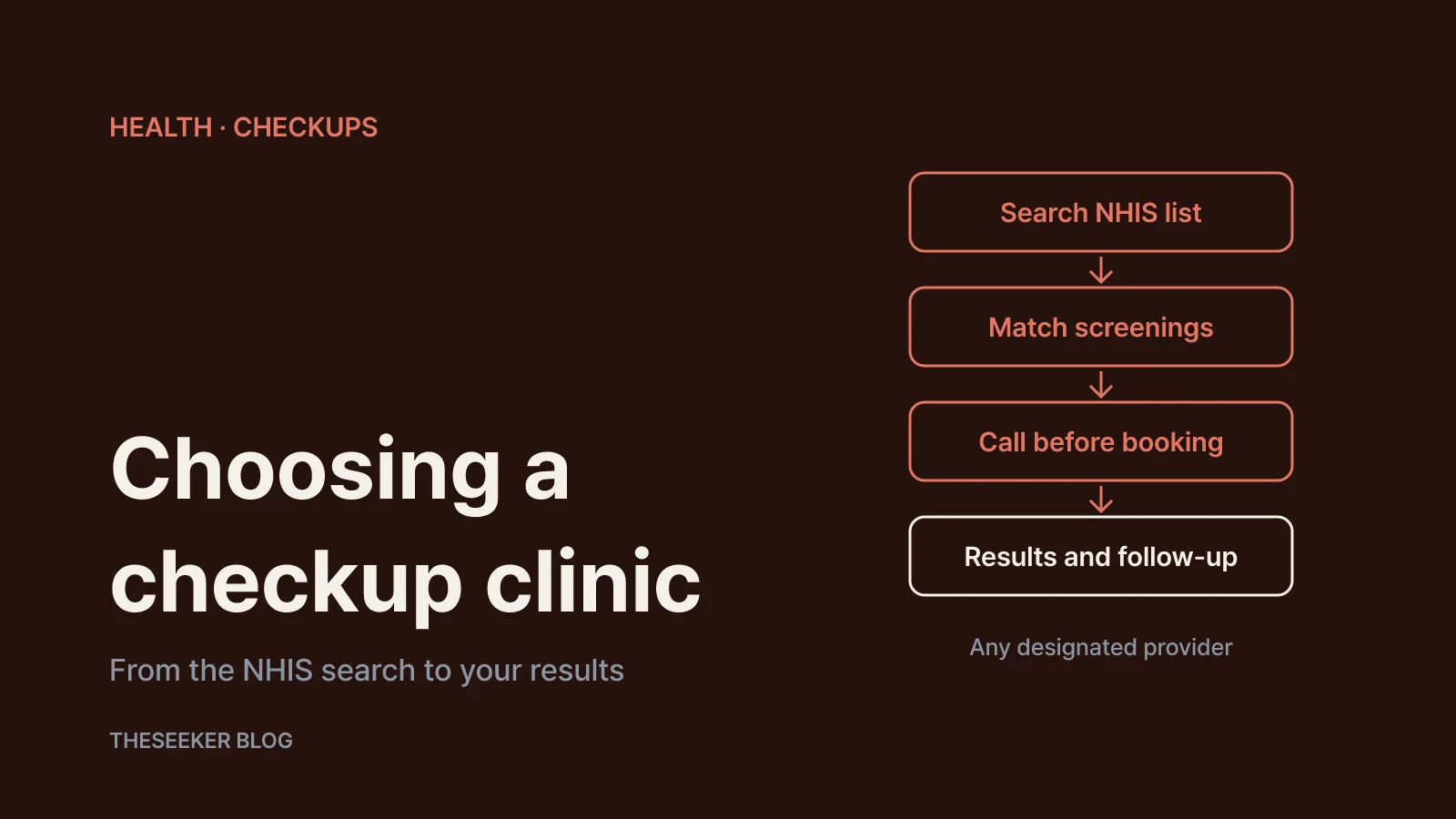
National checkups can be done at any designated center nationwide regardless of your address, and you can find one through the NHIS site or app. Choosing extras this way means the deciding factors are your age, your risks and the money you will actually spend, not the package tier.
Sources
Frequently asked questions
If I buy a comprehensive checkup package, can I skip the national checkup?
They are separate. The NHIS pays fully for the general checkup and most of cancer screening, so overlapping items are usually cheaper through the national program. Ask the center whether you can do both on the same day and whether overlapping items come off the package price.
Does going straight to colonoscopy count as national colorectal screening?
No. National screening starts with a fecal occult blood test, and colonoscopy follows a positive result. The KDCA says that without the FOBT, you pay the full colonoscopy cost.
Who qualifies for the national low-dose lung CT?
People aged 54 to 74 with a confirmed smoking history of 30 pack-years or more, every two years. Former smokers who quit within the last 15 years can remain eligible until 74.
Where can I compare prices for optional tests in Korea?
Use HIRA's non-covered fee information (비급여 진료비 정보) on its website or the 건강e음 app. You can search by hospital or by region, size and item, and save up to 20 institutions for comparison.
Should I add a thyroid ultrasound?
Korea's seven-cancer screening recommendations do not advise routine thyroid cancer screening because the evidence is insufficient. If you have symptoms or a clinical reason, decide with a doctor.
blog.theseeker.io/en/posts/health-checkup-extra-tests-by-age-and-cost
Sophia Reed
Sophia covers checkups, nutrition and everyday health habits, drawing on guidance published by public health agencies and medical societies.
Read our editorial standards