What to Wear in Japan: Outfits by Season, Region, Packing
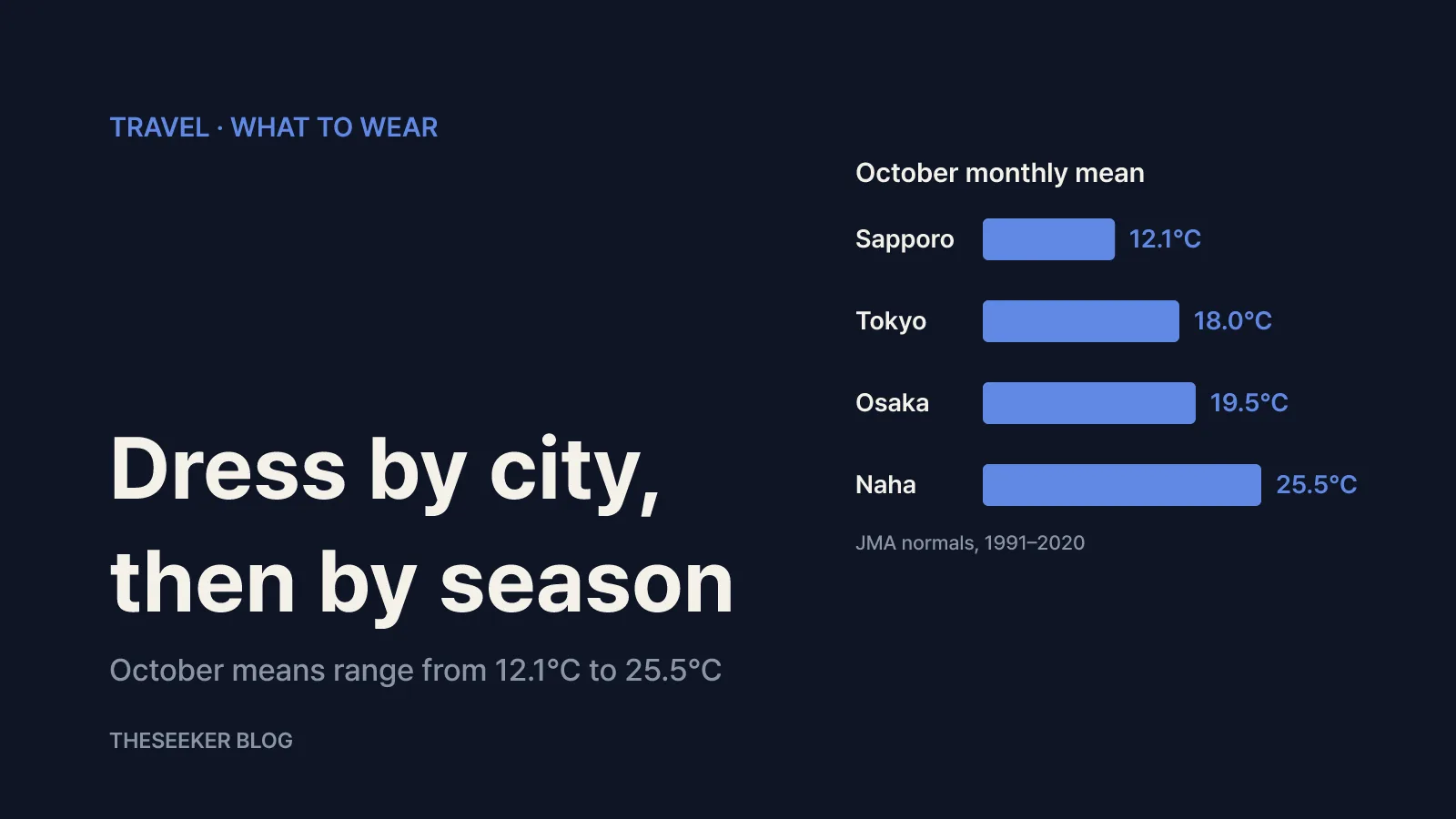
In October alone, monthly mean temperatures run from 12.1°C in Sapporo to 25.5°C in Naha. Using Japan Meteorological Agency normals and official tourism guidance, here is how to dress by season and city and pack a lighter bag.
 Daniel Foster
In this post
- What to wear in Japan by season
- Spring (March–May): always carry a light layer
- Summer (June–August): plan for rain, heat and air conditioning
- Autumn (September–November): treat September as summer and November as early winter
- Winter (December–February): a city coat, or real cold-weather gear in Hokkaido
- Japan weather by region: Sapporo, Tokyo, Osaka and Naha
- Hokkaido: seasons arrive about a month early
- Tokyo, Osaka and Kyoto: similar, but Kansai summers run hotter
- Okinawa: light layers in winter, rain gear year-round
- Visiting several cities?
- Walking shoes and a simple layering system
- Bring two pairs
- Think in three layers
- How to pack light for Japan
- Stick to two or three colors
- Wear your bulkiest items on the plane
- Choose quick-dry fabrics and plan laundry
- Leave room for what you can buy there
- A simple packing formula
- A pre-trip checklist for the week before you fly
- Sources
- Frequently asked questions
As of October 2026, the quickest way to decide what to wear in Japan is to look at where you are going before you think about the season. Japan Meteorological Agency (JMA) climate normals for 1991–2020 put the October monthly mean temperature at 12.1°C (about 54°F) in Sapporo, 18.0°C (64°F) in Tokyo, 19.5°C (67°F) in Osaka and 25.5°C (78°F) in Naha. That spread is wider than many first-time visitors expect. Rather than hunting for one perfect outfit, check the normal temperature for each city on your route and build a wardrobe of thin layers you can add or remove. It keeps your bag smaller and saves you from shivering in Hokkaido or overheating in Okinawa.
This guide does not forecast the weather for a particular date. It uses 30-year averages to set your baseline wardrobe, then shows how to adjust one or two pieces with the forecast just before you leave. It focuses on clothes, shoes and how to pack them, not on a full travel checklist.
What to wear in Japan by season
Climate normals are a baseline, not a promise. The Kyoto City Tourism Association notes that summer days above 35°C (95°F) have become more common in recent years. Use the averages to choose the weight of your clothing, then leave room to go one layer warmer or cooler.
Spring (March–May): always carry a light layer
GO TOKYO, the city's official travel guide, says early spring is still chilly enough for a coat or fleece, while by May most days are warm enough for short sleeves, though mornings and evenings cool down. Tokyo's monthly means are 9.4°C in March, 14.3°C in April and 18.8°C in May. Kyoto's tourism association suggests a coat with some thickness and a sweater in March, and an easy-to-carry jacket with a long-sleeved top in April and May.
- March: long-sleeved tee, light sweater, a reasonably warm coat
- April: long-sleeved tee, shirt or cardigan, trench coat or windbreaker
- May: mix short and long sleeves, plus a packable light jacket
Cherry blossom evenings often mean standing outdoors after dark, so keep that jacket in your day bag rather than at the hotel.
Summer (June–August): plan for rain, heat and air conditioning
GO TOKYO describes the rainy season from June to mid-July as humid, with humidity often above 80%. A heavy coat makes it feel worse; a breathable rain jacket works better, and waterproof shoes help if you plan to walk a lot. After the rainy season, temperatures can climb above 35°C and seldom fall below 25°C after sunset. JMA normals put Osaka's average August high at 33.7°C (about 93°F).
Indoors can be the opposite. Kyoto's tourism association warns that air-conditioned shops, trains and buses can feel surprisingly chilly, and recommends a hat or parasol and sunscreen outdoors. GO TOKYO adds that if you want to blend in, avoid anything too revealing.
- Tops: quick-dry tees or linen shirts
- Bottoms: lightweight trousers, wide-leg pants or knee-length shorts
- Cover-up: one thin long-sleeved shirt for sun and cold trains
- Rain: a compact umbrella or breathable rain shell; convenience stores also sell inexpensive umbrellas
Autumn (September–November): treat September as summer and November as early winter
Autumn has the biggest swing within a single season. GO TOKYO notes that heat above 30°C (86°F) can linger into September and typhoons can disrupt plans. Tokyo's mean drops to 18.0°C in October and 12.5°C in November. Early November can still be T-shirt weather, but you will likely want a sweater with a jacket on top.
Kyoto's guidance describes warm days followed by sudden evening chills, and recommends long sleeves, long trousers and a jacket or sweater for mornings and nights. Osaka's JMA normals show the same daily swing: an average high of 23.7°C and low of 16.0°C in October, and 17.8°C and 10.2°C in November.
- September: summer clothes plus a light shirt for air conditioning
- October: long-sleeved tee, thin knit or cardigan, light jacket
- November: sweater and a warmer jacket; add a light down jacket if you have many late-night plans
In short, for Tokyo or Osaka in October: one long-sleeved layer by day, one extra layer at night.
Winter (December–February): a city coat, or real cold-weather gear in Hokkaido
According to GO TOKYO, December in Tokyo is mostly autumnal and the real cold arrives in January, with temperatures usually between 1 and 10°C. Twilight comes around 16:30, so afternoons get cold quickly. Pack sweaters, a wool coat or light down jacket, gloves, a scarf and a winter hat; heavier winter wear is usually unnecessary in the city. Kyoto averages around 7°C in December and 5°C in January and February, and its tourism association suggests layers that come off easily because buildings, buses and trains are heated.
Japan weather by region: Sapporo, Tokyo, Osaka and Naha
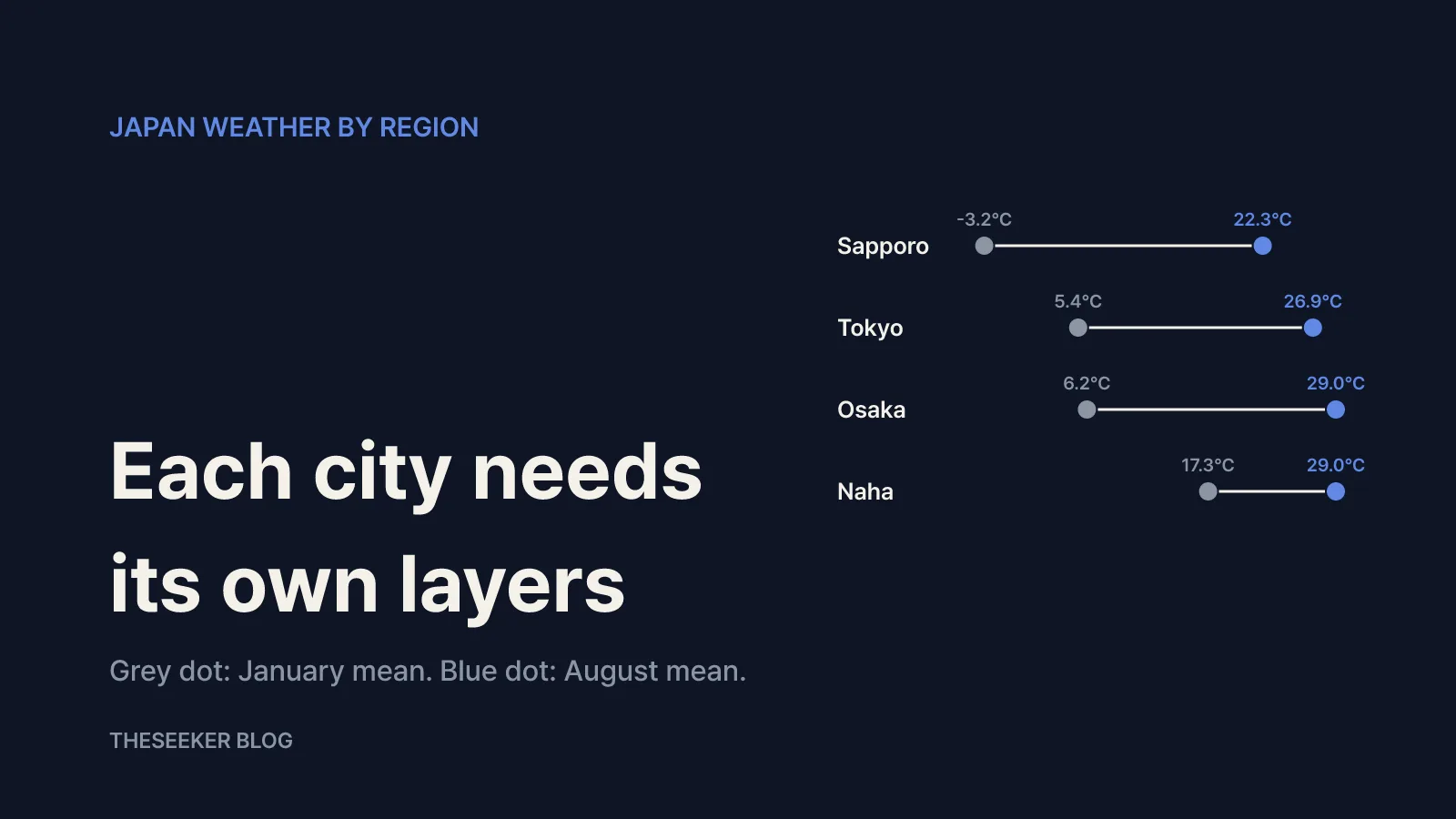
Japan stretches a long way north to south, so one trip can need two wardrobes. The table shows JMA 1991–2020 monthly mean temperatures. Sapporo and Tokyo figures come from the Hokkaido Tourism Organization, which cites JMA data; Osaka and Naha come directly from the JMA normals tables.
← Swipe to see more
| City | January | April | August | October |
|---|---|---|---|---|
| Sapporo | -3.2°C (26°F) | 7.3°C (45°F) | 22.3°C (72°F) | 12.1°C (54°F) |
| Tokyo | 5.4°C (42°F) | 14.3°C (58°F) | 26.9°C (80°F) | 18.0°C (64°F) |
| Osaka | 6.2°C (43°F) | 15.2°C (59°F) | 29.0°C (84°F) | 19.5°C (67°F) |
| Naha | 17.3°C (63°F) | 21.5°C (71°F) | 29.0°C (84°F) | 25.5°C (78°F) |
Hokkaido: seasons arrive about a month early
The Hokkaido Tourism Organization says April to June in Hokkaido feels like March in Tokyo. Early September is summer-like, but mornings and evenings turn chilly from mid-September, and the first snow falls from late October to early November. It recommends a light down jacket or thick coat for October and November, with a scarf and gloves from late October. By December, Sapporo's daily mean drops below freezing.
Two winter tips stand out: jeans are slow to dry once wet, and a thin, foldable inner down layer under your coat adds a lot of warmth. If you do not want to buy snow boots, the organization suggests removable non-slip spikes that attach to regular sneakers or boots, sold at convenience stores and shoe shops in Hokkaido.
Tokyo, Osaka and Kyoto: similar, but Kansai summers run hotter
Tokyo and Osaka follow a similar curve, so one wardrobe usually covers both. August is the exception: 26.9°C in Tokyo versus 29.0°C in Osaka. Kyoto sits in a basin ringed by mountains on three sides, which the city's tourism association says makes summers very hot and winters surprisingly cold. Pack an extra tee for Kansai in summer and warm socks in winter.
Okinawa: light layers in winter, rain gear year-round
Naha's January mean is 17.3°C, with an average high of 19.8°C and low of 14.9°C, so a long-sleeved top and light jacket replace a winter coat. October averages a high of 28.1°C and a low of 23.5°C, which means short sleeves most of the time. Rainfall is the bigger factor: normals are 245.3 mm in May, 284.4 mm in June and 275.2 mm in September, so pack a rain layer and shoes that dry quickly.
Visiting several cities?
Choose your outer layer for the coldest stop and your base layers for the warmest. For an October trip covering Sapporo and Osaka, wear a long-sleeved top on its own in Osaka, then add a sweater and light down jacket over the same top in Sapporo. No separate city wardrobes needed.
Walking shoes and a simple layering system
Train transfers, long station corridors and neighborhood wandering add up fast in Japan, so build your outfits around your shoes.
Bring two pairs
- Main pair: well broken-in sneakers or walking shoes. Brand-new shoes are the usual cause of blisters.
- Second pair: depends on the season. Sandals or quick-dry slip-ons in summer, waterproof shoes in the rainy season, and soles that grip or take spikes for Hokkaido in winter.
GO TOKYO recommends waterproof shoes for heavy walking during the rainy season. Some temples, shrines and restaurants ask you to remove your shoes, so slip-on styles and clean socks make life easier.
Think in three layers
- Base: next to the skin. Quick-dry tees in summer, thermal tops in winter.
- Mid: temperature control. Thin knits, cardigans or fleece that fold into a day bag.
- Outer: wind and rain. A windbreaker or trench in spring and autumn, a wool coat or light down in winter, and a windproof insulated jacket for midwinter Hokkaido.
When it is cold outside and warm inside, or hot outside and cold on the train, you only change one layer. A light tote or small backpack for the layer you take off completes the system.
How to pack light for Japan
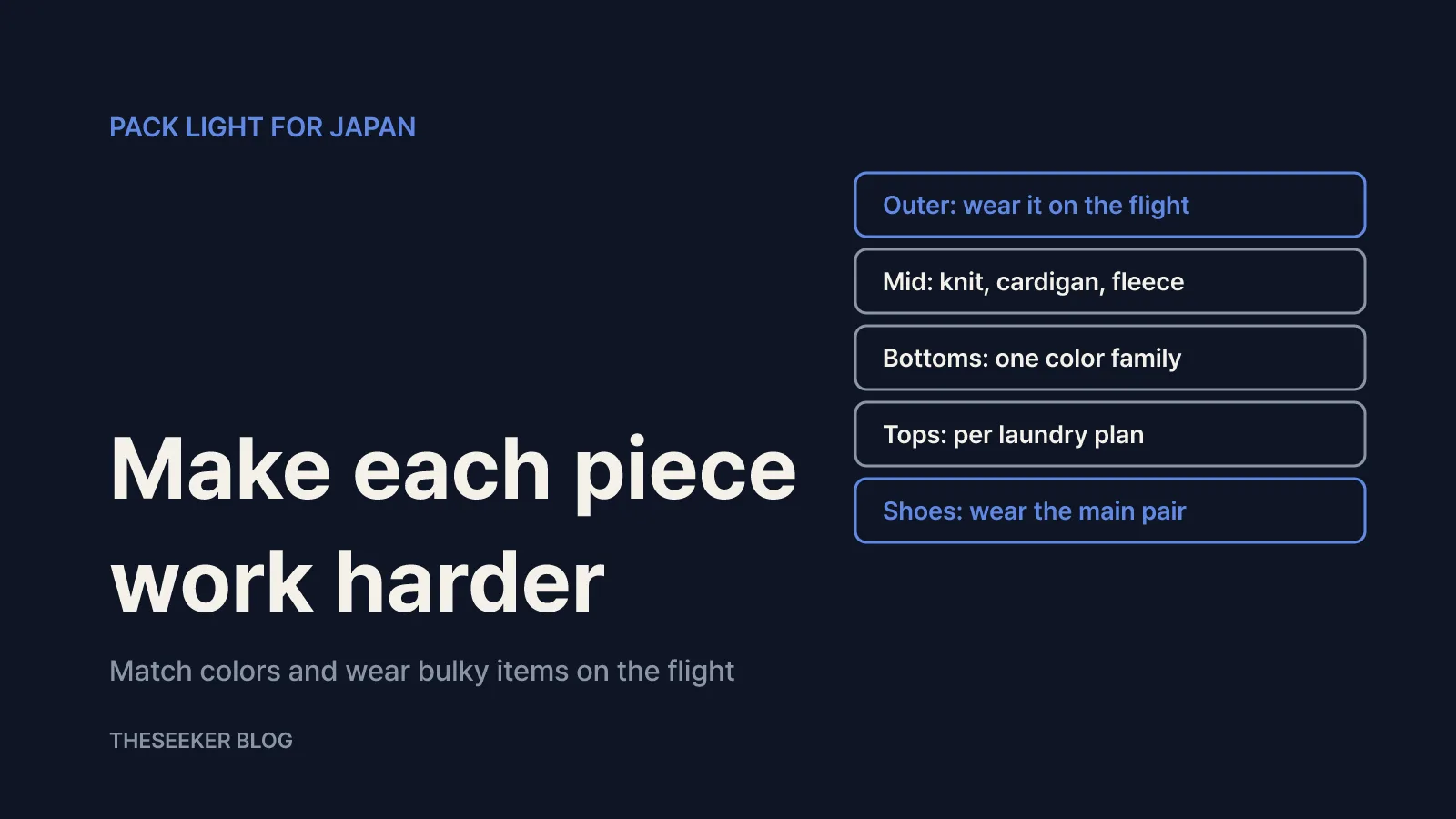
Packing light is less about leaving things behind and more about making each piece work harder.
Stick to two or three colors
Pick two neutrals, such as navy and grey or beige, plus one accent color. Every top then matches every bottom, so two pairs of trousers and a handful of tops create a different look each day.
Wear your bulkiest items on the plane
Bring one outer layer chosen for your coldest stop, and wear it on departure. Do the same with your heaviest shoes. A packable down jacket doubles as a blanket on the flight.
Choose quick-dry fabrics and plan laundry
Cotton denim is heavy and, as the Hokkaido guidance points out, slow to dry. Quick-dry tops and trousers can be hand-washed or run through a machine and worn again. Check whether your accommodation has a washer or a nearby coin laundry before you pack, and you can bring fewer tops than you have travel days.
Leave room for what you can buy there
Umbrellas are easy to find at convenience stores, and Hokkaido shops sell non-slip spikes. Leave some space for shopping on the way home.
A simple packing formula
- One outer layer, matched to your coldest stop and worn on the flight
- One or two mid layers
- Two bottoms in the same color family
- Tops based on your laundry plan, fewer than your number of days
- Two pairs of shoes, wearing the main pair on departure
A pre-trip checklist for the week before you fly
- List each city with its dates. If you move between Hokkaido and Osaka, treat them separately.
- Set the baseline with climate normals. Use the table above or JMA's normals to decide which seasonal setup you need.
- Mark your coldest and hottest moments. Night views, sunrise outings and heavily air-conditioned interiors change how warm you feel.
- Check for rainy-season or typhoon timing. For June–July or around September, pack rain gear and keep checking local forecasts, as GO TOKYO advises.
- Adjust one or two pieces with the forecast. If it will be warmer or colder than normal, drop or add a mid layer instead of repacking everything.
- Lay everything out before packing. Make sure every top works with every bottom and your outer layer fits over all of them. Remove anything that does not.
Follow this order and the just-in-case pieces disappear. The key to dressing for Japan is the normal temperature of each city and a layering system you can adjust one piece at a time.
Sources
Frequently asked questions
What should I wear in Japan in October?
It depends on the city. JMA normals put the October mean at 12.1°C in Sapporo, 18.0°C in Tokyo, 19.5°C in Osaka and 25.5°C in Naha. In Tokyo or Osaka, wear long sleeves with a thin knit or light jacket for evenings; in Sapporo, bring a light down jacket or thick coat; in Naha, short sleeves work most days.
Do I need snow boots for Hokkaido in winter?
Snow boots are ideal, but the Hokkaido Tourism Organization suggests removable non-slip spikes that attach to regular sneakers or boots if you do not want to buy a pair. They are sold at convenience stores and shoe shops in Hokkaido.
Should I pack long sleeves for summer in Japan?
Yes, one thin long-sleeved layer is worth it. Kyoto's tourism association notes that air-conditioned shops, trains and buses can feel surprisingly chilly, and the same shirt helps with sun protection.
How many outfits should I pack for a week in Japan?
Focus on structure rather than a fixed number: one outer layer, one or two mid layers and two bottoms in matching colors, with the number of tops based on whether you can do laundry where you stay.
Can I wear short sleeves in Okinawa in winter?
Naha's January average high is 19.8°C and the average low is 14.9°C. Light clothing works during the day, but pack long sleeves and a light jacket for mornings, evenings and wind.
blog.theseeker.io/en/posts/japan-travel-outfits-season-region-packing
Daniel Foster
Daniel covers trip planning, booking and on-the-ground tips, checking fast-changing details such as entry rules and fares against official sources and noting when they were checked.
Read our editorial standards