Newborn Care at Home After a Postpartum Center: First Week
Leaving a Korean postpartum center means taking over every feed and every night. Here is how to prepare the home, read feeding and diaper signs, set up safe sleep and plan the first checkup.
 Grace Whitman
In this post
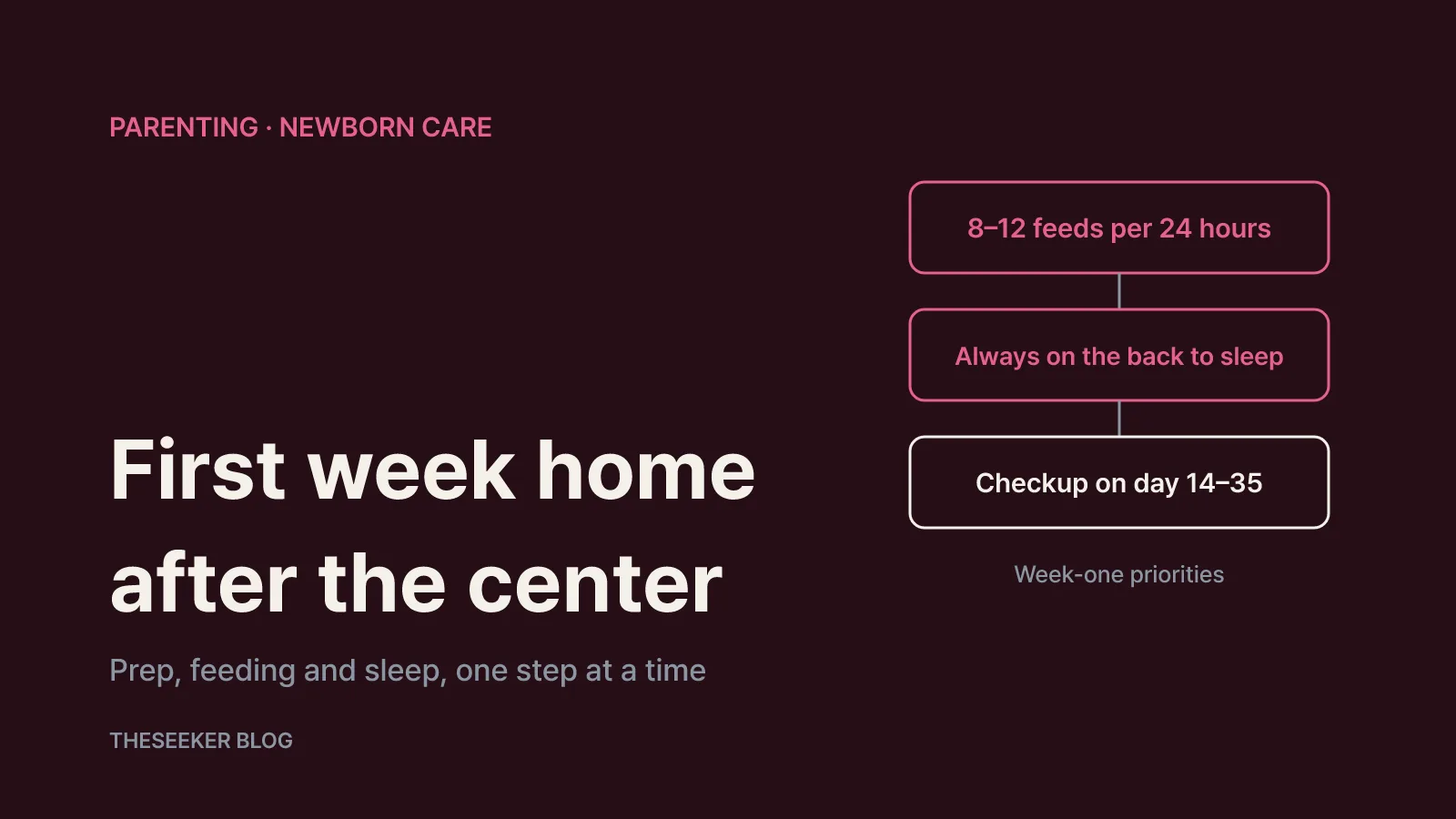
As of October 2026, the short answer is this: in your first week home from a postpartum center, focus on three things rather than a perfect schedule. Feed your baby on cue, roughly 8–12 times in 24 hours; always put them to sleep on their back on a firm, flat surface in their own crib or bassinet; and keep a simple log of feeds and diapers so you can tell whether they are getting enough. If you live in Korea, line up two public services before you leave the center as well: the free first infant health checkup (due between day 14 and day 35) and the postpartum home care helper voucher.
In Korea, many families spend the first weeks after birth in a postpartum care center (sanhujoriwon), where nursery staff track feeding times and handle much of the night care. Going home means all of that suddenly lands on the parents, which is why videos of new parents saying "the center was heaven" are so widely shared. This guide draws on public guidance from the American Academy of Pediatrics (AAP) and the US Centers for Disease Control and Prevention (CDC), plus Korean government program pages. If your baby was born early or needed treatment, the instructions from their own care team come first.
Get the home ready before you leave the center
Start with the sleep space. The AAP safe sleep guidance recommends sharing a room with your baby but never a bed. Place a crib or bassinet with a firm, flat mattress near your bed and use only a fitted sheet. Bumpers, pillows, quilts and soft toys stay out from day one.
Next, set up a feeding station: a chair or corner for night feeds with water, burp cloths and a phone or notepad for logging. If you use a nursing pillow, keep it for feeding only. The AAP specifically warns against letting babies sleep on products not designed for infant sleep, and lists nursing pillows among its examples.
Put diapers, wipes, spare clothes and a lidded bin in one changing area. For formula feeding, give bottles and cleaning gear a fixed spot; for pumping, keep the pump and storage containers together. Ask the center which formula and bottle nipples your baby has been using so you can start with the same ones.
Plan the people, not just the things. Broken sleep is the hardest part of the first week. Agree on a night split with your partner or family, such as one person covering the early night and another the early morning. If the mother is breastfeeding, the other adult can take diaper changes, burping and resettling so she can rest between feeds.
In Korea, the postpartum home care program sends a trained helper to your home. According to Gov24, the voucher covers 5 to 40 days depending on the number of babies, birth order and the length you choose. The basic eligibility line is a household health insurance contribution at or below 150% of the standard median income, with local exceptions above that. Gov24 lists the deadline as 30 days after birth, while the Seoul pregnancy and childbirth center allows applications up to 60 days after birth and says the voucher must be used within 90 days. Because rules vary by district, confirm with your local public health center while you are still at the postpartum center, and sign with a provider so help can start the day you get home.
Feeding: follow your baby's cues, expect 8 to 12 feeds a day
For healthy, full-term babies, the AAP feeding guide recommends watching the baby rather than the clock. Early hunger cues include lip licking, sticking the tongue out, rooting and bringing hands to the mouth. Crying is a late cue and can make latching harder. Not every suck or cry means hunger, though; sometimes a baby simply wants to be held or changed.
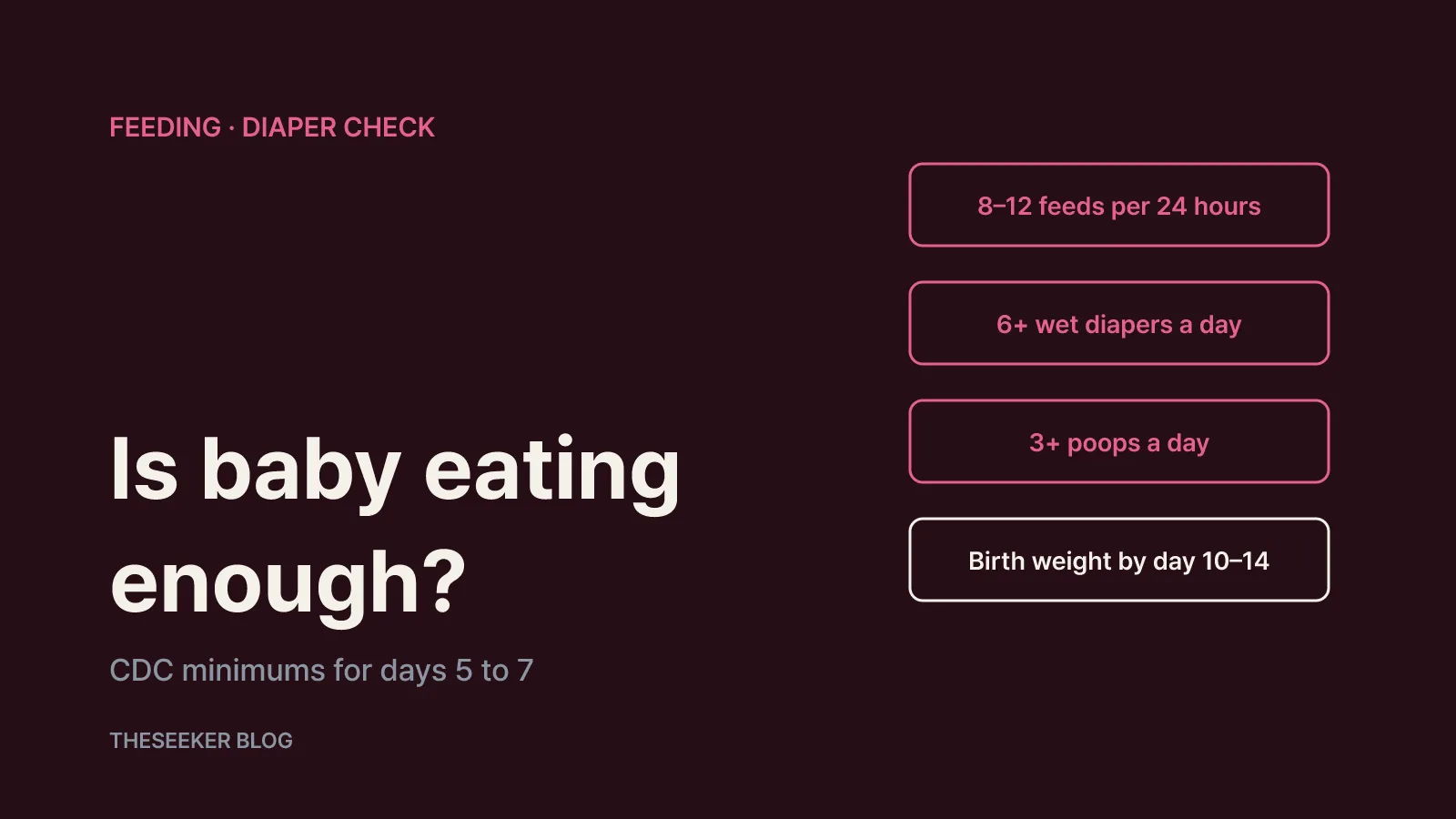
The CDC's newborn breastfeeding basics list 8–12 feeds per 24 hours as a sign a baby is getting enough, and note that newborns may want to eat every 1 to 3 hours, including at night. The AAP says breastfed newborns usually nurse about every 2 hours, measured from the start of one feed to the start of the next, for 10–12 sessions a day. Bottle-fed newborns usually eat every 2 to 3 hours, with at least 8 feeds in 24 hours. After the first day or two they typically take 1 to 2 ounces (about 30 to 60 ml) per feed, rising to 3 or 4 ounces (about 90 to 120 ml) every 3 to 4 hours by the end of the first month.
Diapers and weight are your best checks. The CDC table sets a minimum of 6 wet diapers and 3 poops a day for days 5 to 7, and says exclusively breastfed babies may poop 6 or more times a day from the end of week one until about 6 weeks. Stools shift from black or dark green to yellow during the first week. Some weight loss early on is normal, but babies should be back to birth weight by day 10 to 14. Ask the center for your baby's last weight so you can compare at the first checkup.
Keep the log simple: start time, side or amount, wet diapers and dirty diapers. The point is not hitting exact numbers but spotting a trend, such as several days under 8 feeds or noticeably fewer wet diapers.
On pacifiers, the AAP suggests breastfeeding families wait until feeding is well established, around 3 to 4 weeks. Formula-fed babies can start whenever parents like, and it is fine if a baby refuses one.
Safe sleep setup and a workable night routine
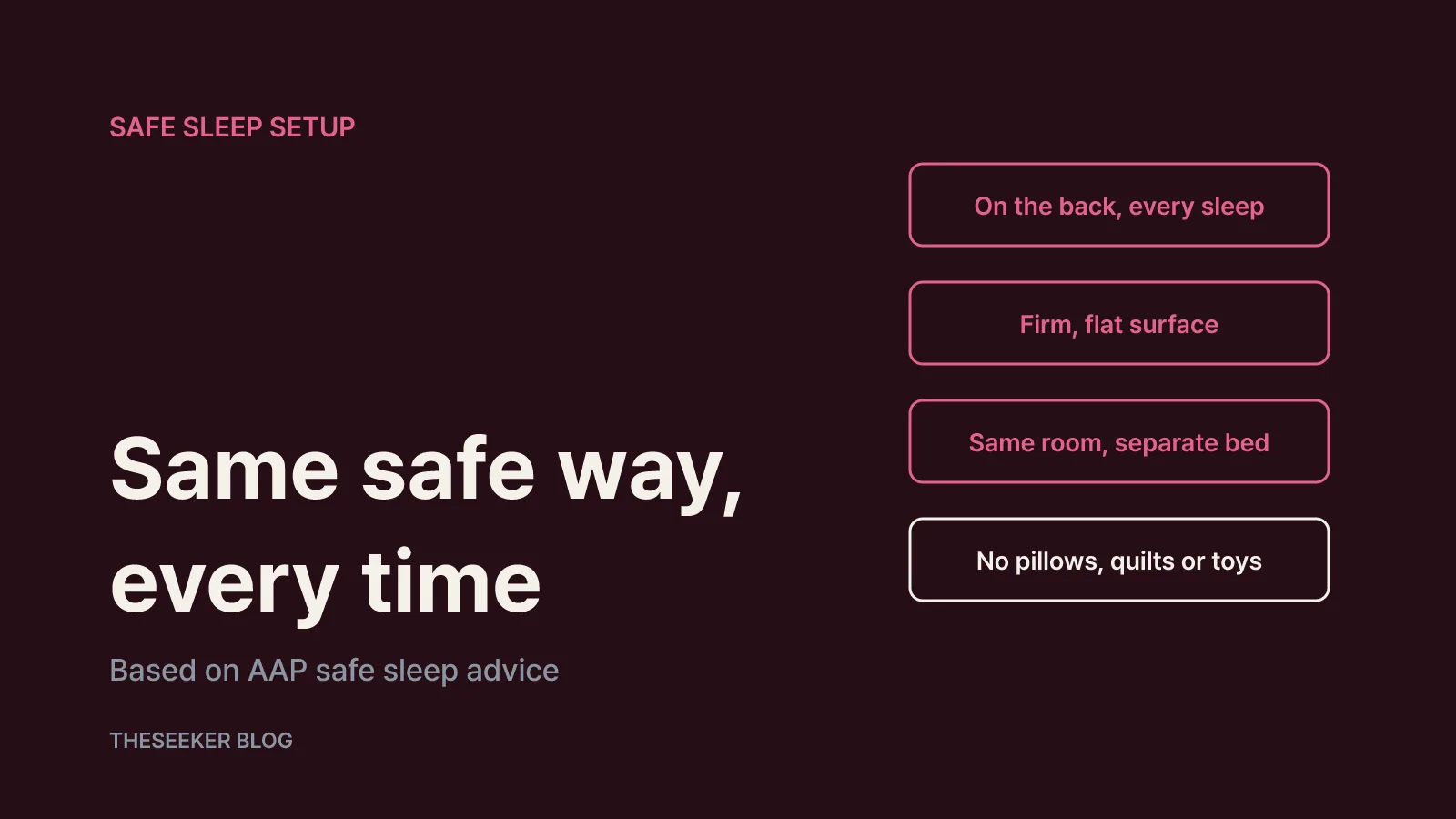
The goal in week one is not sleeping through the night; it is putting your baby down safely the same way every time. The AAP's safe sleep recommendations say to place babies on their backs for every nap and every night. Side sleeping is as risky as stomach sleeping, and babies on their backs will not choke because of their airway anatomy and gag reflex.
The surface should not indent under the baby, and anything inclined more than 10 degrees is unsafe. If your baby dozes off in a car seat, stroller, swing or carrier, move them to a flat sleep surface as soon as you can.
Room-share for at least the first 6 months. The AAP says this can cut SIDS risk by as much as 50%, while falling asleep with a baby on a couch or soft armchair raises the risk of sleep-related death up to 67 times. If you feel yourself nodding off during a night feed, put the baby back in the crib first.
Dress your baby in one layer more than you are wearing, skip hats indoors, and watch for sweating, a hot chest or flushed skin. If you swaddle, always place the baby on their back, keep it loose enough for breathing and hip movement, avoid weighted products and stop once the baby starts trying to roll.
A simple repeatable sequence helps tired parents: diaper, feed, burp, then down in a dark, quiet room. Keep night feeds dim and quiet; let daytime be bright and normally noisy. Add short, supervised tummy time while the baby is awake and build toward at least 15 to 30 minutes a day by 7 weeks.
A day-by-day plan for the first week home
Days 1–2: keep the center's feeding rhythm, settle on your log format and test the room layout with naps in the crib.
Days 3–4: adjust the night split once you see who struggles at which hour. Decide whether someone else will give one feed of pumped milk or formula. If a home care helper is coming, list what you want to learn, such as bathing, feeding positions or burping.
Days 5–7: book the first checkup. Korea's National Health Insurance Service schedules it between day 14 and day 35, covering an exam, height, weight and head measurements, and health education, with no out-of-pocket cost for insured families. Bring your log and the center's weight records, and confirm the vaccination schedule. Build in rest for the mother as well: hand off housework, nap when the baby sleeps at least once a day, and keep meals simple.
When to call the pediatrician right away
The CDC lists signs a baby may not be getting enough: fewer than 8 feeds in 24 hours on most days, no visible or audible swallowing, trouble staying latched or clicking sounds, fussiness after feeds, continued weight loss after day 5, fewer than 3 poops and 6 wet diapers a day by day 5, or yellowish skin. Do not wait for the next scheduled visit; contact your baby's health care provider.
Painful feeding deserves quick help too. The CDC describes a poor latch as sucking only on the nipple, lips curled inward, pain, or cracked or bleeding nipples. A clinician or lactation specialist can help. For babies who are slow to gain weight, the AAP advises not letting too much time pass between feeds, even if that means waking them.
Sources
Frequently asked questions
Should I keep the postpartum center's feeding schedule at home?
Keeping the same rhythm on day one can ease the transition. For healthy full-term babies, though, follow hunger cues over the clock and use your log to confirm roughly 8 to 12 feeds in 24 hours. If your baby's care team set specific intervals, follow those.
Do I need to wake my newborn at night to feed?
Many newborns wake every 1 to 3 hours anyway. The AAP advises that babies who are slow to gain weight should not go too long between feeds, even if that means waking them. Check weight recovery at the first visit and ask for individual advice.
Is it safe for my baby to sleep in our bed?
The AAP recommends avoiding bed sharing in all circumstances and room-sharing with a separate crib or bassinet for at least 6 months. Falling asleep together on a couch or soft chair is especially dangerous.
Can I apply for Korea's postpartum home care voucher after leaving the center?
Deadlines differ by region: Gov24 lists 30 days after birth, while Seoul allows 60 days. Check with your local public health center and apply while you are still at the center if possible.
blog.theseeker.io/en/posts/newborn-care-at-home-after-postpartum-center
Grace Whitman
Grace covers child development, education and family support programs, working from official guidance to highlight the conditions and steps parents can check right away.
Read our editorial standards