Chewy Korean Garlic Potatoes: Recipe and Sauce Ratio
Mash cooked potatoes with 200 g of potato starch and 150 ml of water, boil the bites until they float, then toss them in a soy-garlic sauce bloomed with hot oil. Here is the method, the sauce ratios and how to store them.
 Chloe Morgan

In this post
As of October 2026, the Korean garlic seasoned potatoes that went viral on YouTube as being "chewier than noodles" are not a stir-fried julienned side dish. They are small dumplings made from mashed potato and potato starch, boiled until they float, then tossed in a garlic, soy sauce and chili flake dressing that has been bloomed with hot oil. The short version: microwave and mash the potatoes, knead in 200 g of potato starch and 150 ml of water while the mash is still warm, shape bite-size pieces, boil until they rise, rinse in cold water and toss in the sauce. Below I compare two published Korean versions of the recipe and add potato selection and storage guidance from two US university extension services, so you can make it in an ordinary home kitchen.
What Korean garlic seasoned potatoes actually are
The Korean name, maneul bibim gamja, translates loosely as garlic mixed potatoes. The viral version behaves more like potato gnocchi or Korean potato rice cakes than like a potato salad. Because the dough is bound with potato starch, the cooked bites are springy and elastic. A WikiFoodie recipe published on Daum notes that adding starch to cooked potato creates the chewy texture and that the chewiness becomes stronger after chilling. A version posted on 10000recipe, Korea's large recipe-sharing site, follows the same structure: microwave, mash, knead with potato starch, boil and dress.
The look is part of the appeal. Each ball of dough is pressed with the narrow mouth of a bottle, which leaves a dimple and makes the bites resemble button mushrooms. The dimple also catches sauce. If you have no suitable bottle, pressing the center with a fingertip works, and the 10000recipe version simply says to shape a ball and press a hollow into the middle.
Ingredients, based on the WikiFoodie version:
← Swipe to see more
| Part | Ingredient | Amount |
|---|---|---|
| Dough | Potatoes | 2 |
| Dough | Potato starch | 200 g |
| Dough | Water | 150 ml (about 2/3 cup) |
| Sauce | Soy sauce | 2 tbsp |
| Sauce | Gochugaru (Korean chili flakes) | 2 tbsp |
| Sauce | Minced garlic | 1/2 tbsp |
| Sauce | Chopped green onion | a little |
| Sauce | Neutral oil, heated | 2 tbsp |
| Finish | Perilla oil | 1 tbsp |
Use potato starch rather than cornstarch, since that is what both recipes are built on. Potatoes vary in size, so treat the starch and water amounts as a starting point and adjust by feel, as described below.
Choosing and prepping potatoes
The dough needs a smooth mash, so a potato that cooks up dry and fluffy is easiest to work with. According to K-State Extension, starch and moisture content determine how a potato behaves. High-starch, low-moisture potatoes such as russets turn dry and fluffy and suit mashing and baking, while lower-starch red and yellow potatoes stay intact and creamy, which suits salads and stews. In US stores, russets are the obvious pick for this dough; Yukon Gold and other yellows, which K-State also lists for mashing, work too but may need a little more mashing.
Pick firm potatoes with smooth skin. UT Extension in Bedford County, Tennessee advises skipping potatoes that are withered, sprouting at the eyes, cut, punctured or showing rot. Green skin is a warning sign that the potato may contain solanine, a bitter alkaloid. K-State explains that light exposure turns the skin green and produces solanine, which can be harmful in large amounts, and recommends peeling the green parts away. Since this recipe uses peeled potatoes, trim any green patches and sprouted eyes generously while peeling.
Cut potatoes can turn brown or pinkish. UT Extension suggests cutting right before cooking, or holding cut pieces in water if they will sit for a while. A little discoloration will not change the flavor, but it does show in a pale dough.
For the rest of the bag, UT Extension recommends a cool, dark spot at 45 to 55°F, out of the refrigerator, in a paper or burlap bag and away from onions. Below 45°F, starch converts to sugar and the flavor suffers. K-State adds that potatoes should be scrubbed under running water just before use, not before storage.
Making the chewy dough
The microwave is the fastest way to cook the potatoes. Peel them, cut them into small cubes, place them in a microwave-safe bowl and cover with a lid or wrap. WikiFoodie suggests 8 minutes and 10000recipe suggests 7 minutes with the lid on. Neither gives a wattage, so check partway through: a chopstick or fork should slide in easily. Smaller pieces cook faster. If you ever microwave whole potatoes instead, K-State advises piercing the skin so steam can escape.
Mash the potatoes while they are hot. A fork is enough; you do not need a masher. WikiFoodie stresses mixing in the starch without letting the potatoes cool, because the warm mash is what produces a cohesive, chewy dough. Add the 200 g of potato starch, then the 150 ml of water in a few additions, and knead by hand.
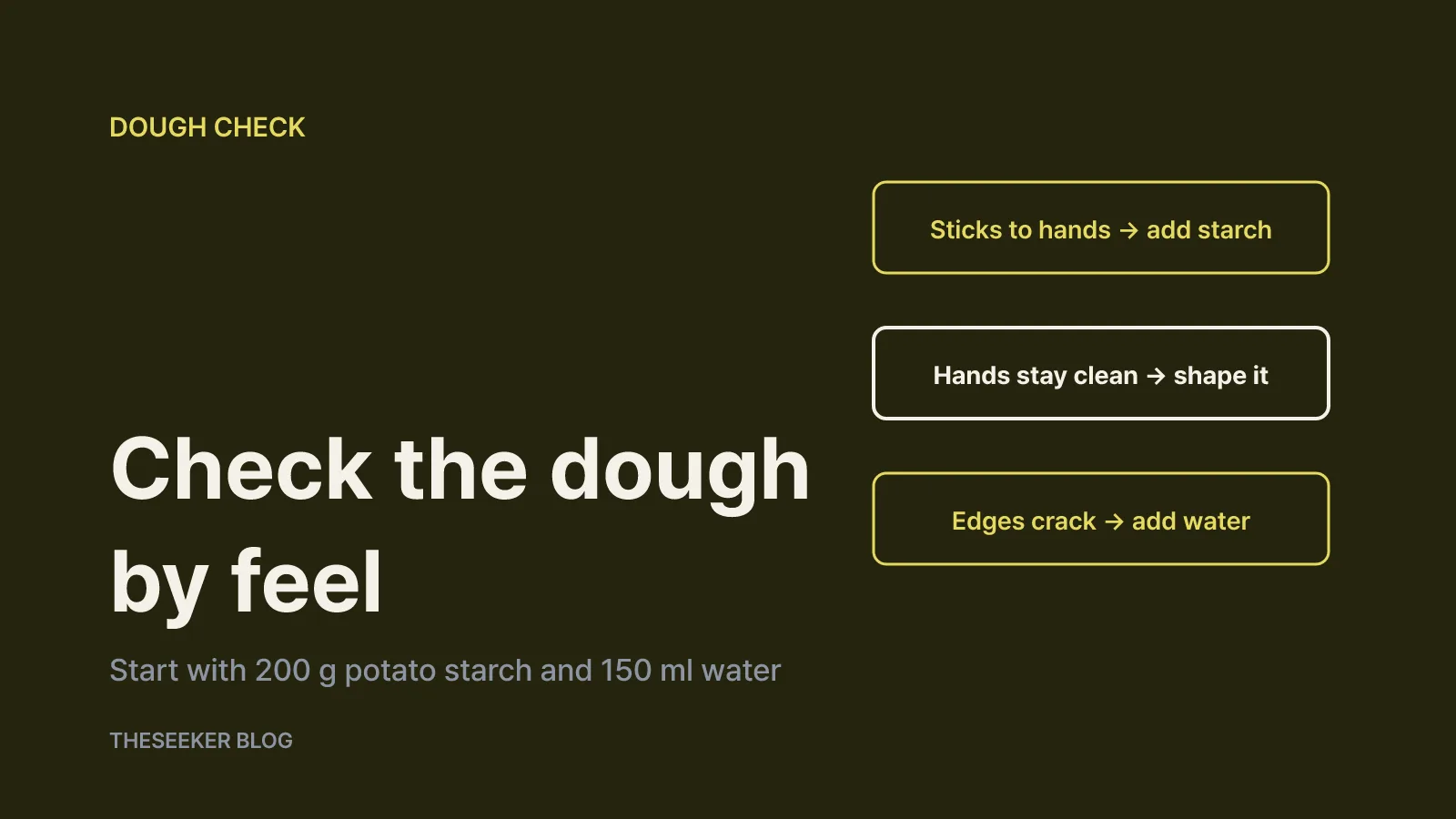
Judge the dough by feel rather than by the numbers alone. WikiFoodie says a dough that is too wet sticks to your hands and one that is too dry cracks, so aim for something soft and pliable. The 10000recipe version uses a simple test: the dough should not feel wet and should not stick to bare hands. If it keeps sticking, knead in more starch a spoonful at a time. If the edges crack when you shape it, add water a little at a time.
Pinch off bite-size pieces, roll them into balls of similar size so they cook evenly, then press each one with a bottle mouth or a fingertip. Cover the waiting dough with a damp cloth or plastic wrap so the surface does not dry out and crack.
Boiling until they float
Bring a large pot of water to a rolling boil and add the dough in batches, so the water stays hot and the pieces do not stick together. Give them a gentle stir right after they go in. Both recipes use the same doneness cue: when the pieces float to the surface, they are cooked. If you have made gnocchi, the rhythm will feel familiar.
Lift them out and rinse immediately in ice water or cold water. WikiFoodie says the ice-water rinse gives a springy exterior and a bouncy center, and the 10000recipe version also rinses before dressing. Rinsing washes off surface starch, so the bites stick together less. Drain thoroughly; extra water will dilute the sauce.
The garlic sauce ratio and the hot-oil step

This step defines the dish. Both recipes put the seasonings in a bowl and pour very hot oil over them. WikiFoodie says to stir as soon as it sizzles, and 10000recipe notes that hot oil poured over chili flakes turns into a thick chili oil. The quick hit of heat softens the raw bite of the garlic and draws out its aroma.
The two published ratios differ quite a bit:
← Swipe to see more
| Ingredient | WikiFoodie | 10000recipe |
|---|---|---|
| Soy sauce | 2 tbsp | 4 spoons |
| Gochugaru | 2 tbsp | 1 spoon |
| Minced garlic | 1/2 tbsp | none |
| Green onion | a little | 1 spoon |
| Sweetener | none | 1 spoon allulose |
| Hot oil | 2 tbsp | 3 spoons |
| Finish | 1 tbsp perilla oil | none |
The WikiFoodie ratio is spicier and less salty, since chili flakes match the soy sauce. The 10000recipe ratio is saltier and slightly sweet, closer to a soy noodle dressing. If you want garlic to lead, start between the two: 3 tbsp soy sauce, 1 tbsp gochugaru, 1 tbsp minced garlic, 1 tbsp chopped green onion, 1/2 tbsp sugar or allulose and 2 to 3 tbsp hot oil. Toss with about two-thirds of the sauce first and add the rest to taste.
Handle the oil carefully. Heat it in a small pan, keep the seasonings in a dry heatproof bowl and pour slowly; water in the bowl makes hot oil spatter. If the oil does not sizzle when it hits the garlic, it was not hot enough and the garlic will stay sharp.
Add the drained dumplings and toss gently. WikiFoodie finishes with 1 tbsp of perilla oil to coat the pieces; toasted sesame oil is a reasonable stand-in if perilla oil is hard to find, though the flavor is different. Sesame seeds, crumbled roasted seaweed or thinly sliced perilla leaves add aroma, and the 10000recipe version adds sliced onion or cucumber for crunch.
Variations and storage
The dough is mild, so other sauces work. WikiFoodie offers a nutty ssamjang-mayo sauce (1 spoon ssamjang, 2 spoons mayonnaise, 1/4 spoon minced garlic, 1/2 spoon sesame oil and some sesame salt) and a tangy gochujang dressing (1 spoon each of gochujang, vinegar, sugar, gochugaru and water, plus 1/2 spoon minced garlic) that tastes like a cold-noodle sauce.
If you want to skip the dough entirely, microwave bite-size potato chunks, let the steam escape and toss them while warm in the same garlic sauce. You lose the chewiness, but it becomes a quick fluffy potato side dish. Since K-State notes that lower-starch potatoes hold their shape better, choose a firmer potato for this chunk version.
Keep storage short. WikiFoodie says the dish keeps about a day in the refrigerator, after which the sauce sets and the dough hardens. On cooked-potato safety, K-State notes that foil-wrapped baked potatoes left at room temperature for more than two hours have, in rare cases, been linked to botulism, and advises removing the foil and refrigerating leftovers. Apply the same habit here: do not leave the dish out, and refrigerate what you will not eat right away.
Sources
Frequently asked questions
Can I use cornstarch or flour instead of potato starch?
Both recipes I compared are built on potato starch, which is what gives the dish its chewy, springy bite. Other starches or flour will change the texture, so use potato starch if you want the result shown in the viral video.
Why is my dough sticking to my hands?
It has too much moisture. Knead in more potato starch a spoonful at a time until the dough no longer feels wet or sticks to bare hands. If it cracks when shaped, add a little water.
How long do I boil the potato dumplings?
Boil them until they float to the surface, then lift them out and rinse in ice water or cold water. Drain well before tossing them in the sauce.
How do I make the sauce less spicy or less salty?
Use less gochugaru and more green onion and perilla oil for a milder sauce. For less salt, cut back the soy sauce, add a little sugar or allulose, and start by tossing with only two-thirds of the sauce.
Can I make them ahead?
Plan on eating them within about a day, refrigerated. The dough firms up and the sauce sets over time, and leftovers should go into the fridge rather than sit at room temperature.
blog.theseeker.io/en/posts/garlic-seasoned-potatoes-chewy-korean-recipe
Chloe Morgan
Chloe covers easy recipes and how to prepare and store ingredients, written in quantities and steps that work in a home kitchen.
Read our editorial standards