Does Your Dog Need a Winter Coat? Who Needs One and Sizing
Not every dog needs a coat. Here is which dogs benefit by breed, body type and age, when a coat is unnecessary, how to measure neck, chest and back length, and how to keep walks safe in the cold.
 Owen Parker
In this post
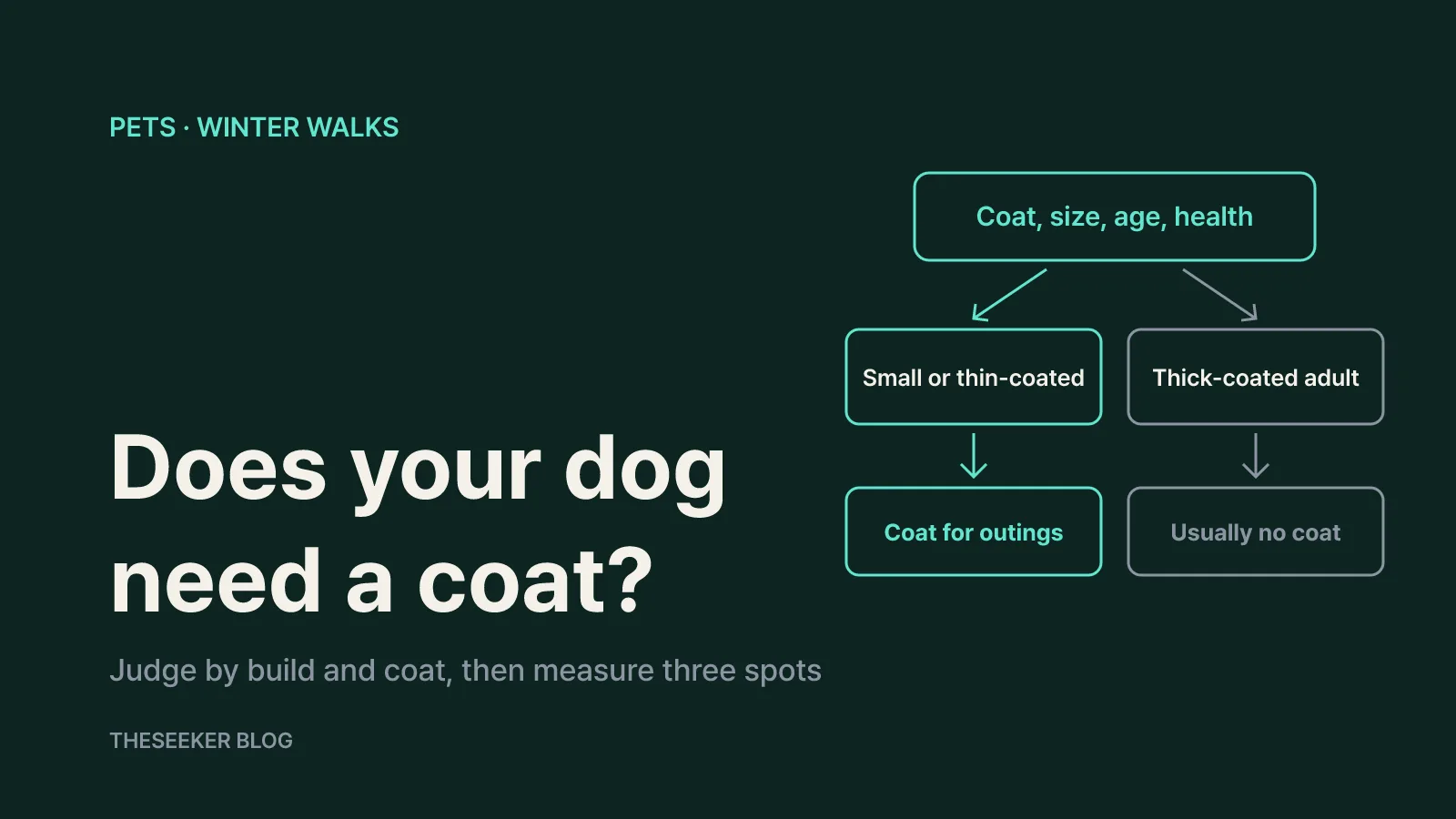
As of October 2026, guidance from veterinary organizations points to a clear answer: not every dog needs a winter coat, but many do. Small and toy breeds, hairless breeds, dogs with clipped or thin coats, short-legged dogs whose bellies touch the snow, lean sighthounds, and puppies, seniors or dogs with chronic illness are the ones most likely to benefit from a coat on cold walks. A healthy adult dog with a thick double coat is usually fine without one while it stays active. If your dog does need a coat, measure three things — back length, chest girth and neck girth — and make sure the dog can walk, run and relieve itself normally while wearing it.
This guide draws on published advice from the PDSA, the American Veterinary Medical Association (AVMA), the American Kennel Club (AKC), VCA Animal Hospitals and South Korea's National Institute of Animal Science. Cold tolerance varies from dog to dog, so treat the lists below as a starting point rather than a strict rule.
Which dogs benefit from a winter coat

The AVMA explains that cold tolerance depends on a dog's coat, body fat, activity level and health. Looking at those four factors, six groups stand out.
Small and toy breeds. Chihuahuas, Yorkshire Terriers and other small dogs lose body heat quickly. The AKC notes that cold outings can be uncomfortable or even dangerous for them, and the PDSA says Chihuahuas and small terriers feel the cold fast and benefit from the extra warmth of a coat. VCA adds that small dogs and short-coated dogs need extra warmth on cold, windy, rainy or snowy days.
Hairless breeds. Chinese Cresteds, Xoloitzcuintlis and American Hairless Terriers have no insulating fur, and the AKC says they need a jacket when they go out in cold weather.
Dogs with clipped coats. Poodles kept in a short clip, or any dog that has just been shaved, lose the natural insulation a longer coat provides and can get cold quickly outdoors.
Short-legged dogs. Dachshunds, Basset Hounds and even thick-coated Corgis sit close to the ground, so their bellies get wet and chilled by snow and ice. The AVMA makes the same point about short-legged pets.
Lean, short-coated dogs. Greyhounds and Whippets carry little body fat and fine fur. The PDSA says they need a warm coat outdoors and should spend less time out in the cold. The AKC adds that energetic short-coated sporting breeds such as Vizslas and German Shorthaired Pointers can chill quickly in snow.
Puppies, seniors and dogs with health conditions. Young and old dogs regulate body temperature less effectively than healthy adults. The AVMA lists diabetes, heart disease, kidney disease and hormonal disorders such as Cushing's disease as conditions that can make temperature regulation harder, and notes that cold weather may worsen arthritis. If your dog has one of these conditions, ask your veterinarian how long and how hard winter outings should be.
When a coat isn't necessary — and why indoors is different
Breeds developed for snow and cold, such as Siberian Huskies, Alaskan Malamutes, Bernese Mountain Dogs, Newfoundlands and Saint Bernards, have thick insulating coats, according to the AKC. The PDSA says a fit, healthy dog with thick fur should be fine without a coat as long as it keeps moving.
Cold-tolerant does not mean cold-proof, though. The AVMA stresses that thick-coated dogs are still at risk and that no pet should be left outside for long periods in below-freezing weather. The PDSA also warns never to leave a dog outdoors without access to shelter and warmth.
Indoors, most dogs don't need clothing at all. The PDSA points out that dogs can overheat quickly in centrally heated homes. If your home is chilly and you use a light, breathable layer, check that your dog isn't getting too warm. South Korea's National Institute of Animal Science notes that a dog's normal body temperature is about 37.7–39.2°C (roughly 100–102.6°F) and that a comfortable living temperature is around 15–26°C (59–79°F), depending on breed, build and coat. The AVMA also suggests giving pets a few safe resting spots so they can move somewhere warmer or cooler as needed.
How to measure your dog for a coat
Choose a garment made for dogs rather than altering human clothing; both the PDSA and VCA stress that dog-specific designs fit properly and let the dog move freely. A soft tape measure works best. If you don't have one, wrap a piece of string around your dog and measure it against a ruler.
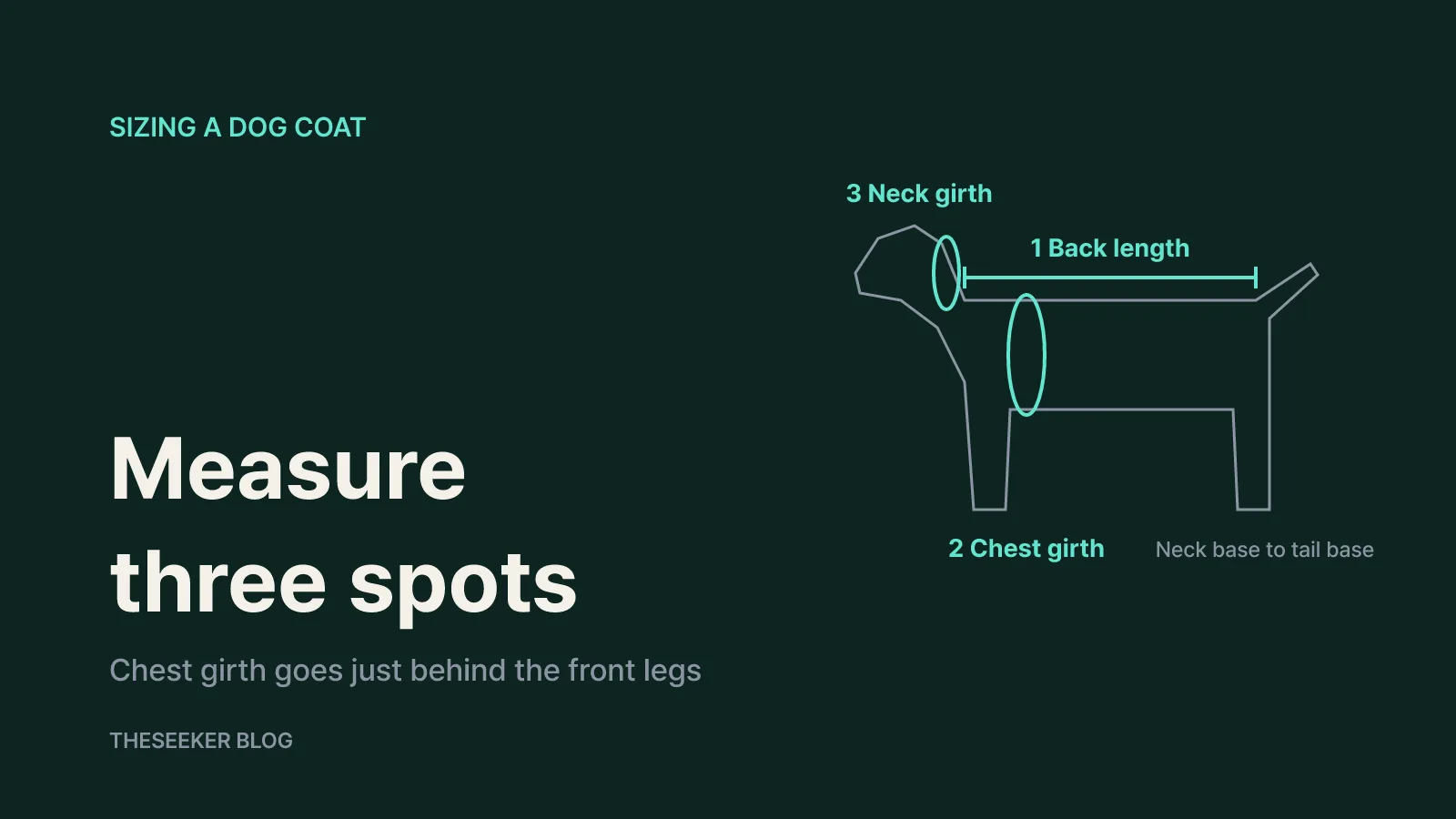
The PDSA recommends three measurements:
- Back length: from the base of the neck, where the collar sits, to the base of the tail.
- Chest girth: around the widest part of the chest, just behind the front legs.
- Neck girth: around the neck where the collar normally rests.
The AKC says back length and the widest chest measurement are the two you will need most often, and that every brand fits slightly differently, so follow the manufacturer's own measuring instructions. Compare your numbers with the size chart rather than relying on a letter size, and check where each brand starts its back measurement.
Record measurements in both inches and centimeters, as the PDSA suggests, because sizing charts use either. Long, deep-chested dogs such as Greyhounds, Lurchers and Whippets usually need coats designed for their proportions. Long-backed breeds like Dachshunds also need both chest and length checked.
Checking the fit and helping your dog accept a coat
A correct size on paper still needs a real-world test. The PDSA says your dog should be able to run, jump, pee and poop exactly as it would without the coat. Biting or scratching at the coat, or rubbing against floors and furniture, signals that it doesn't fit or is irritating.
The AKC warns that a coat that is too tight restricts movement, while one that is too loose can tangle a dog during play. Check for rubbing behind the front legs, pressure around the neck, and a belly panel that stays clear when your dog relieves itself.
Useful features, according to the AKC, include reflective trim for dark mornings and evenings, a leash opening for back-clip harnesses, and sanitary cut-outs. Introduce the coat gradually at home with treats and praise before the first walk. Wash it regularly as well; the AKC notes that coats collect hair and dander and can harbor bacteria if stored damp.
Keeping your dog safe on cold-weather walks
A coat is only one part of cold-weather care.
Shorten outings. The AVMA advises shortening walks in very cold weather. A veterinarian quoted by the AKC suggests that when the windchill drops below 20°F (about -7°C), play sessions should last 15–20 minutes, followed by time indoors to warm up.
Swap wet layers. Wet sweaters and coats can make a dog colder, the AVMA warns, so keep more than one on hand and use a dry one each time. Waterproof outerwear suits snow and rain better than knitwear.
Know the signs of hypothermia. The AVMA lists whining, shivering, anxiety, slowing down or stopping, weakness and burrowing for warmth. The PDSA says to head home as soon as a dog shivers or slows down.
Watch for frostbite. Ears, tail and toes are most at risk. The National Institute of Animal Science describes affected skin turning pale and painful to the touch; warm it gently and see a vet if it darkens. The AVMA notes frostbite may not be obvious for several days.
Clean paws and bellies. De-icers and antifreeze can injure paws and are dangerous if licked off. Wipe or wash your dog's feet, legs and belly after walks, consider booties that fit properly, and trim the fur between the toes to reduce ice balls.
Avoid cold cars and frozen water. The AVMA warns that cars can chill rapidly and that dogs should be kept off frozen ponds and lakes.
DIY dog sweaters: knitting and crochet tips
If you knit or crochet your own dog sweater, build the pattern around the same three measurements. Make it snug but not tight, keep the belly panel short enough for bathroom breaks, and skip dangling ties or loose decorations that could snag or be chewed off. Because wet knitwear loses warmth, save handmade sweaters for cold, dry days and switch to a waterproof coat in snow or rain.
For reference, the PDSA describes multipurpose waterproof coats with fleece or padding, simple raincoats, high-visibility coats and breathable tweed coats. The AKC adds full-body snowsuits, which are especially helpful for lean or hairless dogs with long legs. One or two well-fitted options matched to your dog's body type and walking conditions will cover most winters.
Sources
- Vet Q&A: Does my dog need to wear a coat on winter walks? (PDSA)
- Cold weather animal safety (American Veterinary Medical Association)
- Does My Dog Need a Winter Coat? Choosing the Best Winter Coat for Your Dog (American Kennel Club)
- 반려견과 ‘흰 눈 사이로’ 산책하며 건강하게 겨울나기 (농촌진흥청 국립축산과학원 보도자료)
- Do Dogs Need Coats In The Winter? (VCA Animal Hospitals)
Frequently asked questions
Do all dogs need a coat in winter?
No. Small, hairless, clipped, short-legged, lean and short-coated dogs, plus puppies, seniors and dogs with chronic illnesses, benefit most. Healthy dogs with thick double coats are usually fine without one while they stay active, though no dog should be left outside for long in freezing weather.
How do I measure my dog for a coat?
Measure back length from the base of the neck to the base of the tail, chest girth around the widest part just behind the front legs, and neck girth where the collar sits. Then compare the numbers with the brand's own size chart.
Should my dog wear a sweater indoors?
Usually not. The PDSA notes that dogs can overheat quickly in heated homes. If your home is cold and you use a light layer, check regularly that your dog isn't too warm.
What are the signs my dog is too cold on a walk?
Shivering, whining, anxiety, slowing down or stopping, weakness and trying to burrow for warmth can all signal hypothermia. Bring your dog inside, dry it off, and contact a veterinarian if the signs continue.
Is a hand-knitted or crocheted sweater a good idea?
It can be, if it is made to your dog's measurements and lets the dog move and relieve itself normally. Use it on dry days, because wet knitwear can make a dog colder.
blog.theseeker.io/en/posts/dog-winter-coat-need-and-measuring-guide
Owen Parker
Owen covers the care, health and costs of living with pets, drawing on guidance published by public agencies and veterinary associations.
Read our editorial standards